A Gladwyne man who misspent millions of dollars from some of Philly’s richest people will spend 9 years in prison
Josh Verne took investments from businessmen including David Adelman, Michael Rubin, and Bart Blatstein and spent the money on private jet flights, country club dues, and other personal expenses.
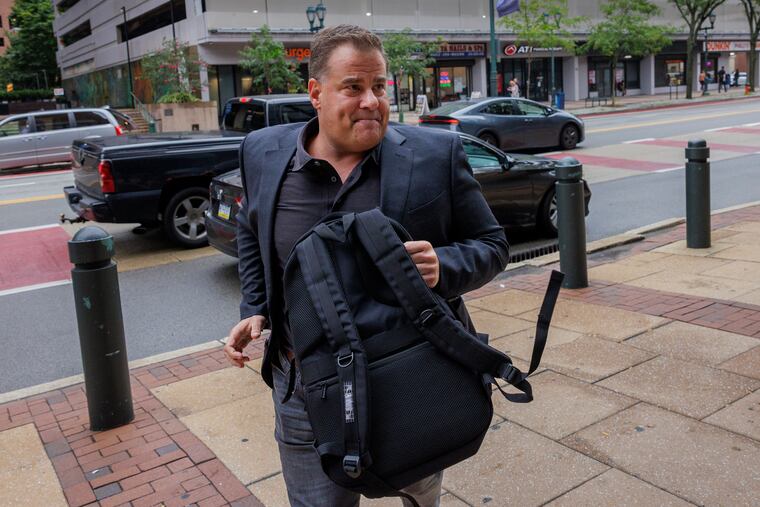
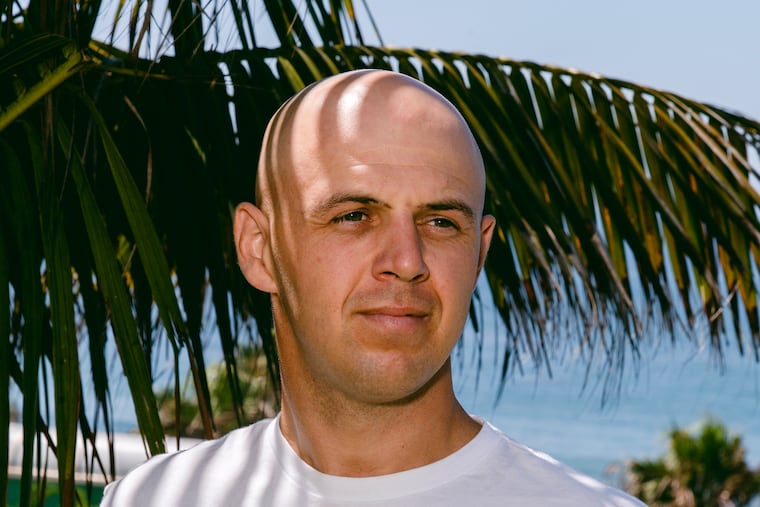
A Gladwyne furniture heir who duped some of the region’s wealthiest people into giving him millions of dollars intended to fund his startup companies — but who instead used the cash to pay for lavish personal expenses including private jet flights, country club dues, and his daughters’ bat mitzvahs — was sentenced Wednesday to more than nine years in federal prison.
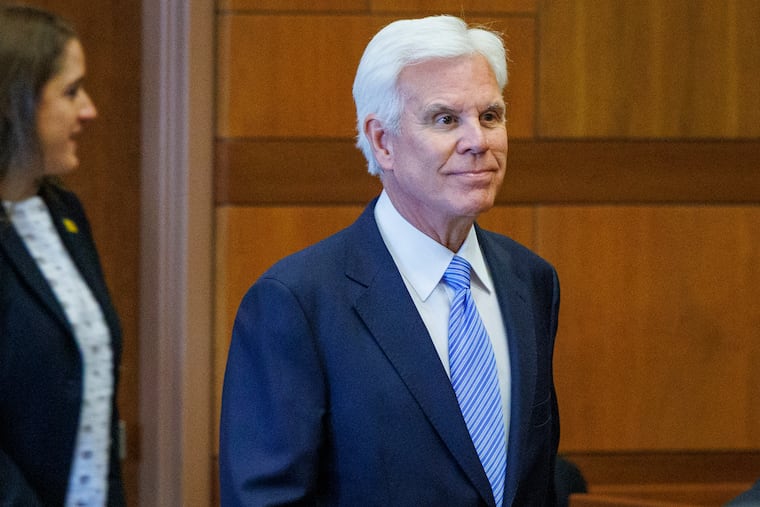
Josh Verne pleaded guilty last year to using forged financial documents and false statements about his net worth to persuade prominent business owners to invest in some of his proposed ventures. They included David Adelman, a billionaire entrepreneur and Sixers co-owner; Michael Rubin, CEO of the sports apparel behemoth Fanatics; and real estate developer Bart Blatstein, The Inquirer has reported.
Part of Verne’s appeal, prosecutors said, was his gregarious and engaging persona, and his confident assurances that he was a visionary entrepreneur who would turn his investors’ money into lucrative returns. He said he’d sold a previous business for tens of millions of dollars — although he hadn’t — and assured his benefactors that he was worth nearly $100 million, though he wasn’t.
In court Wednesday, Verne, 48, cut a far more humble figure, saying he’d “destroyed” his career, reputation, and relationships through his misconduct.
“I alone am responsible for that,” he said. “Not the circumstances, not the pressure, but me.”
Prosecutors said Verne’s misdeeds were part of a calculated, long-running scheme to “steal rather than earn.” In court documents, they described him as an “extraordinarily capable conman” whose fraud “was not an aberration — it was a business model.”
“This wasn’t a poor man who was trying to feed his family,” Assistant U.S. Attorney Jerome Maiatico said in court. “He wanted to live a lifestyle that he couldn’t otherwise afford. And he sustained that with deception.”
U.S. District Judge John F. Murphy said Verne clearly had a knack for gaining people’s trust — but that in this case, he abused that trust in “profound” ways, day after day.
“What makes this scheme so meaningful is the sheer persistence of all of the decisions,” Murphy said. “You don’t accomplish all of these things with a couple of light decisions.”
The judge said Verne’s total term of incarceration would be 111 months. Afterward, he said, Verne will serve three years of supervised release.
Verne was raised in Huntingdon Valley, and his family in the 1960s founded Chuck’s Bargain House, a furniture company that was later renamed Home Line Furniture Industries and grew to include factories in Philadelphia, North Carolina and Vietnam.
Verne went to work for the business in the early 2000s, but it was forced to close because of financial difficulties in 2011.
After that, Verne founded Workpays.me LLC, an employee payroll-deduction purchasing program. And in 2016, he persuaded Adelman to invest in FlockU, a digital media outlet focused on appealing to college students.
In courting Adelman, prosecutors said, Verne lied about his net worth, his business background, and, to bolster his accounts, presented Adelman — referred to in court documents as “Investor A” — with forged financial documents he said were from Goldman Sachs.
Once FlockU foundered, prosecutors said, Verne changed the LLC’s name to Ownable and pivoted its business model, seeking to make it an online marketplace that would lease laptops and smartphones to people who couldn’t afford to buy them.
To persuade Adelman to invest more money, prosecutors said, Verne lied again, saying he was investing more than $2 million of his own money into Ownable, when in fact he never did so.
Verne then went on to raise millions more from other boldfaced names, in part by touting his connection to Adelman and continuing to boast about his own wealth. All the while, prosecutors said, Ownable was struggling to get off the ground — but Verne was using the money to fund an extravagant life.
He used his investors’ cash to renovate his Shore house, prosecutors said, and paid for private jet trips, his daughters’ bat mitzvahs, his country club dues, an interior decorator, and credit card and mortgage bills.
The U.S. Attorney’s Office has not yet settled on a precise dollar figure for all that graft, but said it was likely between $12 million and $24 million.
Prosecutors and Verne’s attorneys said in court Wednesday that they were continuing to try and finalize disputes about exactly how much Verne owes to his victims, although his federal public defenders said he is now “penniless.”
In 2023, the Securities and Exchange Commission said in a civil court filing that Verne had raised $31 million from investors — and misspent about half of it.
More than $9 million went toward Verne’s personal expenses, the SEC said, and about $5 million was diverted to make “Ponzi-like payments” to some initial investors, an attempt by Verne to mislead his benefactors into thinking Ownable was in good financial health.
By 2019, however, Ownable was in severe financial distress, prosecutors said. And in 2020, the company’s board learned of the issues and forced Verne to resign.
Two years later, prosecutors said, when Verne knew he was under criminal investigation, he sent texts to a former Ownable employee who’d spoken to the FBI, as well as the man’s wife. Prosecutors said the texts amounted to witness intimidation.
Verne’s attorneys disputed that, saying the texts were a one-time, “off-the-cuff” reaction made under duress, and did not contain any explicit threats against anyone.
Murphy, the judge, disagreed.
“Some would call it extortion,” he said. “It’s a threat.”
Verne was indicted in 2024 on charges including securities fraud, wire fraud, and aggravated identity theft. He pleaded guilty last year to some of those charges as part of a plea agreement.
Murphy said that although some of Verne’s victims were wealthy, others were less well-heeled and therefore devastated by his misuse of their money.
And yet Verne continued making decisions to benefit himself at the expense of those who trusted him, the judge said.
“What the next day brought every time,” Murphy said, “was more and more harmful decisions.”