The Pa. Attorney General’s Office seeks to intervene in a murder case that Philly prosecutors helped overturn last month
The attorney general’s actions Wednesday provided a first test case since the state Supreme Court issued a forceful ruling against DA Larry Krasner's office last week.
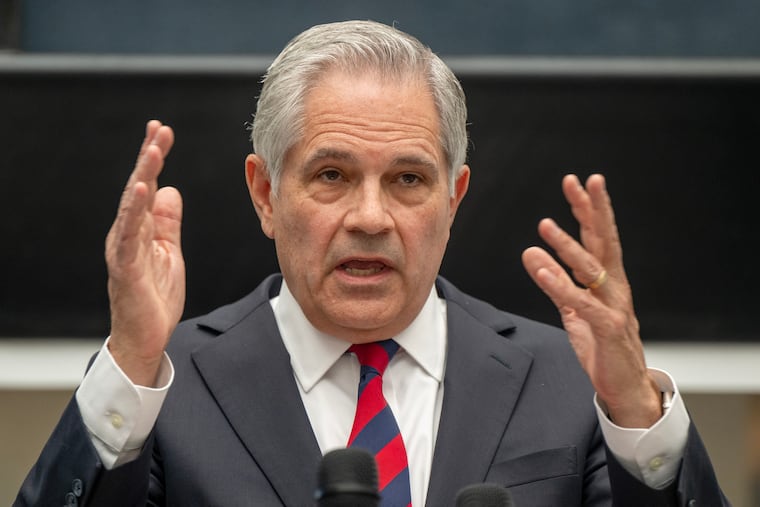
The Pennsylvania Attorney General’s Office on Wednesday said it was appealing and seeking to intervene in a murder case that Philadelphia prosecutors helped overturn last month — the first application of a recent state Supreme Court ruling that gave state prosecutors more oversight over their city counterparts in appellate matters.
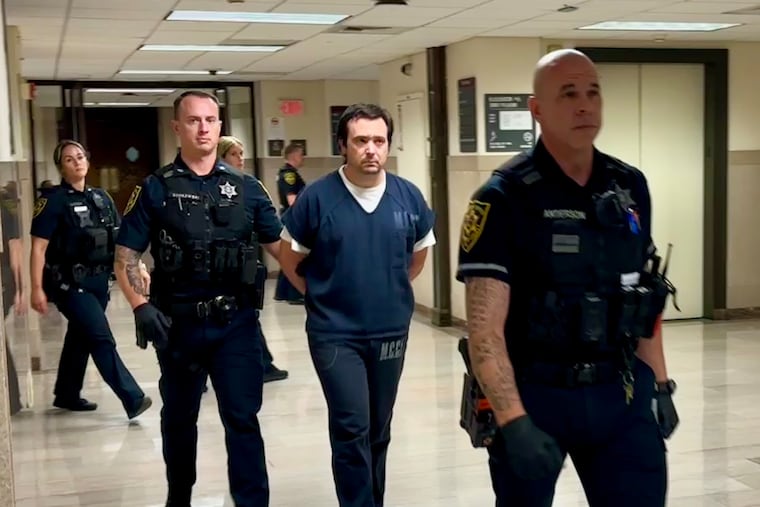
The notice, filed Wednesday in Philadelphia Common Pleas Court, seeks to insert the attorney general’s office into the case of Marc Brittingham, Rasheed Turner, and Jermal Shuler, whose convictions in a 1997 killing were vacated in May after prosecutors and defense attorneys said key evidence presented at their trial was unreliable.
As a result, Brittingham, Turner, and Shuler were freed from prison after 28 years.
But last week, the Pennsylvania Supreme Court said in a forceful ruling that District Attorney Larry Krasner’s office had displayed a pattern of misleading judges while seeking to overturn murder convictions. Moving forward, the justices said, the state attorney general’s office should be given the opportunity to review such cases before a judge can decide whether to grant relief.
» READ MORE: Forceful Pa. Supreme Court ruling constrains one of DA Larry Krasner’s signature initiatives
The filings raise a procedural question at the heart of the new ruling. The Supreme Court’s decision requires judges to notify the attorney general and gives the office “the right to intervene in the case before ruling on the concession.” But in this case, that moment had already come and gone; the judge had accepted the district attorney’s position and overturned the convictions.
What may have allowed the attorney general back in was timing: The 30-day window to appeal the decision had not closed yet. The office filed its notice of intervention and an appeal on day 29.
Krasner, in a brief phone call Wednesday, said, “I hope the public will watch this case carefully.”
“I hope they will watch what our attorney general’s office stands for and what the district attorney’s office stands for,” he said. “Stay tuned. It’s going to tell us a lot about what’s really going on.”
Deputy Attorney General Hugh Burns did not say in court documents how or why the office believed it had authority to intervene in this case, saying only that it was taking the action in response to the state Supreme Court’s order from last week.
A spokesperson for the office declined to comment.
Wednesday’s filing seeks to reopen a case in which many of the facts underlying the district attorney’s decision to join defense lawyers in seeking to vacate the convictions remain obscured by extensive redactions in court filings.
Prosecutors and defense attorneys said the case was undermined by newly uncovered information about the work of Bennett Preston, a former assistant medical examiner whose testimony helped establish the prosecution’s timeline of Essie Mae Thomas’ death.
Thomas, 73, was found stabbed to death inside her Northwest Philadelphia home in November 1997. A jury convicted Brittingham, Turner, and Shuler the following year, after hearing testimony from a neighbor who placed them at the home and from Preston, who linked Thomas’ time of death to the witness’ account. Nearly three decades later, Krasner’s prosecutors said that the testimony of the witness and Preston was questionable, and that disciplinary action had been taken against Preston.
The details of those disciplinary actions, however, were redacted from filings.
Officials with the district attorney’s office have said that the discovery of previously unknown disciplinary action involving Preston helped prompt the reinvestigation. But prosecutors have declined to publicly detail much of that information, and court records filed in the case concealed significant portions of the evidence that led them to conclude the convictions could no longer stand.
When Common Pleas Court Judge Jennifer Schultz vacated the convictions in May, she found that the newly uncovered evidence would likely have changed the outcome of the trial. Prosecutors then withdrew the charges, ending the case and allowing the men to walk free.
Jules Epstein, a criminal law professor at Temple University, said “this is unknown territory.” Because a court order is not final for 30 days, he said, the office could have a right to appeal.
He pointed to comments from the attorney general’s office this week in which it said it was still working out a process for how and when to intervene in cases.
“What disturbs me is did they actually look at the merits of this decision? Or did they just knee jerk and say, ‘It’s Krasner, we’re going to challenge it’?”
Marissa Boyers Bluestine, assistant director of the Quattrone Center for the Fair Administration of Justice at the University of Pennsylvania‘s law school, said the language of the high court’s order did not appear to leave room for retroactivity.
Bluestine, who worked on Brittingham, Turner, and Shuler’s case in her previous role leading the Pennsylvania Innocence Project, said it was also curious that the attorney general’s office was involving itself without the judge’s invitation.
“They’re saying that they are intervening, not requesting permission to intervene, which is an interesting way to put it,” she said.