He took part in 60 carjackings and two murders in Philly. Then he testified about it all at a federal trial.
Jonathan Akubu's harrowing testimony served as a key part of a two-month trial in which five of his former coconspirators were found guilty of federal crimes.
As soon as the man who made counterfeit keys for Jonathan Akubu became a liability, Akubu decided he had to die.
The key maker, Aiah Gbessay, had unwittingly left his fingerprints inside a car that Akubu helped steal. And police had recovered the car after they found its 60-year-old owner shot dead in a Northeast Philadelphia driveway — a killing that Akubu and his crew committed while trying to take the man’s Toyota.
Fearing that police might soon approach Gbessay — and worried that Gbessay would give him up — Akubu asked him to meet in Southwest Philadelphia.
When Gbessay pulled up in a white van, Akubu testified in federal court this month, he didn’t even bother to say hello.
“I told him I was sorry,” Akubu said. “Before he responded, I fired the first shot.”
Akubu fired at Gbessay repeatedly — even reloading his gun after it jammed to continue blasting away.
Thinking Gbessay was dead, Akubu went to steal the van. But he felt his victim’s hand grab his ankle.
“Then I shot him again,” he said, “until he stopped moving.”
Akubu’s harrowing testimony, delivered in a monotone and without any visible emotion, was central to a two-month trial that concluded Thursday in federal court — one in which five of his former coconspirators were found guilty by a jury of crimes including murder, carjacking, and weapons offenses.
Over the course of about four months beginning in 2021, prosecutors said, the men committed about 60 carjackings and two homicides across the region. And after stealing people’s cars at gunpoint, evidence showed, the men would sell the cars to people who shipped them to be resold in Africa.
Authorities presented a host of evidence in the case, including cellphone records, text messages, surveillance videos, GPS reports, and testimony from law enforcement officers and carjacking victims. Because the trial covered so many incidents, prosecutors divided them into groups and labeled them with letters, from A through N.
Akubu pleaded guilty before trial and served as the case’s star witness. He spent more than a day on the stand, displaying a striking memory of his crime rampage and recounting carjackings — which he called missions — in chilling detail.
There was a carjacking in the parking lot of a Little Caesar’s in Elmwood, where he and his coconspirators managed to steal both a Range Rover and a Lexus.
There was a botched attempt to steal a car on Aramingo Avenue in Bridesburg, where Akubu fired a gun in the air, spooking the driver and causing her to run over a curb.
And there was the time a driver got out of his car in Southwest Philadelphia and ran behind a tree — leading Akubu to shoot him in the shoulder.
“We kinda stared at each other for a little bit,” Akubu said. “And he kinda moved, and I shot him.”
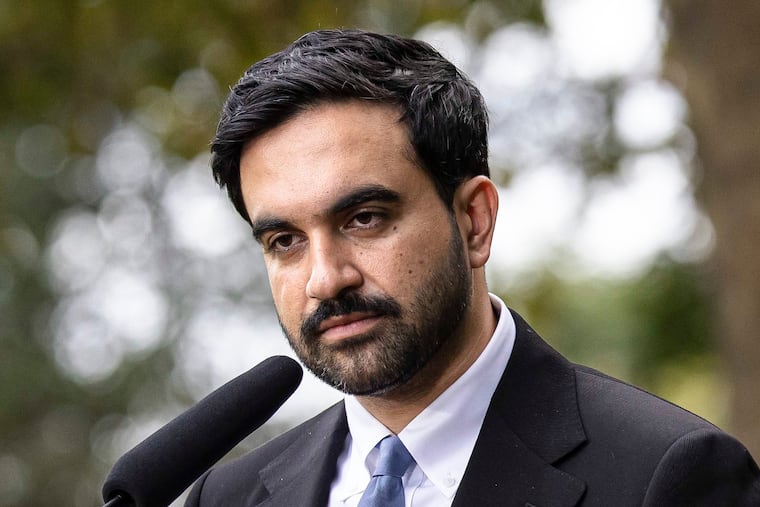
U.S Attorney David Metcalf said after the verdict that the case was perhaps the largest carjacking ring ever prosecuted by the Department of Justice.
“This was a case of [an] unimaginable scale of dread and destruction,” he said.
Akubu, 32, said that as he was committing his crimes, he didn’t care about the terror he was inflicting on others. And he admitted that he was testifying only to try reduce his punishment to something other than a life sentence.
He realizes the gravity of his actions, he said.
Still, he said that only when prompted. And he summed it up in just three words:
“It’s horrible, yes.”
‘Hunting’ for cars
The crime spree began in the fall of 2021, as carjackings were in the midst of a startling spike in Philadelphia and across the country.
Night after night, Akubu said, he would get together with a mix of his five coconspirators: Mikal McCracken, Amin Muse, Aleem Abdul-Hakim, Dean Fosque, and Kavon Coleman.
The men would hop into a car, then drive around searching for vehicles to steal — mostly Toyotas or Range Rovers, which typically operated with key fobs and could be stolen only if the keys were taken from a driver.
The men brought guns and gloves and used a police scanner to listen for potential trouble, Akubu said. And once they succeeded in one crime, he said, that encouraged them to commit another.
“Keep hunting,” he said.
Their enterprise had its own lingo: Stolen cars were “johnny boys,” a “ducky” was a place to stash a vehicle.
One time they stole from a rental car location. Occasionally they’d put tracking devices on cars and go back to steal them later. And sometimes, when they confronted drivers, they also demanded wallets or phones, then sought to withdraw money from people’s bank accounts or smartphone apps.
But mostly, Akubu said, the carjackings followed a familiar pattern: The men would drive until they spotted a desirable car, then they’d follow it and ambush the driver.
The motivation was simple, he said: Money. He knew buyers who would give him cash for the cars and ship them overseas.
Akubu wasn’t specific about how much he made from each theft. At first, he said, the thefts went off without a hitch.
Then their crimes escalated to murder.
A fatal shooting
It was Feb. 6, 2022. Akubu said he went out with McCraken, Muse, and Abdul-Hakim to drive around and look for cars.
They spotted a Toyota Rav4 on Roosevelt Boulevard, he said, then followed it until the driver parked on the 2100 block of Afton Street in Rhawnhurst.
Akubu said he stayed in his car while the others got out to steal the Toyota. But when they approached the SUV, its owner, George Briscella, fought back.
The men shot Briscella, a 60-year-old Marine Corps veteran who had been on his way to visit his mother. They left him on the ground and drove off in his SUV.
They took the vehicle to a stash location, then noticed that they didn’t have its key. In the panicked moments after shooting Briscella, they left the key behind but were able to drive away because he had never turned the car off.
To resell the car, Akubu said, they needed a key. So he called Gbessay, a locksmith, to create a new one.
A week later, as police continued to investigate Briscella’s shooting death, a story broke on the news: Officers had recovered his SUV.
Killing a potential witness
The crew was concerned, Akubu said. They wondered whether Gbessay — who accessed the car to create the key — had ever been arrested, knowing that if he had, police would have his fingerprints on file.
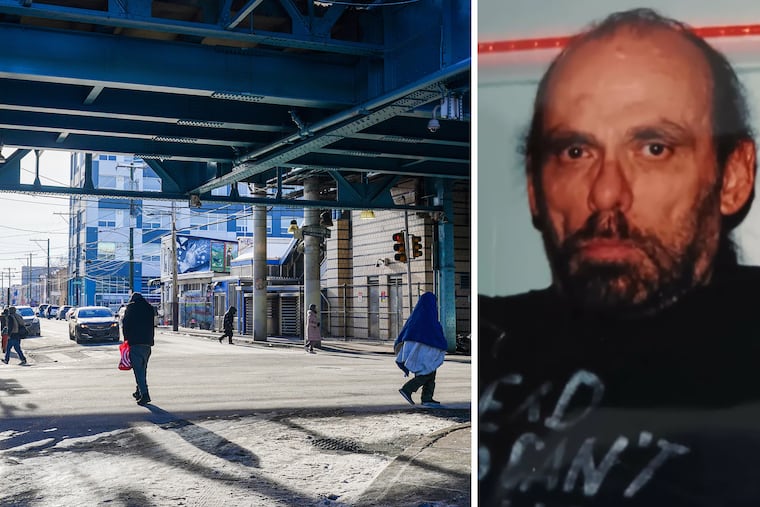
Gbessay, an immigrant from Sierra Leone who had a wife and son, was not an active member of the conspiracy; he ran a legitimate locksmith business, and Akubu hired him only occasionally to print or program keys.
Still, in this instance, Akubu said, “my mind was made up on what needed to be done.”
“I was going to carry out the homicide on ... the key-maker.”
After luring Gbessay to his death on the 8100 block of Grovers Avenue, Akubu stole Gbessay’s van and set it on fire.
Then he went home, he said, and burned his clothes as well.
But less than a week later, police arrested him in connection with the deaths of Gbessay and Briscella. He was charged with murder and held without bail.
Unraveling the conspiracy
Soon after being taken into custody, Akubu started talking.
During several interviews with police and prosecutors, he not only admitted to his role in the killings, but also detailed a staggering array of carjackings, shootings, and robberies that he and his associates had committed.
He did so in unusual detail, authorities said, recalling where incidents occurred, who participated, and how exactly the incidents unfolded.
Most of what he said was later corroborated with other evidence, including cellphones connected to his coconspirators. Authorities later found at least one of the stolen cars in a shipping container — corroborating the seemingly-fantastical notion that the vehicles were being sent overseas.
Still, Akubu sometimes lied, he later acknowledged, or omitted details that might implicate him.
During the trial, defense attorneys sought to highlight those inconsistencies, casting him as a murderous liar who would tell authorities whatever they wanted to hear.
They also emphasized a bizarre fact: Near the beginning of the conspiracy, Akubu reached out to the FBI.
During a call to a recorded tip line in September 2021, Akubu said he could provide information about a group of men stealing cars and shipping them to Africa.
But as the call went on, Akubu balked at questions seeking specifics, including a request to provide his full name. And within a few weeks, evidence showed, Akubu was fully ensconced in the conspiracy, committing the same crimes he had been describing on the call to the tip line.
Akubu said he made the call because “I was trying to see if I could work for the bureau.”
Defense attorneys said that revealed Akubu’s self-serving and duplicitous nature — an inclination to try and protect himself, even as he was committing the same crimes he was purporting to want to expose.
“When Mr. Akubu’s mouth is moving, he’s lying,” said William J. Brennan, an attorney for Abdul-Hakim.
Assistant U.S. Attorneys Joseph A. LaBar and Katherine Shulman told jurors that two things could be true at once: Akubu was a “rotten guy,” as LaBar put it, but was also candid about the “horrible, horrible” things he and his associates did.
Long prison terms
Akubu’s five coconspirators were indicted in 2024, about two years after he was arrested. After being found guilty, all are now likely to spend decades — if not the rest of their lives — behind bars.
Metcalf, the U.S. attorney, said: “They’re not getting out.”
Akubu, as part of his plea deal, will be sentenced to at least 35 years in prison, though it could be much more. If he is ever released, he will also likely be deported to the Democratic Republic of the Congo, where he was born and lived until his family sought asylum in the United States 15 years ago.
Relatives of Briscella and Gbessay declined to comment after the verdict.
U.S. District Judge John F. Murphy will sentence Akubu and his codefendants in the coming months.