Three weeks after drug raids on a Kensington block, Philly police are continuing to restrict access to the entire street
Philly police officers are checking identification of anyone who wants to access the block in Kensington.

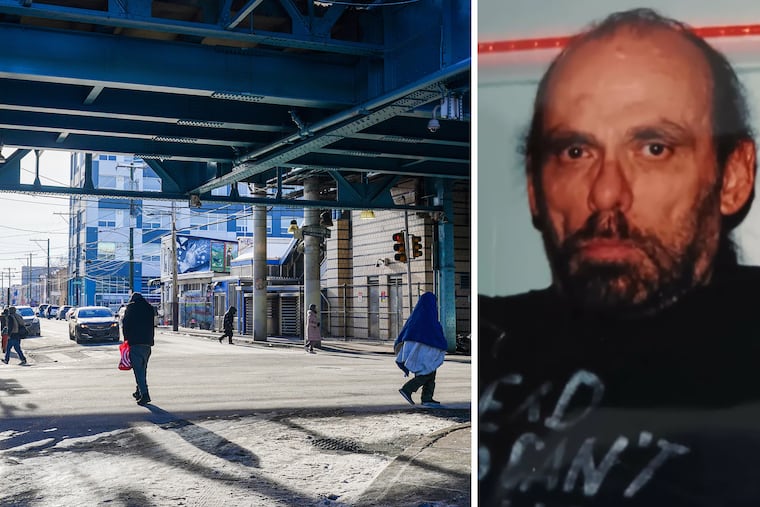
Three weeks after Philadelphia police and federal agents raided Kensington’s Weymouth Street and arrested more than 30 people in what they called the takedown of a decade-old drug-trafficking gang, residents and neighbors are still feeling the constant presence of law enforcement.
That’s because Philadelphia police officers have since been stationed at either end of the narrow block 24 hours a day — asking anyone who wants to pass through to show identification, and declining to let people walk or drive through if they don’t live there.
Deputy Police Commissioner Pedro Rosario said the strategy was part of an attempt to ensure that the block — which had long been a hub of open-air drug dealing — not fall back under control of a new or rival drug organization. Officials who announced the takedown effort last month, including FBI Director Kash Patel, said the case was an attempt to “dismantle” the gang that controlled the 3100 block of Weymouth, and Rosario said he wanted to ensure the results of that investigation had time to take root.
Although limiting public access to a street is unusual, Rosario said that the neighbors he has heard from have been supportive, and that he viewed the effort as an attempt “to stabilize the neighborhood.” Mayor Cherelle L. Parker’s administration has made addressing crime and living conditions in Kensington a priority, employing a variety of sometimes-controversial strategies to combat issues including drug dealing and homelessness.
“This is the department just trying to give the neighborhood a chance to catch its breath,” Rosario said. “I want the power of that investigation to linger. That way, people can really take into account, ‘Should I be doing [drug] business here in Kensington, or is it finally changing?’”
A spokesperson for Parker referred all comments to the police department.
City Councilmember Quetcy Lozada, who represents the area, said that she, too, has received primarily positive feedback from residents about the situation, and that she viewed the heavy police presence as a way to help ensure the block be given a chance to move forward.
“Everyone knows when one operation is broken down and moved out of the way, there’s always someone looking to move in and replace that,” Lozada said. “I think it’s very important for the police to stay around and for the new norm to stay successful.”
Inquirer reporters visited the block on three days this week seeking to interview residents about the aftermath of the raids, but were denied access by officers sitting in patrol cars at either end of the street.
In phone interviews conducted afterward, three residents said they were either indifferent about, or fine with, the ongoing restrictions.
“I’m either going to be for trying to fix this problem or against it,” said one resident, who requested anonymity to discuss a sensitive issue affecting his block. “And if this is what [police] have to do right now, I think I’d rather have the police there than drug [users] running up and down the street.”
Another resident, who also asked not to be named, said he believed police were “keeping people safe.”
“People appreciate it, that we have somebody doing something about it,” he said.
Jimmy Townsend disagreed. The 51-year-old said that he has lived on the block for three years, and that being questioned on the way to his house amounted to “harassment” and a way to impose consequences on an entire block for the actions of others.
“God forbid I forget my mail or ID, I might get stopped from coming to my own house,” Townsend said. “I was not part of that crime.”
Witold J. Walczak, legal director for the American Civil Liberties Union of Pennsylvania, said government agencies generally have “a significant burden” to justify prohibiting access to areas like public streets or sidewalks. And while police can — and often do — limit access to public places in the middle of major operations, Walczak said he was unsure why police in this instance felt the need to place such restrictions on the block if officers were also stationed there in patrol cars.
“If the police are there anyway, I don’t understand how [not] letting people in and out of the area is going to advance their interests,” he said. “The fact that they’re there should do that without restricting access.”
Rosario, the deputy commissioner, said any time police place a heavy emphasis on one patrol area, they will scale back their presence over time as conditions improve. In this case, he said, “I want to be strategic in how we do that.”
In the meantime, he said, police were continuing to allow delivery trucks and other essential vehicles to access the block, even as officers sought to divert most passersby elsewhere.
“This is us really being deliberate,” he said, “to let this sink in for a second.”