It was a bad weekend for NFL officials, including one missed call that impacted the Eagles
“It’s not really hard — that’s pass interference,” NBC rules analyst and former official Terry McAulay said during the Ravens-Patriots game.
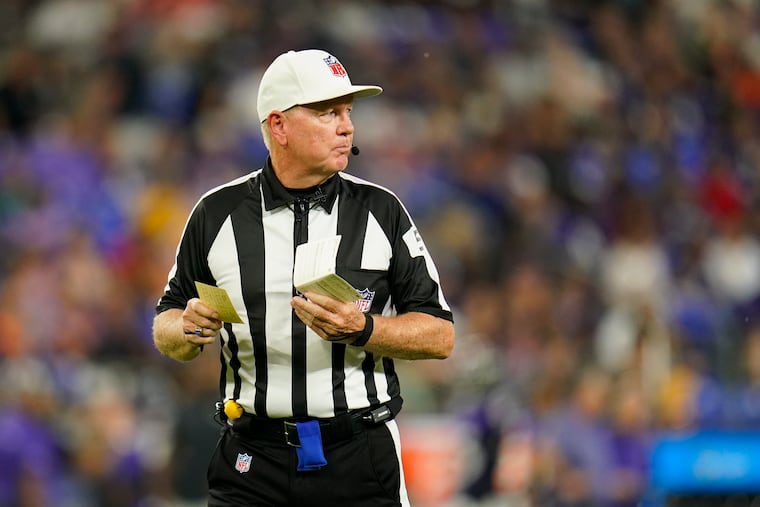
It’s easy to criticize the refs, but this weekend NFL officials really gave fans and announcers a few things to complain about.
One was a key late play during the New England Patriots’ win over the Baltimore Ravens Sunday night.
With a little more than three minutes remaining, Ravens cornerback Marlon Humphrey appeared to outright tackle Patriots wide receiver Kayshon Boutte on a deep pass. Despite an official watching just yards away, no flags were thrown, to the surprise of everyone on NBC’s Sunday Night Football broadcast.
“It’s not really hard — that’s pass interference,” NBC rules analyst and former official Terry McAulay said.
Earlier on Sunday, during the Carolina Panthers’ win against the Tampa Bay Buccaneers, officials missed what appeared to be a blatant fourth-down penalty.
With a little under five minutes remaining and the game tied, Panthers defender Princely Umanmielen hit punter Riley Dixon after he kicked the ball, which should have resulted in a penalty and a first down. Instead, officials called holding on the Buccaneers and missed the running-into-the-kicker penalty altogether.
“I think when you fixate watching the hold, maybe you miss that contact on the punter,” Fox rules analyst and former official Mike Pereria said during the broadcast. “It is contact to the body. I would have had running into the kicker.”
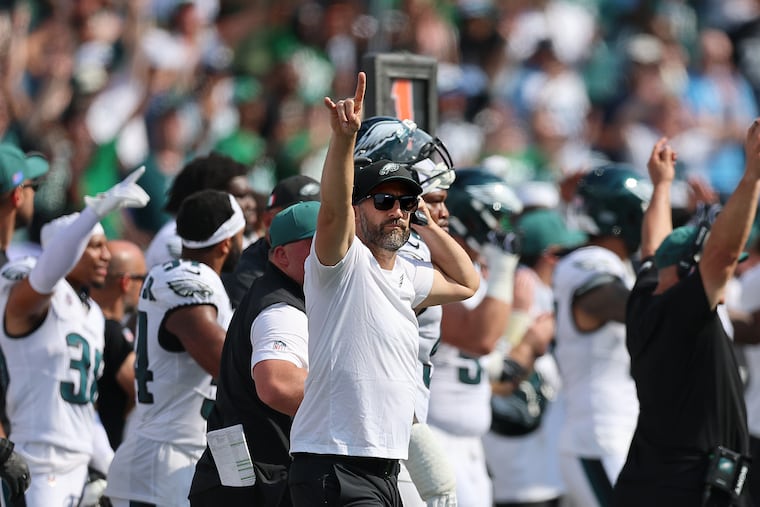
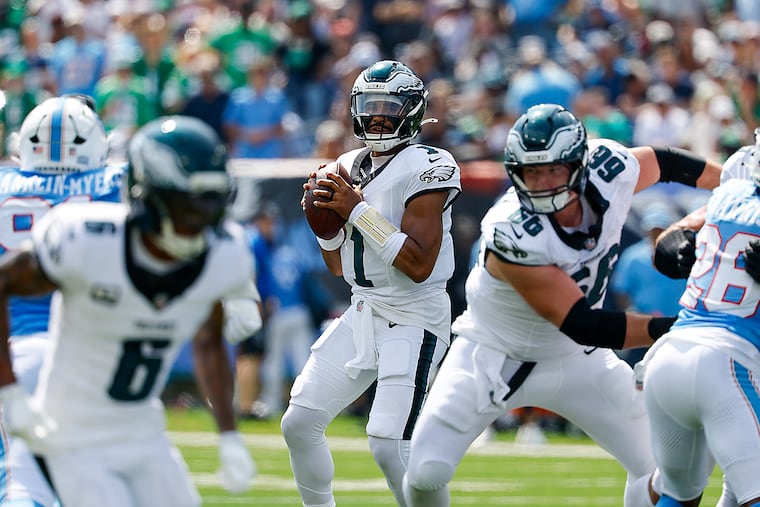
That missed call proved pivotal, as the Panthers marched down the field and kicked what ultimately became the game-winning field goal. The Panthers’ win also prevented the Eagles from clinching the No. 3 seed or better in the NFC playoffs.
Then there’s the controversial ending of the Pittsburgh Steelers-Detroit Lions game, in which Lions receiver Amon-Ra St. Brown lateraled to quarterback Jared Goff for what would have been the game-winning touchdown.
On the play, St. Brown was called for pass interference, negating the touchdown. But both head official Carl Cheffers and CBS announcers Jim Nantz and Tony Romo did a poor job explaining why the Lions didn’t get another play
“By rule, that penalty is not enforced and there is no replay. The game is over,” Cheffers said.
Lions almost just had the craziest walk-off touchdown in recent memory
— Jomboy Media (@JomboyMedia) December 22, 2025
Instead the referees called an offensive pass inference on Amon-Ra St. Brown and the Steelers survive pic.twitter.com/KbHFFsnRlr
NFL rules stipulate if the offense commits a foul with no time remaining, “there shall be no extension of the period. If the foul occurs on the last play of the half, a score by the offense is not counted.”
Goff appeared to cross the goal line with no time on the clock, but the play wasn’t reviewable. If Goff had run into the end zone with time remaining, the Lions could have been given another shot.
After the game, Cheffers called it “a pretty complex play.”
“We have the original player who had the ball lose possession of the ball. So, we had to decide if that was a fumble or a backward pass because of course we have restrictions on the recovery of a fumble inside of two minutes,” Cheffers told pool reporter Nolan Bianch. “We ruled that it was a backward pass, so the recovering player was able to advance it and that recovering player advanced it for a touchdown.”
“We had to rule on that and then because of the offensive pass interference, it negates the touchdown. Because it is an offensive foul, we did not extend the half. Therefore, there is no score and there is no replay of the down,” Cheffers added. “That’s the way the rule is written.”
It also wasn’t the only controversial call to end the game. With 22 seconds left, Goff hit St. Brown on a one-yard touchdown pass, which would have won the game. But officials called pass interference on Lions receiver Isaac TeSlaa, negating the go-ahead score.
“The reporting official on that play told me that the offending player picked one of the defenders, creating an opportunity for the offensive player to make the catch,” Cheffers said.