Ranking the 2026 NFL draft position groups, and what that means for the Eagles
The Eagles' needs are well-known, but how do they match up with the available talent in this draft?
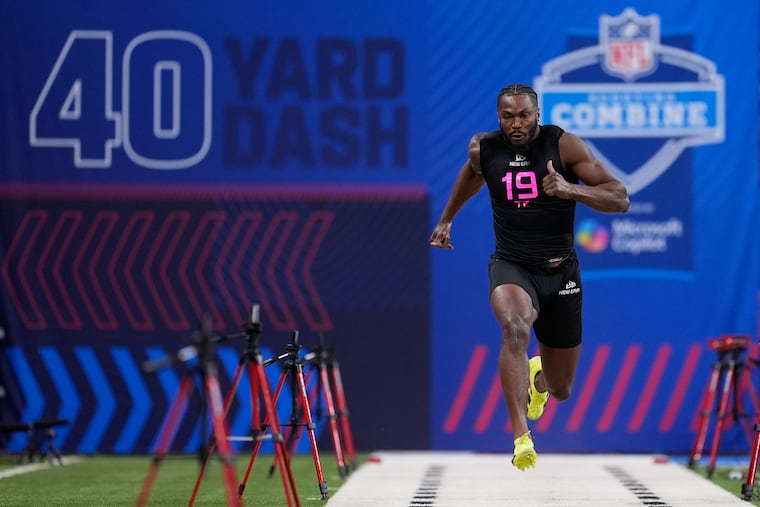
Next week, 319 college football prospects will descend on Indianapolis for the annual NFL scouting combine, where they will be tested physically, mentally, and medically, interviewed by NFL front office personnel, and will speak with hundreds of media members.
This latest step in the 2026 NFL draft process allows teams to home in on the next crop of players that will fill their franchises. All 32 teams will have 45 “formal interviews,” which last just under 20 minutes, can include watching film or any questions teams want to ask a prospect, and typically take place in the Lucas Oil Stadium suites.
The first direct touch point with prospects happened at last month’s Shrine and Senior Bowl games. NFL teams will utilize this next piece of the puzzle to identify which prospects match their team needs.
Here is how we’re ranking the combine position groups from strongest to weakest — and how they could help the Eagles address some roster needs.
1. Cornerbacks
It’s a good year to add a secondary player, whether they play outside corner, nickel, or safety. But outside and boundary corners, specifically, will be plentiful from the first round to Day 3 of the draft.
This is a position the Eagles could address early, but not one that will likely be prioritized in the first round. Among the early projected draft picks at the position are LSU’s Mansoor Delane, Tennessee’s Jermod McCoy and Colton Hood, Clemson’s Avieon Terrell, and South Carolina’s Brandon Cisse.
Finding a corner to develop into a starter opposite of Quinyon Mitchell — assuming they don’t bring back Adoree’ Jackson, who is set to be a free agent — should be among the Eagles’ objectives. Keep an eye on San Diego State’s Chris Johnson, Ohio State’s Davison Igbinosun, Arkansas’ Julian Neal, Georgia’s Daylen Everette, and Texas A&M’s Will Lee as players who could interest the Eagles.
2. Wide receivers
There is always a healthy stable of receivers entering the draft, and 2026 is no different. The Eagles, of course, won’t be drafting a wide receiver early — unless they trade A.J. Brown before the draft — but they will need to add more depth to the room regardless.
The top of the class is led by Ohio State’s Carnell Tate, Arizona State’s Jordyn Tyson, and USC’s Makai Lemon, but the receivers heading to the combine feature several skill sets.
The Eagles’ WR3 spot is a potential question mark heading into next season with Jahan Dotson heading into free agency. Players like Ole Miss’ Harrison Wallace, Baylor’s Josh Cameron, Georgia Tech’s Eric Rivers, and Clemson’s Antonio Williams are players to keep an eye on that can occupy either a slot role or have moved around the formation in their collegiate careers and could fit in a depth role for the Eagles.
3. Edge rushers
There is an abundance of edge rushers worth drafting in this class, with Miami’s Rueben Bain, Texas Tech’s David Bailey, and Auburn’s Keldric Faulk as the top names. With Jaelan Phillips and Azeez Ojulari set to become free agents and Brandon Graham’s status unknown for 2026, the Eagles’ edge rusher room desperately needs more depth.
The versatile edge rusher types might interest the Eagles more in this class, though, to complement the relatively light-body types in the edge rusher room currently. Alabama’s LT Overton, Florida’s Tyreak Sapp, and Penn State’s Dani Dennis-Sutton are all players who are bigger in size and have the ability to play from three-techniques out to true pass rusher alignments.
As for developmental pass rushers, keep an eye on Michigan’s Jaishawn Barham, Western Michigan’s Nadame Tucker, and Boston College’s Quintayvious Hutchins as late Day 2 and early Day 3 options as pure pass rushers.
4. Interior D-line
As the Eagles and Seattle Seahawks proved in the last two Super Bowls, an interior pass rush presence matters a whole lot, and the NFL has a deep group of prospects to choose from in this class.
There are run stuffer types such as Texas Tech’s Lee Hunter, Ohio State’s Kayden McDonald, Iowa State’s Domonique Orange, and Georgia’s Christen Miller, and twitchy pass rushers including Clemson’s Peter Woods and Florida’s Caleb Banks.
Jalen Carter and Jordan Davis could soon get extensions from the Eagles, but adding more bodies to have a deeper rotation and talent level in the room would only help keep those players fresh. Michigan’s Rayshaun Benny, Missouri’s Chris McClellan, and Texas A&M’s Tyler Onyedim are a few Day 2 and 3 options to keep tabs on.
5. Linebackers
The Eagles linebacker room became a strength of the defense over the last few seasons and they won’t need to expend an early-round pick on one. But this class has three first-round caliber players at the position: Ohio State’s Arvell Reese and Sonny Styles and Georgia’s CJ Allen.
The Eagles could lose Nakobe Dean to free agency this offseason, but still have Jihaad Campbell and Zack Baun penciled in as starters. There are two players in this class with Philly-area ties: USC’s Eric Gentry, the former Neumann Goretti standout, and Missouri’s Josiah Trotter, the younger brother of Jeremiah Trotter Jr. Josiah Trotter and Gentry are both expected to get drafted.
6. Tight ends
Put a big circle around this group, because tight end is one of the pressing needs for the Eagles. Dallas Goedert, Grant Calcaterra, and Kylen Granson are all set to be free agents, and regardless of whether any of those players return, the room needs more talent in it.
Oregon’s Kenyon Sadiq is at the top of the class, and likely the only tight end to go in Round 1. But this class is strong on Day 2 and 3.
Ohio State’s Max Klare, NC State’s Justin Joly, Georgia’s Oscar Delp, and Baylor’s Michael Trigg are all receiving tight end prospects worth taking on Day 2. Players who can thrive in-line as blockers and have some receiving chops as well include Ohio State’s Will Kacmarek, Penn State’s Khalil Dinkins, Texas A&M’s Nate Boerkircher, and Indiana’s Riley Nowakowski, who can also play fullback.
Other later names, including Utah’s Dallen Bentley, Ole Miss’ Dae’Quan Wright, and Stanford’s Sam Roush are developmental options on Day 3 and could fill roles as second or third options in multi-tight end formations.
7. Safeties
This is a position that probably needs more attention than it generally gets, considering Reed Blankenship and Marcus Epps are soon-to-be free agents. Drew Mukuba and Sydney Brown are the only players under contract for next season who have taken significant snaps at the position.
This is a strong safety class, led by Ohio State’s Caleb Downs, who is also one of the best players in the draft class. Quinyon Mitchell’s alma mater, Toledo, has another early-round pick in Emmanuel McNeil-Warren, and there are plenty of coverage specialists such as USC’s Kamari Ramsey, LSU’s A.J. Haulcy, and Arizona’s Genesis Smith.
Since Blankenship played more near the line of scrimmage, the Eagles could be looking to pair that skill set with Mukuba, and players including Penn State’s Zakee Wheatley, Oregon’s Dillon Thieneman, and Iowa’s Xavier Nwankpa fit the bill.
8. Offensive linemen
This is the spot the Eagles need to upgrade most heading into next season, yet it’s among the weakest groups in this class in terms of starting caliber players. Still, there are players that will interest the Eagles.
The player most commonly linked to the Birds is Alabama’s Kadyn Proctor, a massive offensive lineman with unique athleticism at 6-foot-7, 366 pounds. Is he a tackle or guard? That debate could get settled at the combine next week.
» READ MORE: 2026 NFL mock draft 1.0: What will the Eagles do at No. 23?
The other top offensive linemen are Utah’s Spencer Fano and Caleb Lomu and Miami’s Francis Mauigoa. Fano and Mauigoa are also players that could move to the interior at the NFL level. Georgia’s Monroe Freeling, Arizona State’s Max Iheanachor, and Clemson’s Blake Miller are the next group of fringe first-round players who will strictly be tackles in the NFL and could serve as potential heirs to Lane Johnson whenever he retires.
As for interior offensive line, Penn State’s Olaivavega Ioane is the only true guard prospect that is Round 1 worthy. The Day 2 prospects like Texas A&M’s Chase Bisontis, Oregon’s Emmanuel Pregnon, Georgia Tech’s Keylan Rutledge, and Notre Dame’s drop-off could be players the Eagles have interest in, especially with Landon Dickerson’s uncertain future.
The overall O-line class has a steep drop-off after the starting-caliber players, so if the Eagles want one, they’ll need to draft one early.
9. Running backs
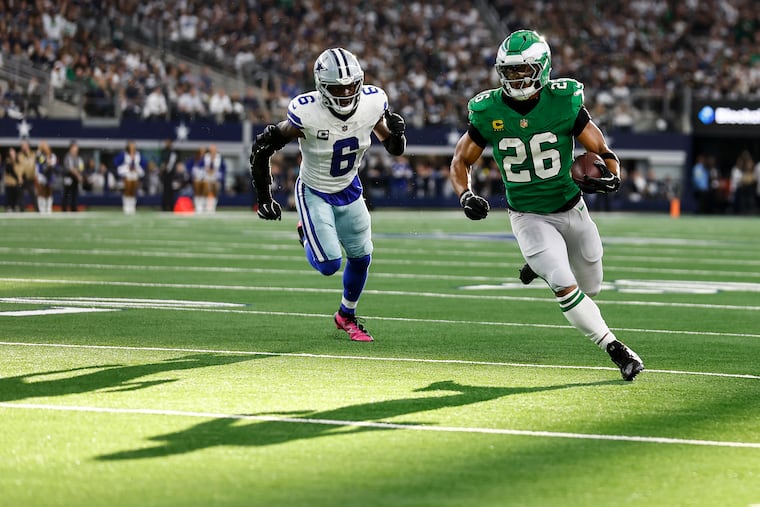
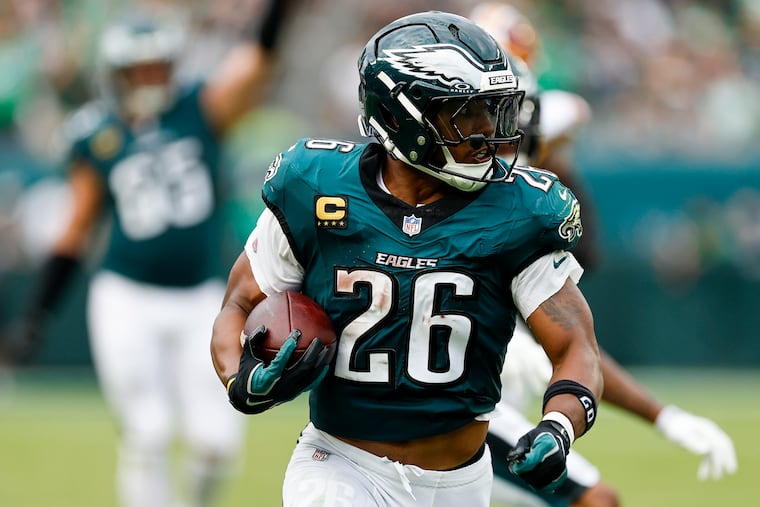
The Eagles seem set at the running back position for now with Saquon Barkley, Tank Bigsby, and Will Shipley. A quick glance at the running back invites at the combine shows a relatively limited group to pick from.
There’s only one running back right now that has first-round consideration, and that’s Notre Dame’s Jeremiyah Love. Beyond him, the next running back could wait a full one or two rounds before hearing their name called in the 2026 draft.
10. Quarterbacks
As we alluded to in the All-Star game takeaways, this is not a strong quarterback class and it’s reflected in the number of combine invites. Indiana’s Fernando Mendoza is the projected top pick, but beyond him, the class is wide open. Alabama’s Ty Simpson could go in Round 1, but the gap between the second and third quarterback taken in this class could be very wide.
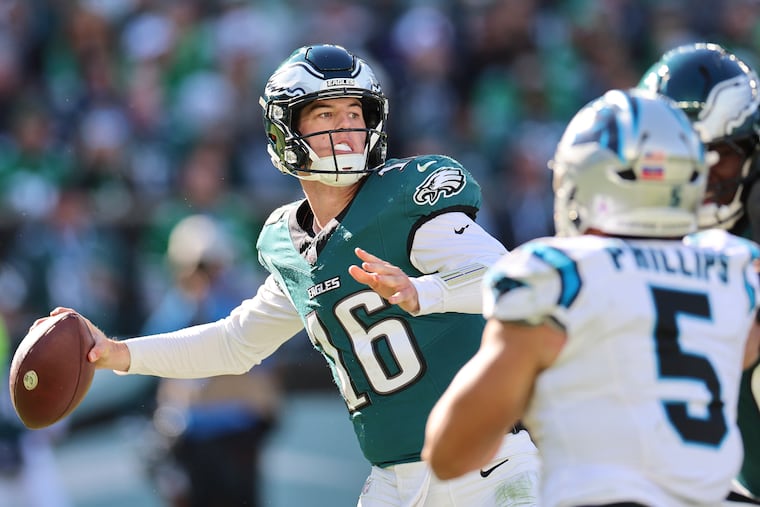
The class overall lacks starting caliber players, and the sweet spot of the class is likely between Rounds 3-6. The Eagles could draft one to develop since Sam Howell is a free agent and Tanner McKee could move on over the next year via trade or free agency.
Some players attending the combine that could make sense for the Eagles include Kansas’ Jalon Daniels, Arkansas’ Taylen Green, and Illinois’ Luke Altmyer.