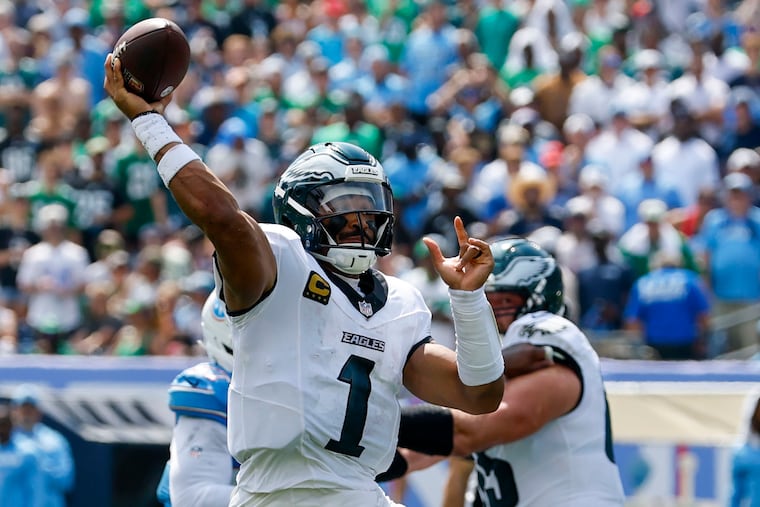
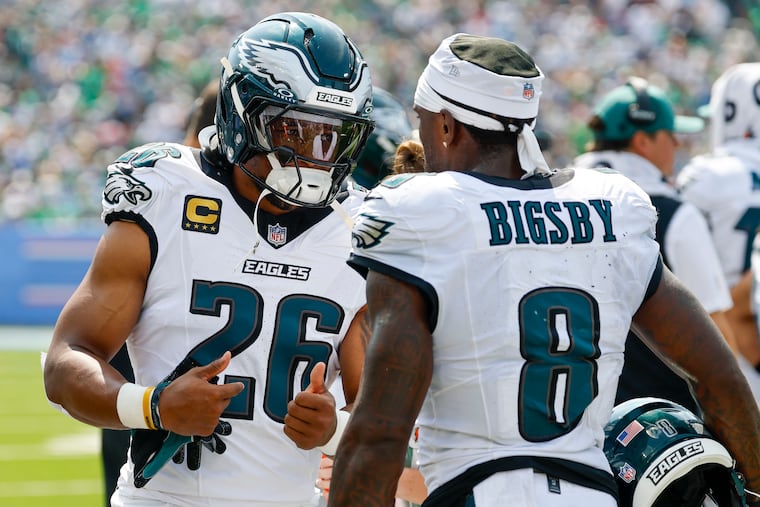
The Eagles had problems with the Tush Push against the Lions. Nick Sirianni has to adjust his coaching accordingly.
The Eagles' signature play has become something less than automatic. Nick Sirianni must be more realistic about when he can use it.

Seven hundred and twenty-four days ago, Nick Sirianni stared into a bank of TV cameras and dared the NFL — hell, dared the whole world — to stop the play that the Eagles had mastered and no one else in pro football had. It was late October 2023, and while holding a seven-point lead against the Miami Dolphins, the Eagles ran a quarterback sneak, a Tush Push, on fourth-and-1 with 10 minutes, 1 second left in regulation. That wasn’t the striking part. Neither, really, was the fact that Jalen Hurts powered forward for a first down. The striking part was that the Eagles were on their own 26-yard line, a set of circumstances that made a bold postgame assertion from Sirianni all the more memorable.


“If everybody could do it,” he said that night, “everybody would do it.”
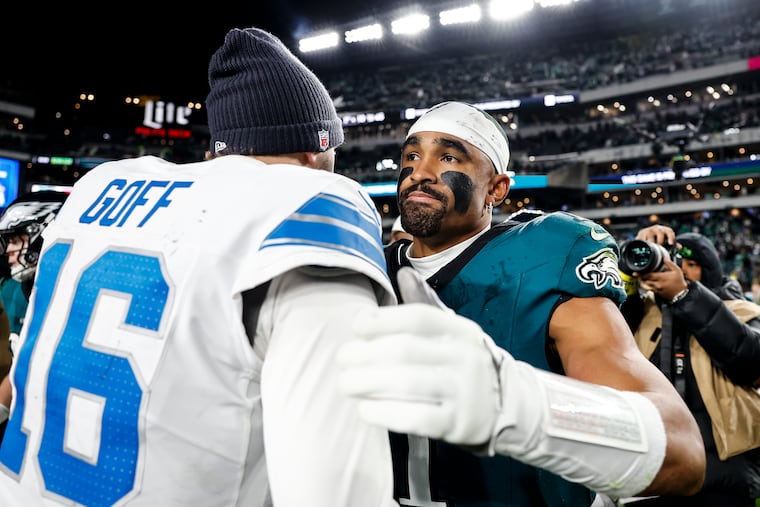
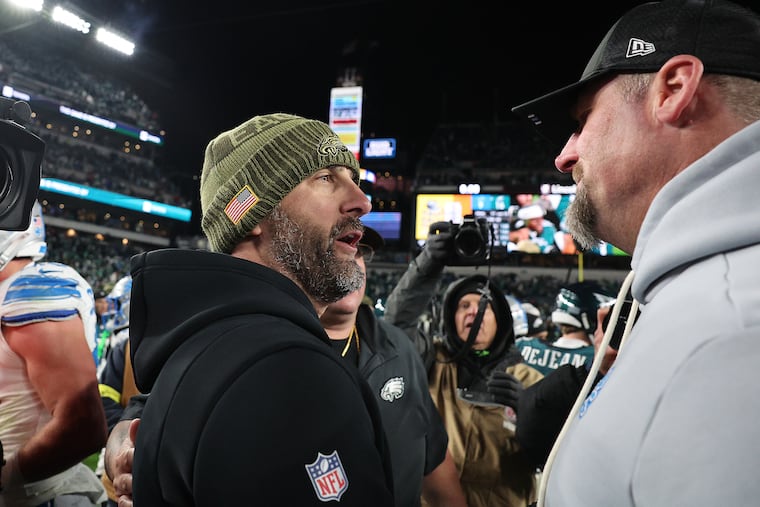
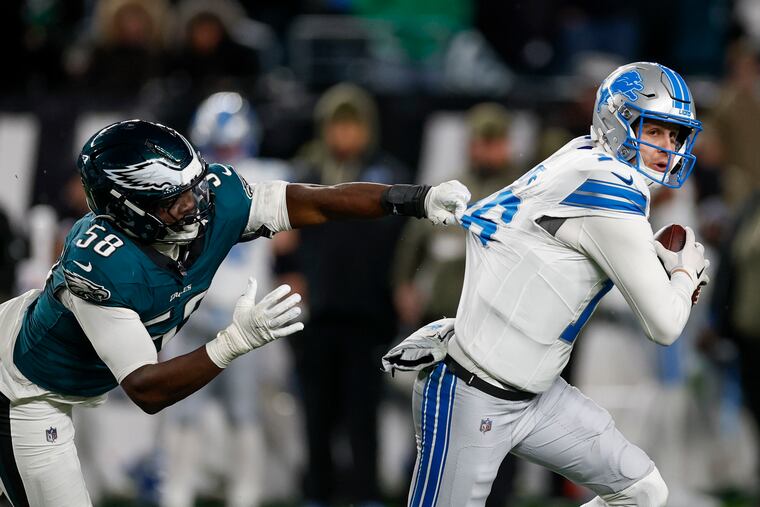
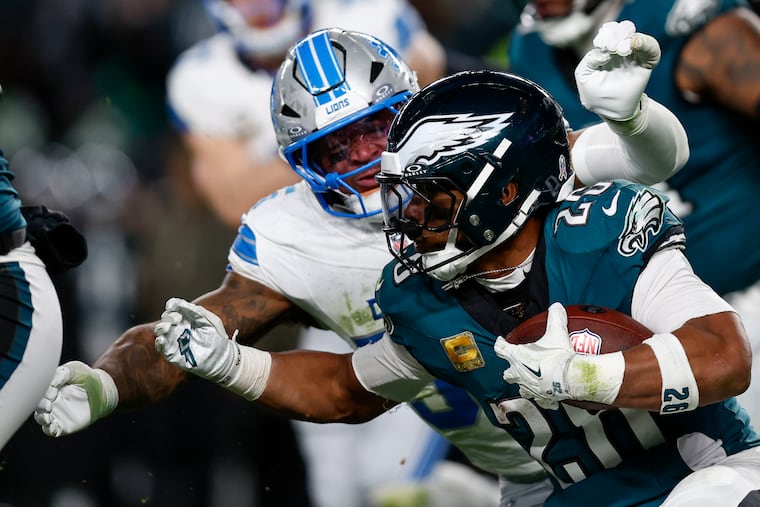
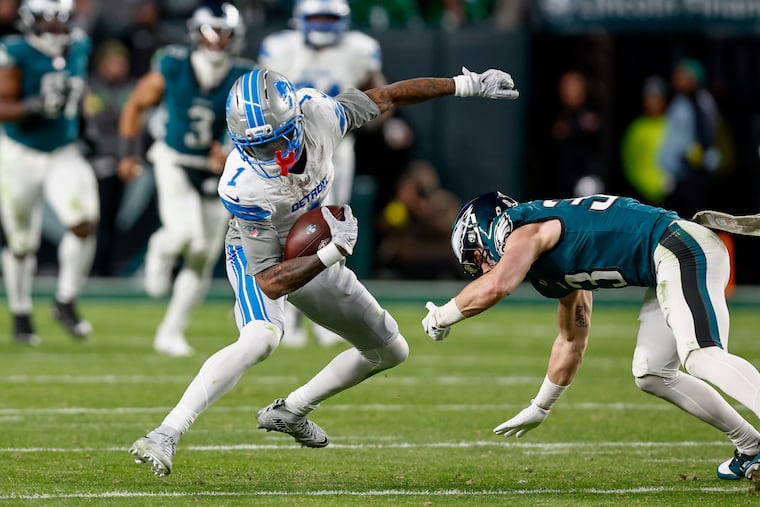
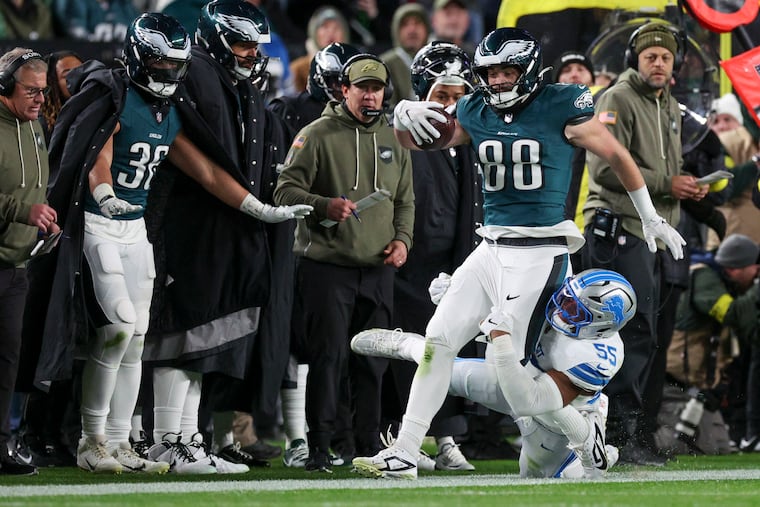
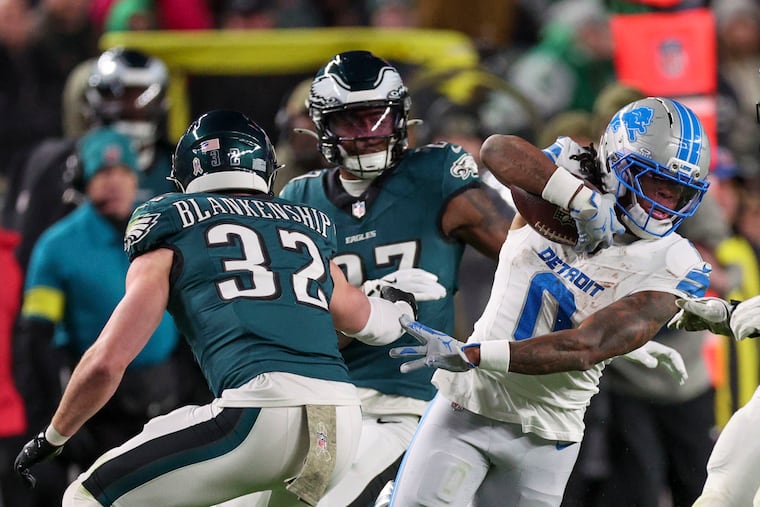
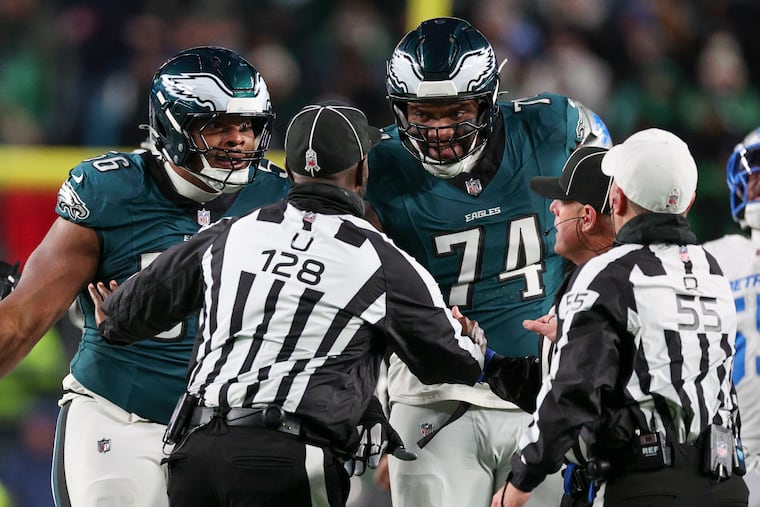
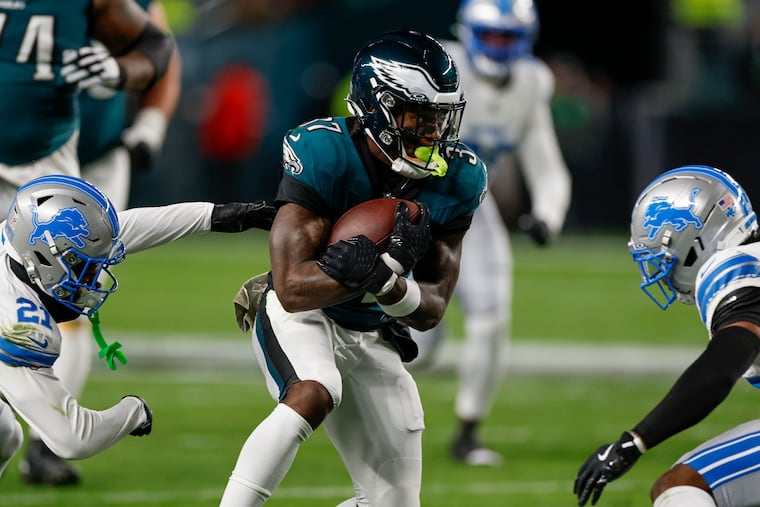
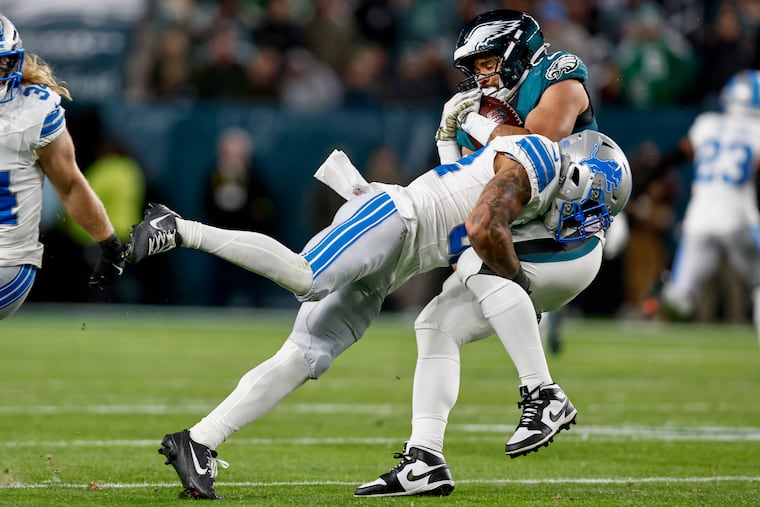
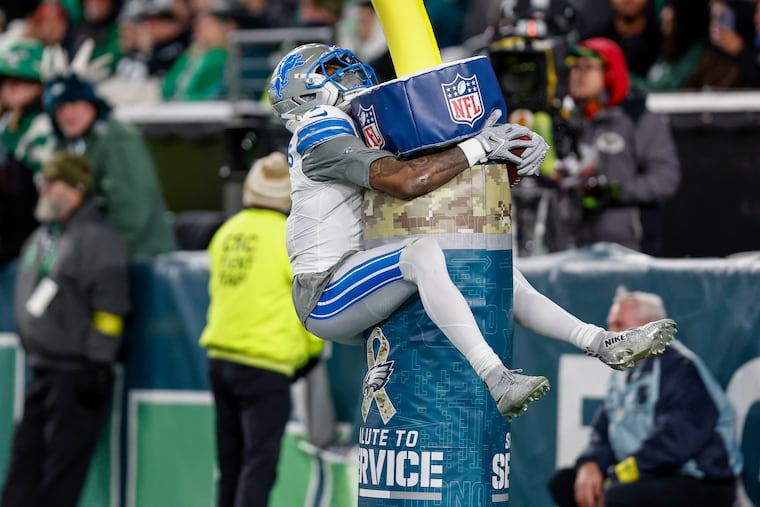
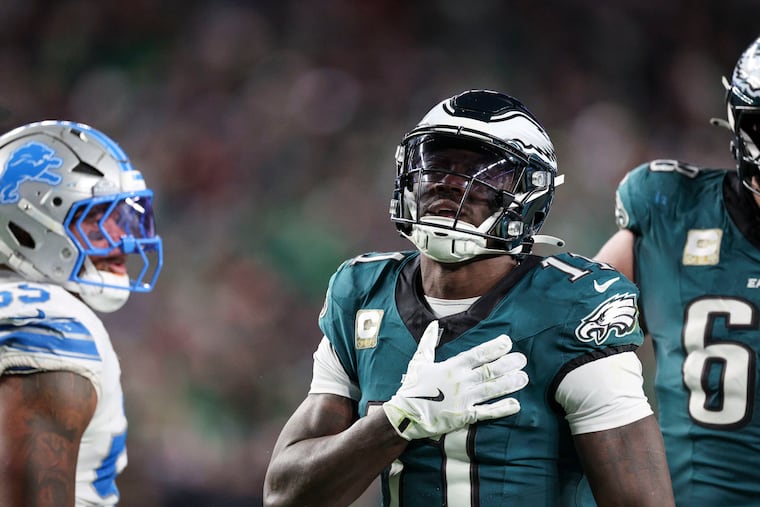
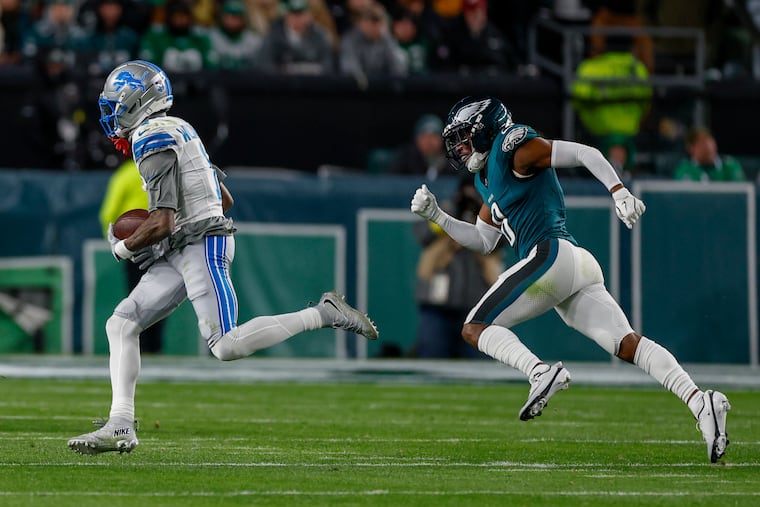
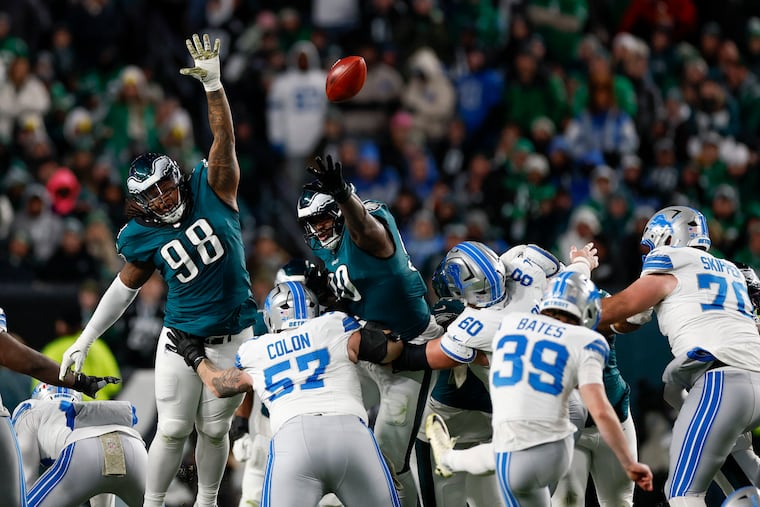
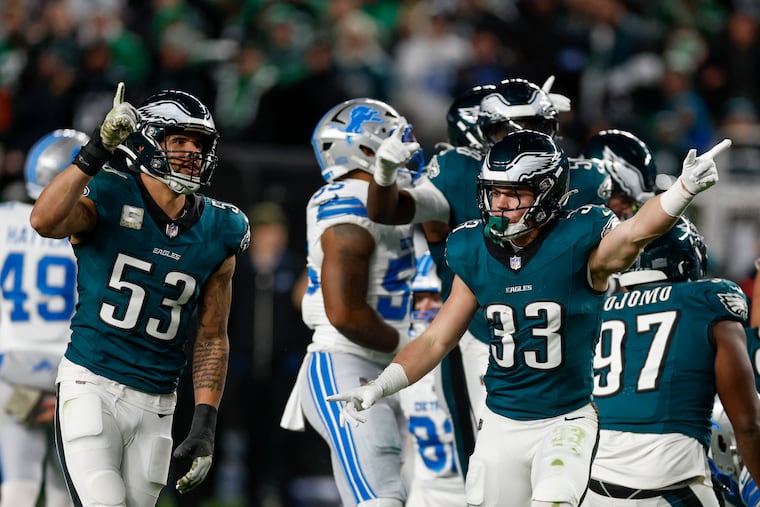
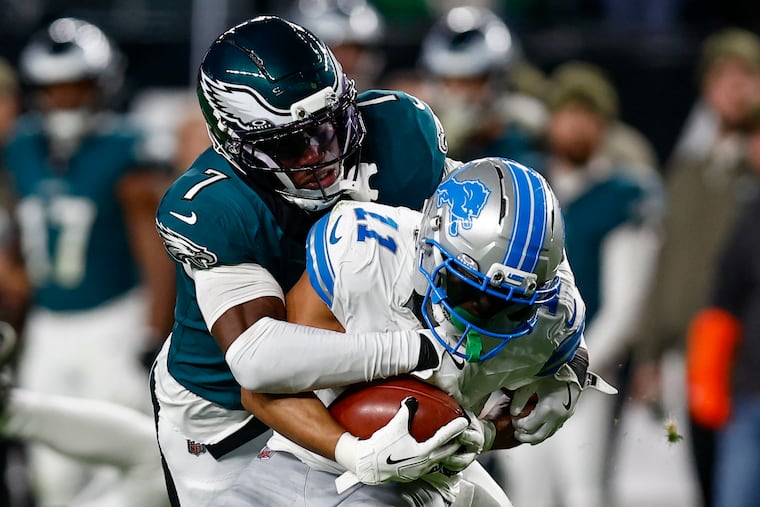
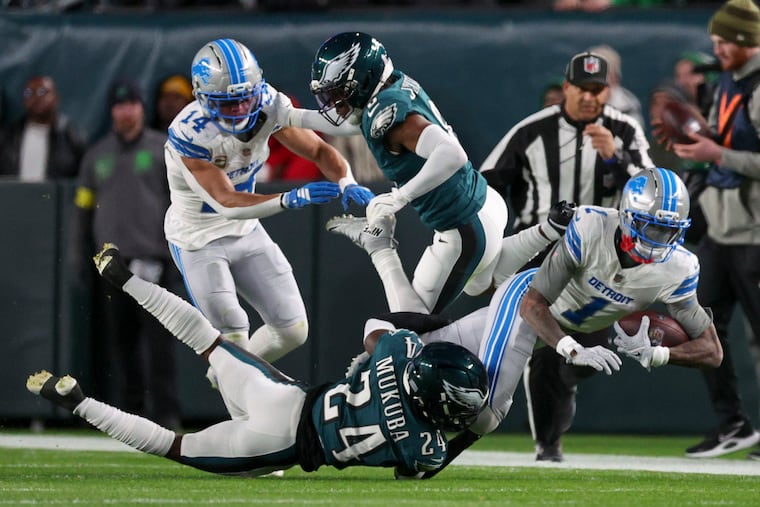
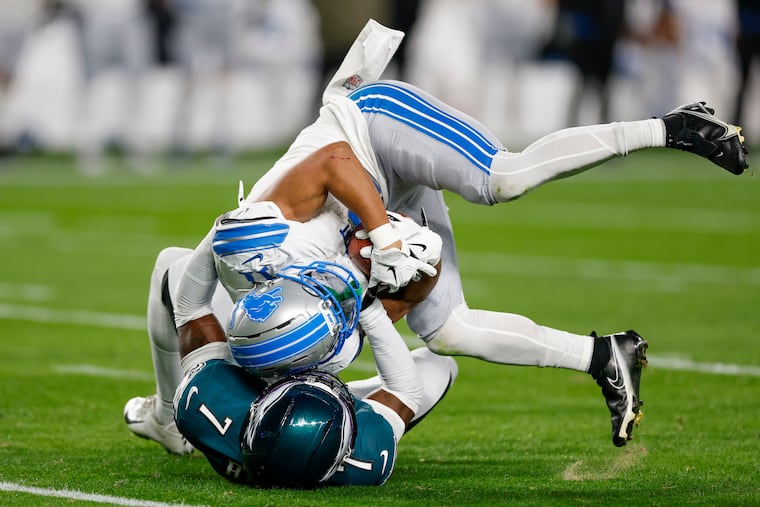
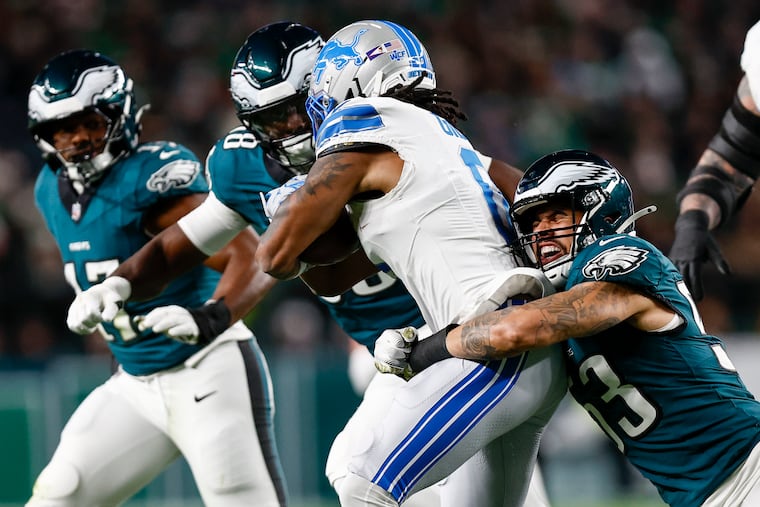
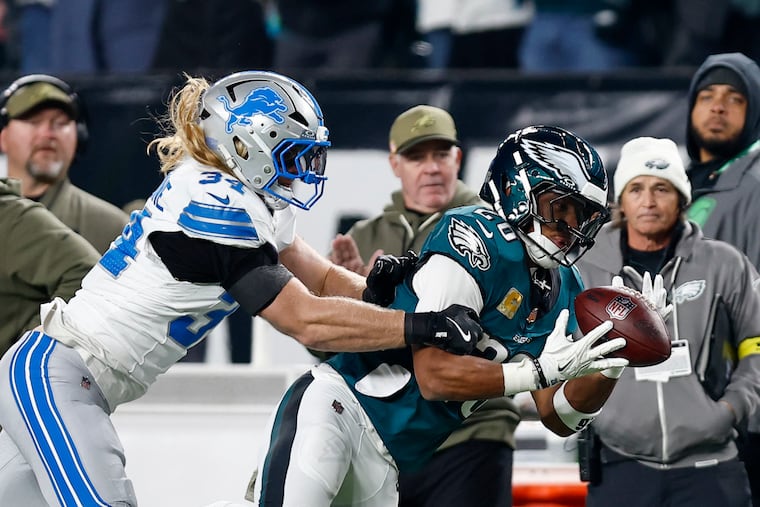
Well, there the Eagles were Sunday night, and for once, the Tush Push was an issue for them. For once, it wasn’t automatic. For once, its magic was gone, and of all the ramifications of the Eagles’ 16-9 victory over the Detroit Lions, that relative demystifying of their signature, unstoppable play was among the most concerning. For these last few years, the Tush Push had given them an innovative and significant advantage over their opponents, had meant the Eagles really needed just 9 yards to get a first down, because the 10th yard was a fait accompli.
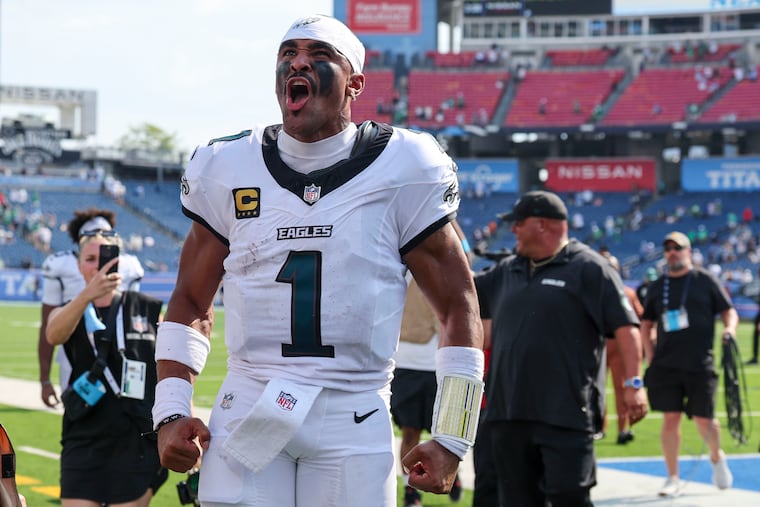
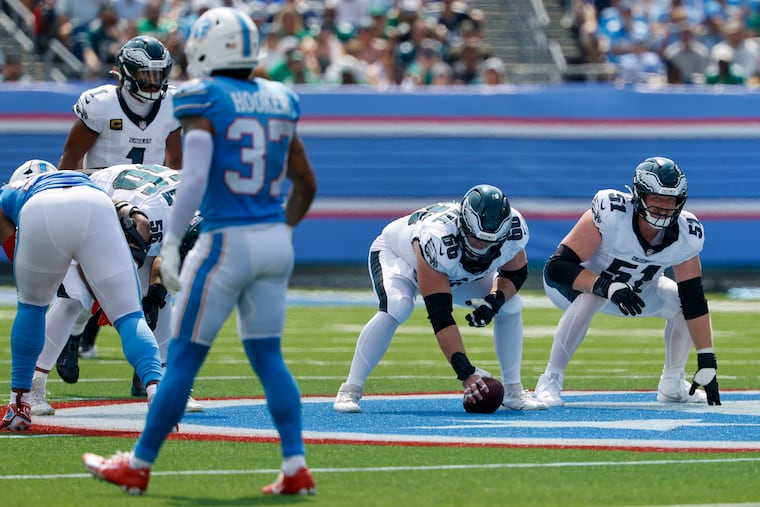
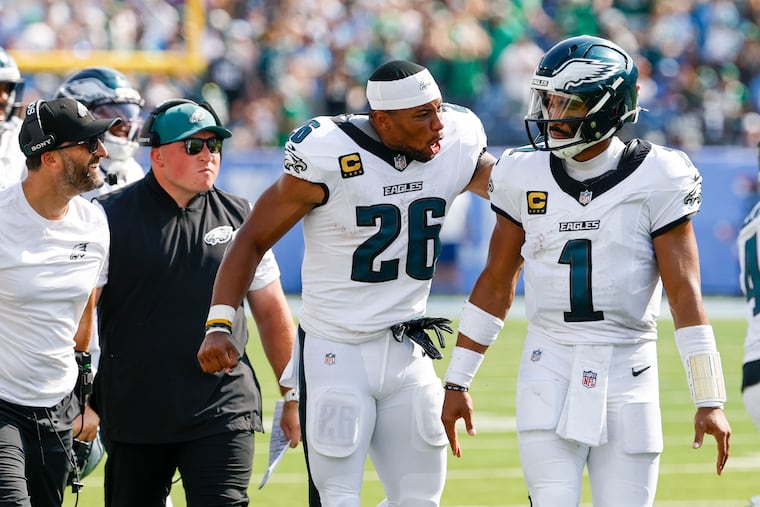
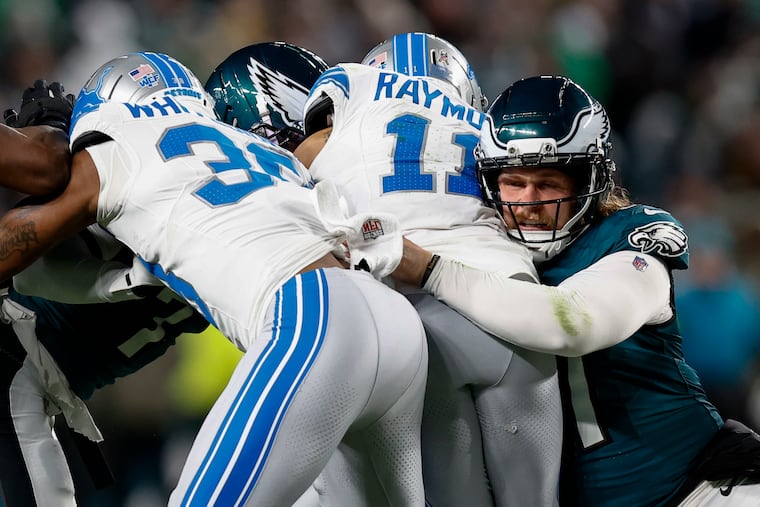
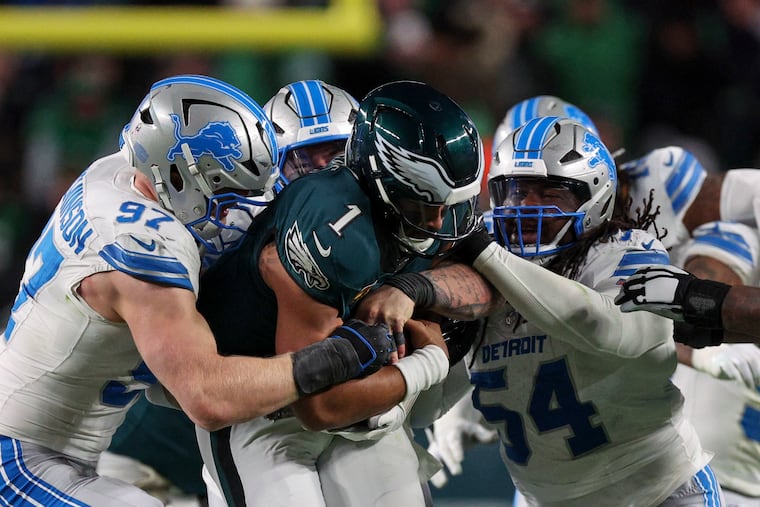
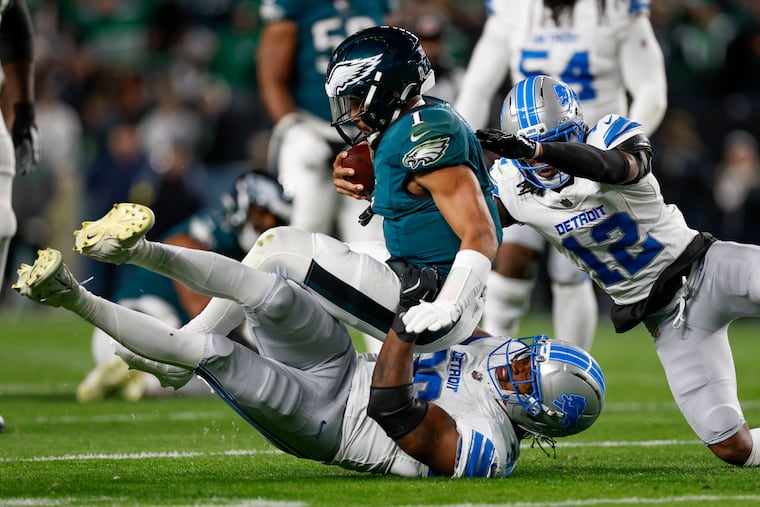
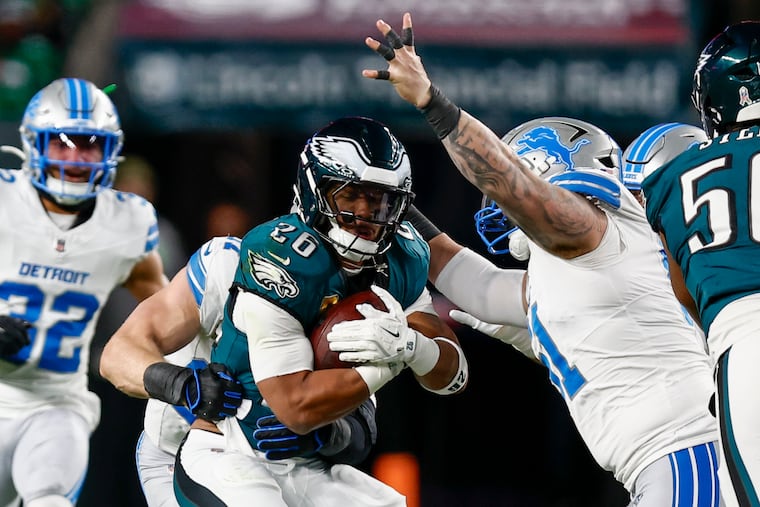
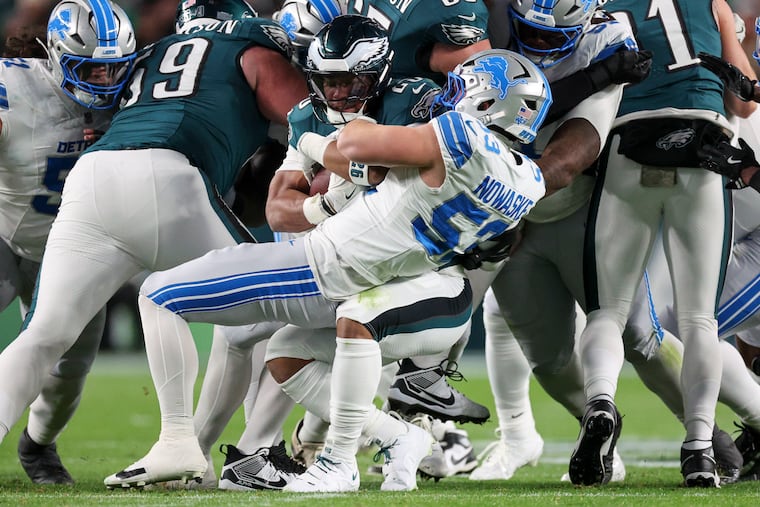
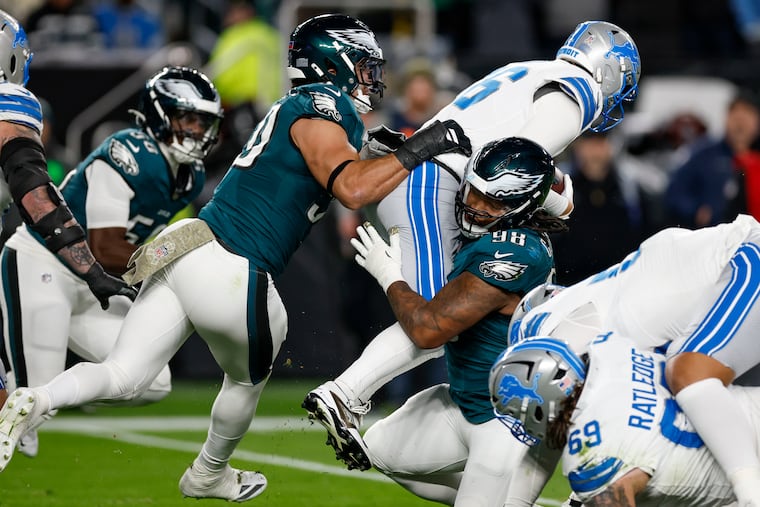
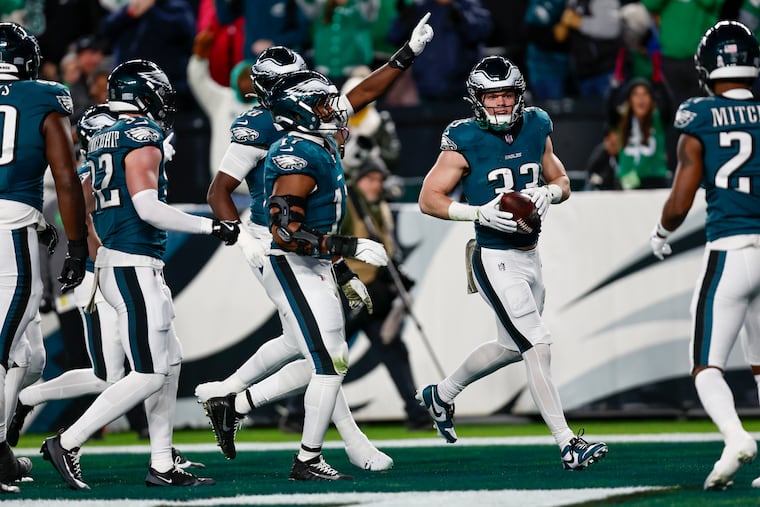
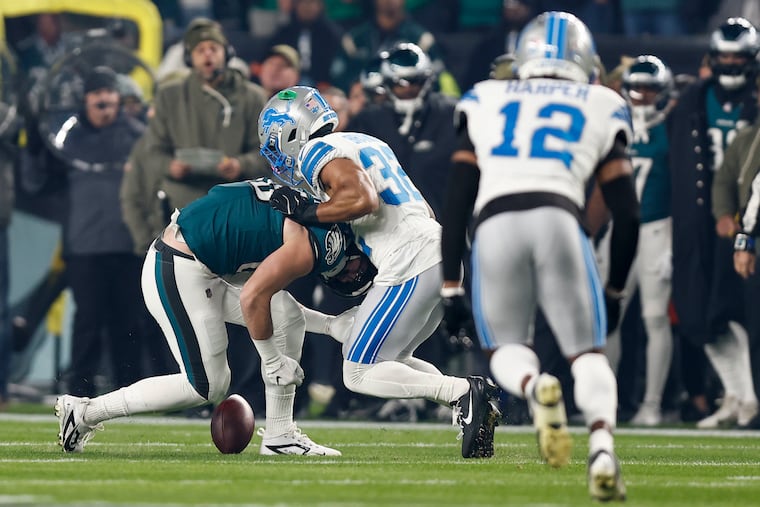
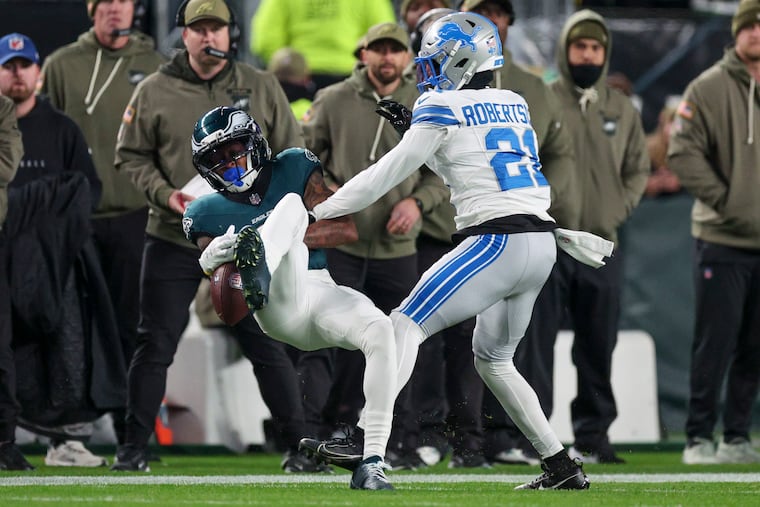
Nothing was that easy Sunday. The Eagles succeeded just once — Hurts’ second-quarter touchdown, the team’s only one of the game — in their six sneak attempts. They false-started. They were stuffed. With 2:54 left in regulation, with the Eagles up 10 and facing fourth-and-1 from their own 29-yard line — a situation similar to the one they confronted against the Dolphins in ’23 — Hurts went nowhere, and that failure invited the Lions back into the game by handing them at least a chance to cut the lead to a single score.
» READ MORE: Eagles grades: D-line dominates, Hurts struggles
“I’d do it again over and over,” tackle Jordan Mailata said. “I’d take us any day. Now, we’ve got to go back and watch that play and see what went wrong. But I’d still take us any day of the week. When you have a defense like ours, it does make it easier to go for it on fourth down. There’s the trust and faith in the guys up front, but also, if we don’t get it, there’s the trust and faith in the guys on defense.”
That was the knee-jerk justification for a call that, in the context of this particular game and the condition of this particular Eagles offensive line, Sirianni never should have made. When he had the Eagles go for it from their own 26 nearly two years ago, his decision was surprising because it was so unconventional at the time. He was correct then: The Eagles were the only team that could run the Tush Push with so high a rate of success, and they could because of the players they had blocking on the play: Jason Kelce, Lane Johnson, Mailata, all healthy.
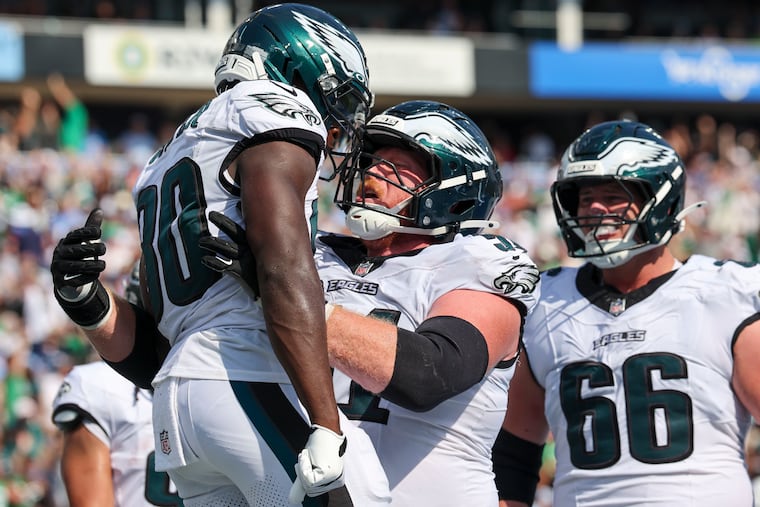
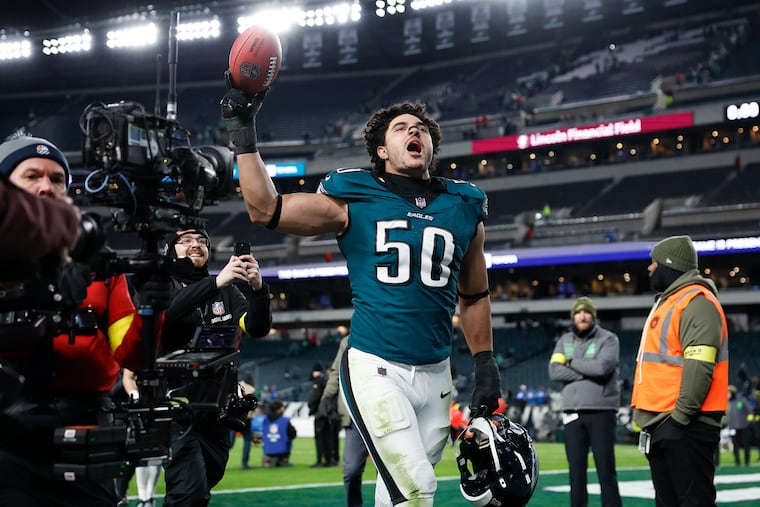
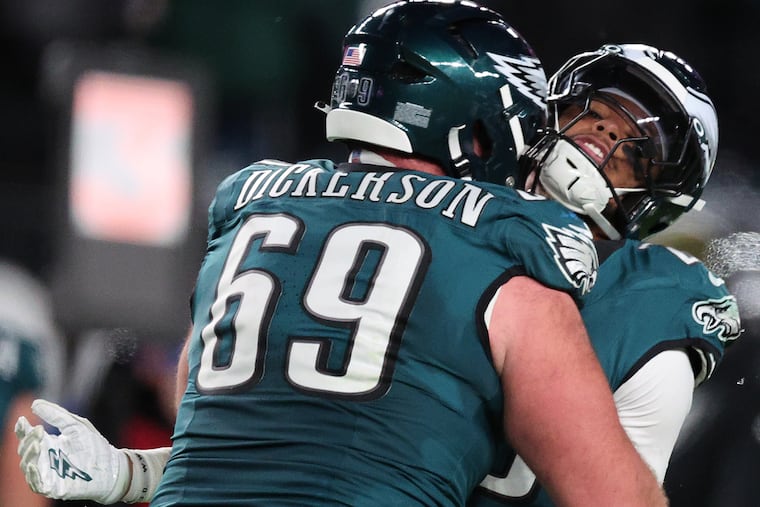
Sunday was so far from that same scenario. Johnson was ruled out at halftime with a foot injury, and center Cam Jurgens, having missed the previous two games with a knee injury and already playing through the painful effect of offseason back surgery, had exited, too, with 5:06 to go. So two backups, Fred Johnson and Brett Toth, were subbing for them. And the NFL and its officials and a chorus of complainers are now watching every twitch and subtle hint of movement every time the Eagles run the Tush Push. And now a play that was once a slam dunk is something closer to a midrange jump shot.
“They’re homing in on it,” Hurts said. “They’re very strict on the guard and the center and how they operate. They’ve got their eyes on it, and we’ve got to go out there and be as clean as possible.”
This sliver of doubt when it comes to the Tush Push might seem a small matter. It isn’t. The play’s reliability was a tangible symbol of the strength of the Eagles offense: the manner with which they controlled the line of scrimmage. Lane Johnson’s warning last month, after a loss to the New York Giants, about the offense becoming “predictable” was in that sense silly. No offense in the NFL last season was more predictable than the Eagles’. Everyone knew Saquon Barkley was getting the ball, and still no one could stop it.
» READ MORE: Howie Roseman’s reconstructed Eagles defense, led by Nakobe Dean, suffocates the Lions offense
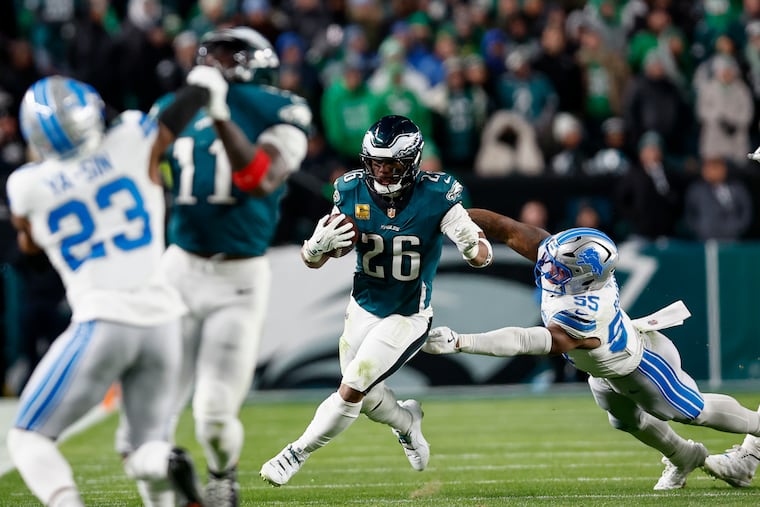
This season, the worry for a team that is 8-2 and atop the NFC is simple: That inevitable dominance hasn’t been there, and that reality has to change the calculus when it comes to the Eagles’ trademark aggressiveness in their play-calling. They could afford to go for it anytime, anywhere in short-yardage situations when they had the best collection of blockers in the league. The line’s regression should compel Sirianni to coach the team he has right now, not the one he used to have or the one he wished he had, and over the rest of the season, he has to weigh how much he asks of a defense that is carrying the Eagles, that allowed them to get away with two subpar offensive performances against two playoff-caliber teams.
“Always. Always. You always think about those things,” he said. “You think about how it plays in-game, but you also think about your past experiences. Everything is taken into account. But you definitely think about how it’s playing in-game. … Any time we don’t get a fourth-down conversion, I’m going to put that on myself. I’m always going to be hypercritical of myself. Obviously, if I had known we weren’t going to get it, I would have punted it.”
He couldn’t have known it, but he could have suspected it, and he has to start asking himself a question that he once didn’t have to contemplate. Of course, if everybody could do the Tush Push, everybody would. But what if the Eagles can’t?