Gov. Josh Shapiro wants to ban cell phones from Pa. schools
Shapiro said he'd like to ban phones for the duration of the school day. There are 23 other states with "bell-to-bell" bans on cell phones.
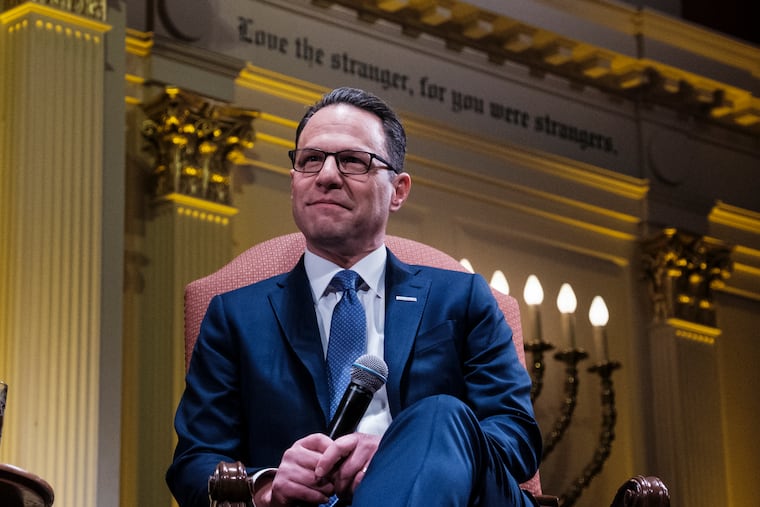
Gov. Josh Shapiro is backing a proposal to ban cell phones from Pennsylvania classrooms, joining a growing chorus of parents, teachers, and officials seeking to curb school disruptions and detach kids from addictive devices.
“It’s time for us to get distractions out of the classroom and create a healthier environment in our schools,” Shapiro said in a post on X on Thursday.
He called on Pennsylvania lawmakers to pass a bill that would require schools to ban the use of cell phones during the school day, “from the time they start class until the time they leave for home.”
The endorsement from the Democratic governor — who could promote the issue during his budget address Tuesday — comes as school cell phone bans have increasingly become the norm: 31 states have restrictions of some kind on phones, including 23 states with “bell-to-bell” bans barring the use of phones the entire school day, according to Education Week.
In New Jersey, former Gov. Phil Murphy signed a law last month requiring a bell-to-bell ban to take effect next school year.
Pennsylvania currently lets schools set their own cell phone policies — and districts have taken a patchwork of approaches. Pennsylvania in 2024 implemented a pilot program allowing schools to access funding for lockable pouches that students could place their phones in during the day, but few districts took the state up on the money.
Some schools have banned cell phones during classes, including by asking students to place their phones in hanging shoe organizers on the backs of classroom doors.
Advocates for entirely phone-free school days say such measures aren’t sufficient. Phones are still buzzing, and if class ends early, “kids are constantly looking at it,” said Kristen Beddard, a parent from the Pittsburgh suburb of Sewickley and leader in the PA Unplugged coalition seeking to curb children’s reliance on phones and screens, in and out of school.
Barring phones only during class time is “not enough to truly break the dopamine feedback loop these kids are exposed to, and inundated with constantly,” Beddard said.
Since PA Unplugged began advocating for a bell-to-bell ban a year ago, “the landscape has changed so much,” including more states moving to restrict phones, Beddard said.
In Pennsylvania, the state’s largest teachers’ union came out in favor of a ban, and legislation that would require school districts to adopt bell-to-bell cell phone policies was unanimously approved in December by the Senate Education Committee. The bill would grant exceptions for students with special needs.
The Pennsylvania State Education Association “supports legislation like Senate Bill 1014 that would establish a consistent, statewide expectation that public schools will restrict the possession and prohibit use of mobile devices for all students during the school day,” said spokesperson Chris Lilienthal.
He said that on a typical day, teenagers get 237 app notifications on their phones.
“Think about how disruptive those notifications are during the course of the school day when students should be focused on learning,” Lilienthal said.
In a divided Harrisburg, the proposal has bipartisan support. Beddard called banning cell phones in schools “maybe one of the few bipartisan issues left.”
In the Philadelphia area, groups of parents have mobilized against cell phone use, circulating pledges such as a commitment to not give children phones before eighth grade. Delco Unplugged, an offshoot of PA Unplugged, has advocated for cell phone bans in school districts and encourages parents to not give children access to phones before high school.
There has been opposition to strict bans, including from school leaders who think kids need to learn how to live with technology, rather than avoid it. Some administrators have also questioned the logistics, and some parents say they want their children to have phones in the case of emergencies, like a school shooting.
Advocates like Beddard say kids are safer during emergencies if they pay attention to the adults in their school, rather than their phones. They also argue that the logistics aren’t so daunting and that there are many ways to enact a ban besides lockable pouches.
Some schools require kids to put their phones in a locker or simply keep them in their backpacks, Beddard said, noting that the legislation advancing in Harrisburg would allow districts to decide how to enact a ban.
Schools that have implemented bans “describe the experience as transformational,” going beyond academic improvements to better socializing among kids, Beddard said. “Awkward conversations in the lunchroom make you a better human being,” she said.
At this point, “Pennsylvania isn’t a pioneer on the issue,” Beddard said. “We need to get with the program.”