Social workers, full-day K and tech ed: How underfunded Pa. school districts are spending new state money
A new report shows how Pennsylvania school districts are spending the additional state money they've gotten since a court ruling found the state's funding system uncontitutional.
Like all Philadelphia charter schools, New Foundations, which enrolls 1,500 students in Northeast Philadelphia, draws its funding from the school district.
But this year, New Foundations is starting to benefit from a relatively new state funding formula that steers more money to the state’s poorest districts, including Philadelphia.
The additional funding gave New Foundations a higher per-pupil payment, and it was able to maintain six academic interventionists who provide extra help to students who are struggling but not enough to require special education.
The charter also hired six permanent building substitutes, freeing up teachers from having to sacrifice prep periods if a colleague is out sick.
And it brought in an on-site therapist to help students with significant mental health needs — freeing up its social workers to support other students, said CEO Chris Zagacki.
The added funding is “really making sure schools have the things kids already deserve,” Zagacki said. “All schools should be doing this. This shouldn’t be anything seen as a bonus.”
Pennsylvania adopted a new school funding formula in 2024, following a Commonwealth Court ruling that the state — which relies heavily on local property taxes to fund public schools — had unconstitutionally deprived children in lower-wealth communities of an adequate education.
The formula was based on a calculation that a majority of Pennsylvania’s 500 school districts are underfunded and need an additional $4.5 billion from the state to adequately educate kids. Between the last two state budgets, Pennsylvania has put $1 billion toward closing that gap; Gov. Josh Shapiro’s budget plan for the coming year includes another $565 million.
Advocates say the new money has proven critical — particularly as federal pandemic relief has run out and districts face rising costs from inflation and mandated services such as special education.
“Adequacy funding is serving as a lifeline for schools,” said Laura Boyce, executive director of Teach Plus Pennsylvania, a group that has backed the new formula and released a report Tuesday analyzing how districts reported to the state that they planned to spend the new money.
While some districts have been able to make long-sought investments, others are using the money “just to make ends meet,” Boyce said.
She noted that charter schools are also benefiting from the money, because when their home school district’s spending increases, charters get a cut of that funding.
“Oftentimes, district schools and charter schools are pitted against each other. This is a situation where a rising tide is lifting all boats,” Boyce said.
Here’s what the report found, and what some school leaders are saying about the funding’s impact:
Districts are spending money on ‘academic performance,’ full-day K
Pennsylvania requires school districts to report how they’re spending the new money. Teach Plus looked at districts’ spending plans this fall and categorized the top intended use as boosting academic performance, with districts planning to spend 26% of the money on items including teachers and staffing, new curriculum and supplies, and benchmarking and assessment tools to track students’ progress.
The next top use was full-day kindergarten, accounting for 14% of spending. In the Philadelphia region, Downingtown and Pennridge used new funding to move from half-day to full-day kindergarten programs, the report noted.
Other top spending uses included charter school tuition increases, STEM and applied knowledge, and support for English learners.
School leaders say new initiatives funded with the adequacy money are already paying off.
The California Area School District — a rural district in southwestern Pennsylvania highlighted in the Teach Plus report — used money to establish three new career and technical education programs in veterinary, homeland security, and education pathways. The district went from being flagged by the state three years ago for low graduation rates to having all of its seniors graduate last year, according to the report.
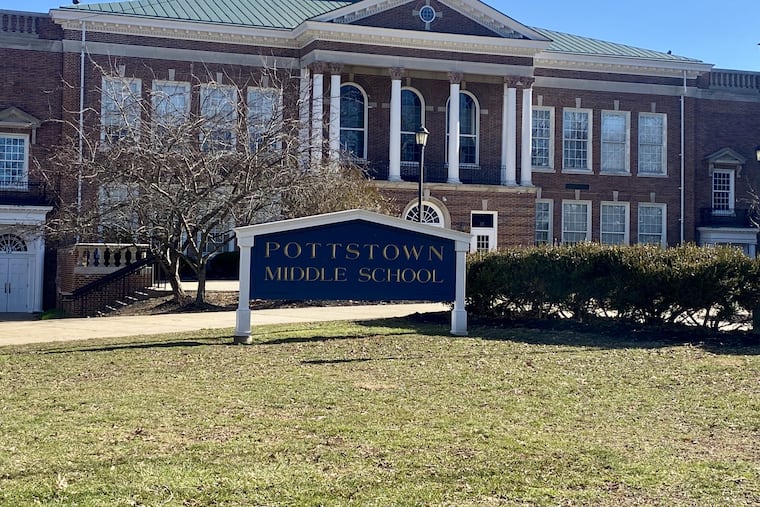
In the Pottstown School District in Montgomery County, Superintendent Stephen Rodriguez said behavioral issues have dropped by 50% after new investments, including the addition of a “house model” at the middle school, with a counselor and principal assigned to each grade level.
“It’s been transformative,” Rodriguez said in an interview.
Districts are still struggling financially
The first two installments of adequacy funding haven’t gotten all districts in a stable financial position, however.
For some, adequacy funding hasn’t yet resulted in new investments, instead serving as a “critical buffer” as federal relief dries up and as mandated costs and inflation eat away at new revenue, Boyce said.
Despite the new funding, Pottstown faced a $9 million shortfall last year that led to position cuts, including coaches involved with providing added support to struggling students.
“We’re absolutely affected by what’s going on in the world,” Rodriguez said, describing everything from Chromebooks to busing as costing more.
The state budget impasse also hurt districts last year, the Teach Plus report said, forcing some to borrow money and incur added costs without state aid coming in.
Philadelphia, for instance, authorized borrowing of up to $1.55 billion and incurred $6.5 million in interest charges “just to stay afloat,” the report said. The district is now facing a $300 million deficit and planning to cut hundreds of positions.
Charters are starting to see funding increases
Because of how charter funding works in Pennsylvania — school districts pay charters a rate based on what districts spend per pupil — more funding to districts means more money flowing to charters.
In Philadelphia — where about one-third of the district’s 200,000 students attend brick-and-mortar charters — adequacy funding so far has led to charters getting an extra $650 per pupil, according to Teach Plus. It said that Philadelphia Charters for Excellence, a charter advocacy group, surveyed member schools and found they used the money primarily on “targeted academic interventions and holistic student support services.”
At New Foundations, Zagacki said the school has seen recent increases in performance on standardized tests, which he attributes in part to the interventionists now funded with state money.
If those positions were gone, students wouldn’t get as much help, and might be misidentified as needing special education services, Zagacki said — which would also cost the school more money, given legal requirements.
“Something else would have to give,” he said.