Emails show political tensions facing Quakertown school leaders ahead of student ICE walkout
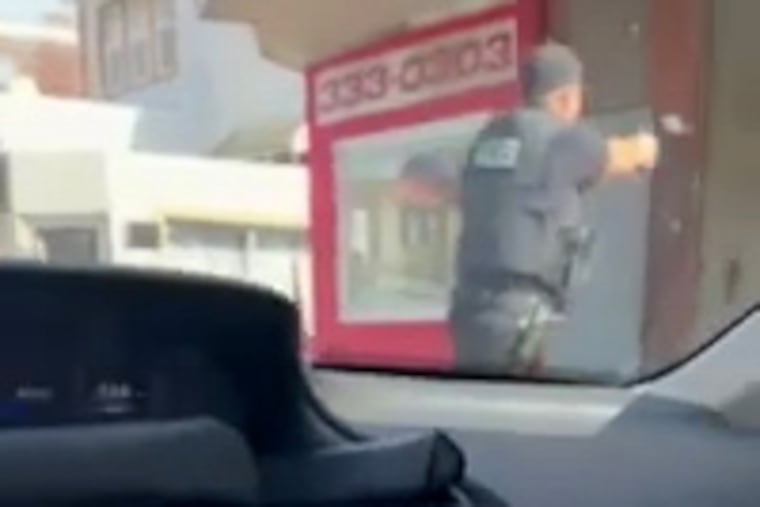
The February student walkout in Quakertown ended in a bloody clash with police, the arrests of five teenagers, and the police chief, Scott McElree, going on leave.
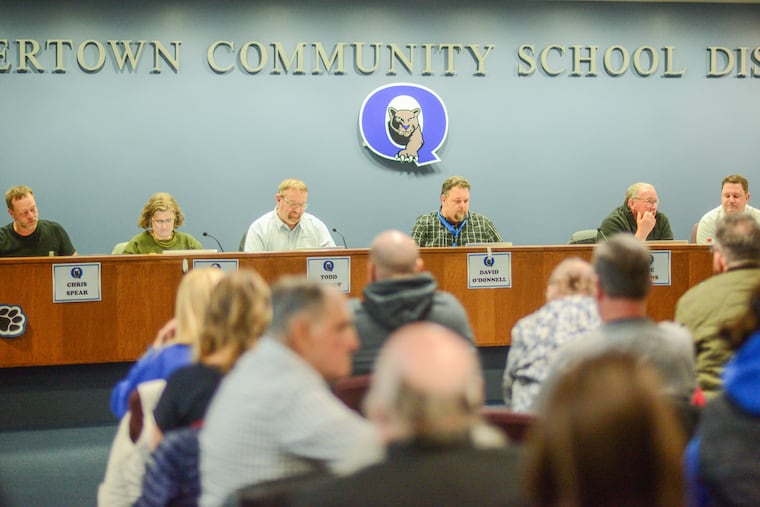
Parents decrying a “partisan stunt” and threatening to leave the school district. Students afraid they would be locked in classrooms and unable to use the bathroom. A school board member demanding any protest be moved off campus.
In the days before the February walkout by Quakertown students to protest federal immigration enforcement ended in a bloody clash with police, emails show district administrators were facing accusations and confusion from community members as they grappled with how to handle the event.
The emails, obtained through a Right-to-Know request, provide insight into the pressures and political tension the district was navigating before the Feb. 20 protest. After administrators attempted to cancel the event because of a threat, it boiled over into a chaotic scene that resulted in the arrests of five teenagers, a police chief going on leave, and borough and school officials blamed for their response.
Critics later accused the school board at a public meeting of putting kids in harm’s way, arguing that trying to stop the event pushed students farther off campus and set the stage for the confrontation with the police chief, Scott McElree, who rushed into the crowd. Video footage showed McElree with his arms wrapped around a girl’s neck.
School board members have said they’ll work to learn from the controversy and determine how to better handle protests in the future.
But in the week before the protest, some were pushing the district to not play any role in the event.
“Please move this off campus,” board member Jonathan Kern, a Republican, wrote in a Feb. 17 email to Acting Superintendent Lisa Hoffman, after Hoffman shared information with board members that would be sent to high school staff and families ahead of the protest. Hoffman’s email made clear that administrators had worked to finesse the language of that message; the district didn’t mention the exact time of the protest, at the advice of law enforcement, Hoffman said, and she also said they’d “tightened the language” to ensure students who protested knew they couldn’t make up work they missed.
While Kern was pleased that making up work wouldn’t be allowed — “This avoids excusing absences (which could look like endorsement),” he wrote — he objected to the school becoming a “protest hub instead of a place for education.” In a previous email to Hoffman, Kern had suggested students could research “other perspectives” about “illegal immigrants who have committed crimes against innocent people.”
Parents were also expressing opposition. “We need more learning and less indoctrination at schools,” one parent said in an email, adding that “myself and many others will be forced to consider alternative schools if the partisan, non-school-related tactics continue.”
“I never thought that the propaganda would come anywhere near our town,” a mother wrote, saying she would not allow her son to participate and be “another brainwashed fool out on the street.”
Some students believed teachers were encouraging participation, another parent wrote, expressing discomfort “with the perception that the school may be endorsing anti-authority or politically driven activity.”
The high school’s principal, Mattias van ‘t Hoenderdaal, consulted with the nearby Pennridge School District about its handling of an anti-ICE walkout, according to emails, informing fellow Quakertown administrators that Pennridge staff were directed to stay inside during their students’ protest.
Two days before the Quakertown protest, the district’s school resource officer relayed to administrators that McElree, the police chief, had granted permission to close down part of the street in front of the high school.
“He appreciates how the school is handling this event,” wrote the officer, Bob Lee. “Any threats will be moved inside. He is concerned the students are a security risk with the way the world is right now.”
Threats ahead of planned protest
The district received several tips the week of the protest through Safe2Say — the state’s confidential school safety hotline for reporting threats. The district redacted the content of tips in its response to The Inquirer’s Right-to-Know request.
The day before the protest, some parents expressed fear about what would happen. One mother told high school administrators that she and her husband would be keeping their child home, citing social media comments that “left us very uncomfortable.”
At 9:14 that night, another Safe2Say tip came in. Hoffman sent an email to the school board at 10 p.m.
“We are taking this threat very seriously,” Hoffman said in the email, which was largely redacted. She said administrators had consulted with police.
The Bucks County Courier Times, citing emails obtained from McElree, said the chief told the borough council after the walkout that “a person with a gun was planning on shooting the protestors.”
Some board members responded to Hoffman’s email with concern. “I’m sorry that someone was so angry and insecure that they would resort to threats and felt compelled to do this,” Brian Reimers said in an email that night to Hoffman.
Kern told Hoffman that “this came to mind ... ‘put up a lightning rod, you might get lightning.’”
“We didn’t need to say yes to this in the first place and saying no is a prudent course of action,” Kern said.
The district sent out an email to high school students and families at 6:57 a.m., declaring the protest canceled. “We were advised to keep the public message vague,” Hoffman wrote to a board member, Todd Hippauf, who noted that the district didn’t mention the specific threat.