Mayor Parker now wants a $1-per-ride tax for Ubers and Lyfts to lessen Philly School District classroom cuts
Parker pitched a 20-cent-per-ride fee in her budget address and is now moving to increase it to help the school district, which is poised to make $225 million in cuts as it faces a budget deficit.
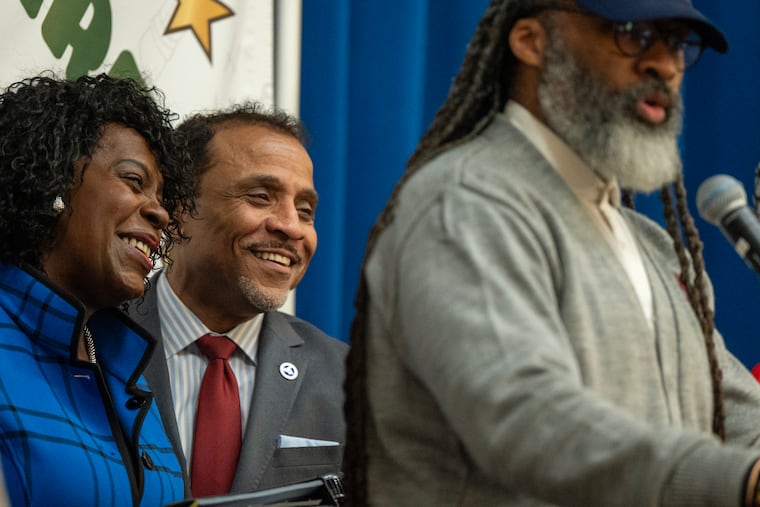
Mayor Cherelle L. Parker on Monday unveiled a proposal to impose a $1-per-ride tax on rideshare services like Uber and Lyft to help close the Philadelphia School District’s budget deficit.
Parker had pitched a 20-cent-per-ride fee in her budget address earlier this month. She is now moving to quintuple the proposed fee after the district revealed the extent of its cash crunch — a move that, if passed, would represent the largest city increase in recurring revenue in more than a decade.
“I’m putting this proposal on the table because we need to do all that we can so that students don’t have to suffer from these devastating cuts,” Parker said.
The new tax, which would take effect Jan. 1, would raise about $48 million per year for the district as it faces a $300 million fiscal cliff. Parker’s previous version of the rideshare fee would have generated only $9.6 million per year for the district.
Parker and Superintendent Tony B. Watlington Sr. announced the proposal at McDaniel Elementary in Point Breeze on Monday afternoon as part of a broader package meant to aid the district. The package includes a plan to provide free SEPTA fares for certain district employees, a $3 million-per-year program the district will pay for with proceeds from the rideshare fee.
Parker also announced the city will fund a pilot program with the Philadelphia Parking Authority that will pay for parking tickets for low-income residents. That will allow some Philadelphians to access cars that have been impounded. And it will benefit Philly schools because the PPA is required to send a portion of its net operating proceeds to the district.
The pilot will cost $3 million per year, and will last three years.
The rideshare tax is likely to be unpopular, Parker said, but given Watlington’s recent announcement that he had to make $225 million in classroom cuts for the 2026-27 school year, including losing teaching, counseling and climate positions and raising some class sizes, she’s ready for a fight.
“In order to build on our students’ success and to increase economic mobility over the long term, we must help our school district on this trajectory for our children,” the mayor said, adding that for elected officials, “it’s not enough to give a good speech. You need to figure out how you are going to drive dollars.”
‘We are with you’
Earlier this month, Watlington indicated he would cut 340 school-based positions to make ends meet.
Principals have said those austerity measures would mean losses of teachers, counselors, climate staff, programs, and supplies that one school leader said would mean “we simply will not have the bandwidth or the budget to meet the needs of our building.”
But Parker’s rideshare tax would pay for the restoration of 200 positions, and district officials said they found funds to save an additional 40 jobs — 130 teachers, 55 student climate staff, and 55 other school-based positions.
Watlington said the district will still need to cut 100 positions, even with the mayor’s proposal, though no layoffs are planned. The superintendent still wants to shed 220 building substitute jobs and make $130 million in central-office cuts, including slashing contracts it deems have low return on investment.
But Parker’s money will make a big difference, Watlington said. The superintended lauded Parker’s “bold commitment,” which he said “will help us serve to continue down the road of being the fastest improving large urban or big city school district in the country.”
Watlington and Parker were flanked by district students, labor leaders and other education advocates who frequently punctuated the news conference with applause and said they would join the mayor in pushing hard for the new tax.
“Madam Mayor, we are with you,” school board president Reginald Streater said. “We are with our city, and I hope that this is a signal to Harrisburg and we can hear it that the School District of Philadelphia is willing to help itself. The city is willing to help itself.”
A fight ahead
The backlash from rideshare companies was immediate.
Uber spokesperson Jazmin Kay said the fee “will be passed on directly to riders who will pay more on each ride” and the result will be that it will “cost more to get around in Philly.”
The hike, Kay said, “will hurt drivers and hit everyday Philadelphians, making rides less affordable and threatening critical access to jobs, healthcare, and essential services,” Kay said in a statement. “This double tax worsens Philadelphia’s affordability and transportation crisis, even though rideshare already provides millions to city schools annually through existing taxes.”
Council President Kenyatta Johnson and Councilmember Rue Landau sponsored the legislation needed to authorize the original 20-cent version of Parker’s rideshare fee proposal.
Landau on Monday said she was “encouraged” that Parker was turning toward rideshare companies “as we look for responsible ways to support our public schools.”
“These services benefit from our streets, our infrastructure, and the vibrant neighborhoods that make our city thrive,” Landau said in a statement. “Philadelphia has always embraced innovation, and that innovation comes with a responsibility to contribute to the communities that make it possible.”
Johnson said Council “will carefully review” the proposal “as one potential tool to help prevent deep classroom cuts.”
“The prospect of hundreds of millions of dollars in SDP cuts that would impact teachers, counselors, and essential programs is deeply concerning,“ Johnson said. ”Any decision by the City Council to add funding for SDP must also include an extensive review of the proposed SDP Facilities Master Plan before it is approved by the Board of Education this year.”
Parker pushed back against the notion that she was imposing a tax on low-wage workers.
“I am not we are not proposing a tax on rideshare drivers,” the mayor said. “Those companies they can make a decision about whether or not they pass this cost on to those hardworking folks.”
As a former member of the state House who pushed for a sales tax hike and cigarette tax and City Council member who backed a sweetened-beverage tax to fund pre-kindergarten and community schools, Parker said she knows what’s ahead.
“It’s not going to be comfortable, and it will not just be given to us,” she said.
Labor leaders, including Philadelphia Federation of Teachers president Arthur Steinberg and Robin Cooper, head of the union that represents Philadelphia principals, applauded Parker.
“Show us the money, because we need it desperately,” said Cooper.
Dan Urevick-Ackelsberg, a lawyer at the Public Interest Law Center of Philadelphia who argued the landmark school-funding case resulting in Pennsylvania’s funding formula being declared unconstitutional in 2023, said the cuts cannot happen, and thanked the mayor for “sounding the alarm.”
“Our job,” said Urevick-Ackelsberg, parent of two children in a Philadelphia public school, “is to make sure that all of our state and local officials bring the fire engines in response.”