Mayor Cherelle Parker unveils ‘economic mobility agenda’ in $7 billion city budget proposal
Parker on Thursday proposed investments in workforce development, financial counseling, and internship opportunities for young people.
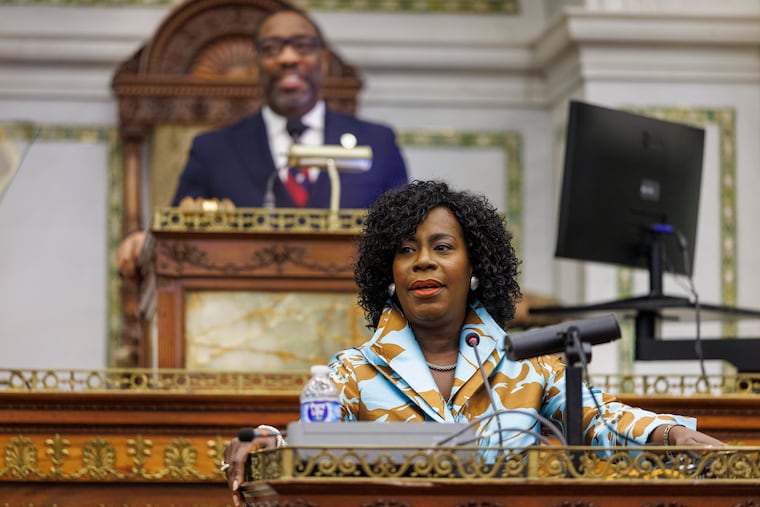
Since taking office, Mayor Cherelle L. Parker has treated her 2023 campaign slogan — to make Philadelphia the “safest, cleanest, and greenest big city in the nation with access the economic opportunity for all” — as a to-do list for her administration.
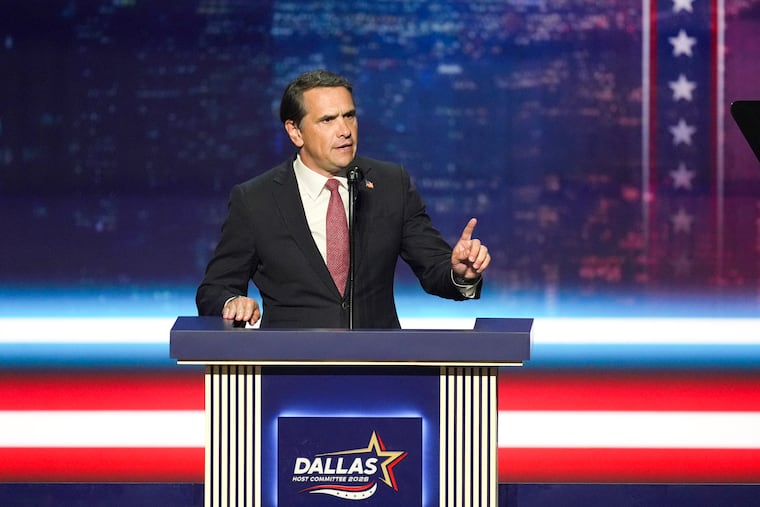
With the homicide rate down and high-profile efforts to improve public cleanliness underway, Parker on Thursday unveiled her third city budget proposal and framed the $7 billion plan as the fulfillment of the final part of her slogan.
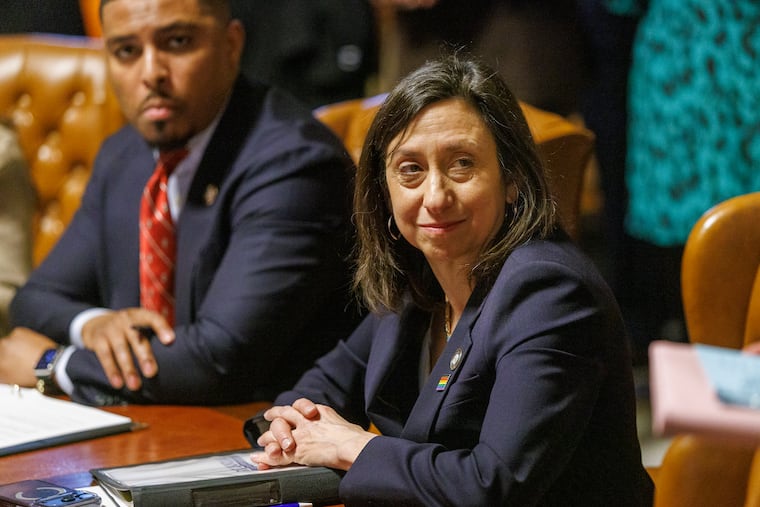
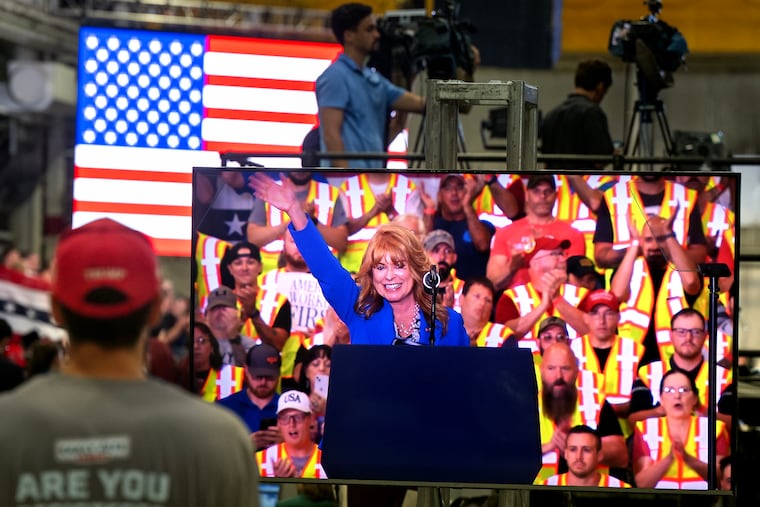
“My focus sharpens on a goal that touches every family and every neighborhood, and that is economic mobility for all and self-sufficiency for all,” Parker said in her annual budget address to City Council. “What good is a safer, cleaner, and greener city if our people don’t have access to good-paying jobs, quality healthcare, and a real shot at raising a family, owning a home, and building a pathway to a better and more affordable life?”
Almost everything in the city budget can be cast as an economic mobility initiative, from funding for education and housing to SEPTA subsidies. But in terms of new spending, the agenda Parker articulated Thursday is far less ambitious than the $2 billion Housing Opportunities Made Easy, or H.O.M.E., initiative that was the centerpiece of her budget proposal last year.
A budget summary distributed by the administration this week identified about $52 million in new spending related to economic opportunity. Parker, however, said her administration is working to boost economic opportunities in everything it does.
“Prosperity must be shared and accessible, with every resident able to afford a home, gain a quality education, and get the skills training they need,” she said in her speech, which lasted more than two hours. “If we get this right — by making value-driven, data-informed investments — Philadelphia can become the national model for economic mobility."
About 20% of Philadelphians live below the federal poverty line, which is $33,000 annually for a family of four. Among the 10 largest U.S. cities, only Houston has a higher rate.
» READ MORE: Mayor Parker plans to renew SEPTA’s Zero Fare program. Here’s how it benefits riders, in their own words.
Parker frequently refers to research by Harvard University economist Raj Chetty, who measures economic mobility in large metro areas and found that the Philadelphia region ranked dead last.
“This budget charts the course from early childhood to school age, from graduation to career, all the way to retirement,” Parker said. “My economic mobility plan is designed so there is a pathway for everyone at every stage in life to move up that ladder.”
Parker’s speech officially kicked off “budget season” in City Hall. Next, Council will hold hearings on each major department’s spending plans. Then, Council President Kenyatta Johnson will negotiate with Parker’s team over amendments to the plan.
Lawmakers are expected to approve the final version in early June. The next budget takes effect July 1.
What’s in Parker’s ‘economic mobility agenda’
The administration labeled numerous line items in the budget proposal as part of Parker’s mobility agenda. They include spending $500,000 to create an economic mobility cabinet and allocating $13.9 million in new funding for the Philadelphia Office of Community Empowerment and Opportunity to connect residents with financial counseling, low-cost banking services, and other opportunities.
The agenda also calls for spending $10 million on workforce development training; $7 million to help graduates of the Community College of Municipal Employment, a program Parker previously launched to create a pipeline to city jobs; and $14.7 million to add 1,000 slots to the city’s Career Connected Learning programs, which provide young Philadelphians with internships, career mentorship, or job shadowing opportunities.
The administration has also requested feedback from companies interested in working on Parker’s goal of building modular housing manufacturing facilities in Philadelphia, a vision she hopes will both provide employment opportunities and make housing more affordable. The budget proposal sets aside $10 million as a “placeholder” for that initiative, which is in its early stages, Finance Director Rob Dubow said.
Some of the investments the Parker administration pitched as part of the agenda do not appear to have as clear a connection to economic mobility, such as $2.5 million over five years for the Dell Music Center and $350,000 “to support the relocation of the Rocky and Joe Frazier statues.”
More broadly, Parker also said Philadelphia’s economy, which has for decades relied on the region’s high-profile educational and medical institutions as the backbone of its economy, needs to evolve. She said the city will seek to embrace opportunities such as a $5 billion investment planned by the Korean company that owns the Hanwha Philly Shipyard.
“We can no longer just limit ourselves and say that Philadelphia is simply a city of eds and meds and leave out the economic potential of maritime, ship-building, and defense industries, because they can and should be essential parts of our efforts to have economic mobility right here,” she said.
New fees, hotel tax hike at issue
Parker’s budget proposal would not make changes to any of the city’s major taxes. But it includes other “revenue enhancements” in more targeted areas: new fees for rideshare and retail delivery services, as well as a 2% hike to the city’s hotel tax.
Those proposals did not go over well with some of the industries that would be affected.
Parker is asking Council to approve a 20-cent-per-ride fee for rideshare services like Uber and Lyft. The estimated resulting $9 million in annual revenue would go to the school district.
» READ MORE: Who benefits — and who pays — in Mayor Cherelle Parker’s new Philadelphia budget plan
“This proposal would worsen Philadelphia’s affordability and transportation crisis by imposing a regressive surcharge that raises costs on working families who rely on affordable rides, at a time when reliable transportation options are being cut,” Uber spokesperson Jazmin Kay said in a statement.
Parker also proposed a 25-cent-per-order fee for retail delivery services like Amazon, with the estimated $15 million in revenue going to street paving and other traffic safety measures.
And she pitched the hike to the hotel tax, which would increase from 15.5% to 17.5% on Philadelphia hotel guests’ bills, as a way to pay for 1,000 new homeless shelter beds. The increase would generate $20 million more per year for the city, according to Parker’s proposal.
Ed Grose, president and CEO of the Greater Philadelphia Hotel Association, said he supports Parker’s desire to combat homelessness. But Grose said Parker’s proposal would leave Philadelphia with the highest hotel tax among East Coast cities, which could make “other cities a more attractive alternative.”
“We applaud Mayor Parker’s effort to tackle this head-on,” Grose said. “We look forward to working with her and her administration to look for alternative ways to fund her efforts.”
Other changes related to city tax revenue will take place this year without Parker or Council members even having to propose legislation.
The administration will soon complete a citywide property reassessment, likely resulting in increased real estate tax bills for most homeowners even if City Council does not change the property tax rate.
Conversely, the city’s wage and business tax rates will fall slightly if lawmakers take no action on those taxes because Parker and Council last year adopted multiyear cuts to the levies.
Progressive activists opposed those cuts when they were adopted last year, and some warn that the city is unprepared to deal with potential funding reductions that could result from growing political dysfunction in Harrisburg and Washington.
The Rev. Gregory Edwards, executive director of POWER Interfaith, said Parker’s proposal “didn’t confront the real threat ahead.”
“While we’re grateful for the small amount of revenue new proposed fees could create, it is a drop in the ocean of what will be needed as millions in federal and state dollars are cut,” Edwards said. “Philadelphians are already stretched thin, and they deserve a real, long-term funding plan that ensures everyone can get the resources they need to live with dignity.”
Council gears up for weeks of ‘trading back and forth’
Parker’s proposal received mostly positive marks from Council members, who must approve a budget by the end of June.
Johnson, a Democrat who has fashioned himself an ally of the mayor, said after her speech that “overall, most of the things that we all care about [are] already inside this budget.”
Johnson and other members are still likely to advocate for adjustments that align with their personal priorities.
“We’ll always get feedback from members in terms of what they want to see as a part of this process,” Johnson said. “Obviously we’ll do trading back and forth.”
Johnson has been a vocal proponent of programs aimed at alleviating the city’s property tax burden, including by increasing the homestead exemption, which reduces the taxable assessed value of primary residences.
He said he may advocate again this year to increase the exemption, which currently lowers assessments of owner-occupied homes by $80,000.
Councilmember Quetcy Lozada, a Democrat who represents parts of North Philadelphia and Kensington, said in a statement Thursday that she wants a whopping $300 million commitment over four years to bolster the city’s Community Forward Builders Fund. The fund allocates money to nonprofit developers that build and preserve affordable housing.
And Councilmember Jamie Gauthier, a progressive who represents parts of West Philadelphia and leads Council’s housing committee, said Thursday that she is concerned about Parker’s plan to offer developers a 20-year property tax abatement for converting large, deteriorating properties into residential housing.
Parker did not mention the abatement during her address Thursday or transmit legislation to enact it. But administration officials highlighted the tax incentive during briefings with Council members Wednesday.
Gauthier wants developers to be required to make a certain percentage of units affordable in order to qualify for the abatement.
“There’s no way in a city that is as poor as ours … that we should be giving developers 20 years of tax breaks without them even contributing to the city’s biggest stated goal, which is affordable housing,” Gauthier said.
Overall, Gauthier, who played an important role in shaping Council’s response to Parker’s housing plan last year, said she was “pleased by many things Mayor Parker outlined” in Thursday’s speech.
“It was a budget that seems to continue a lot of the initiatives brought in by the mayor around clean, green, and safe,” Gauthier said. “I like the focus on economic mobility, economic opportunity. I love that we’re doing what we need to to end street homelessness.”
Staff writer Jake Blumgart contributed to this article.