EEOC sues Penn for failing to release information related to antisemitism investigation
Penn usually does not comment on litigation, but in this case, the school ardently objected to the EEOC’s characterization of its cooperation and the personal nature of the material it is seeking.
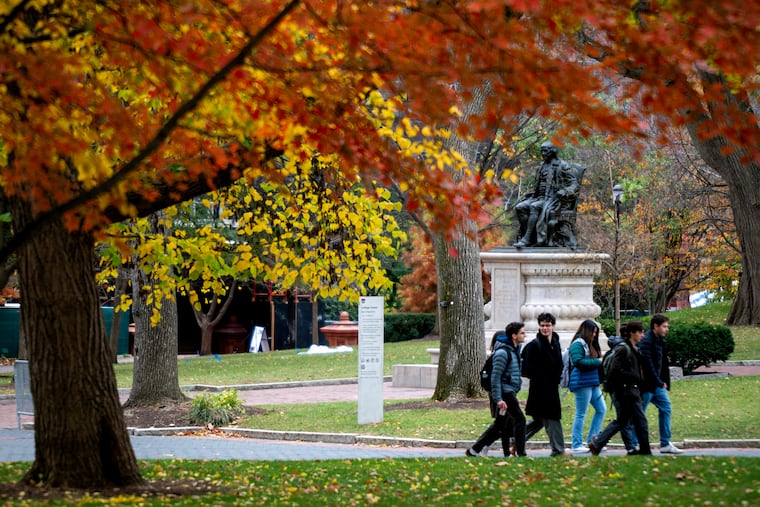
The U.S. Equal Employment Opportunity Commission is suing the University of Pennsylvania for failing to release information related to an investigation it began in 2023 over the school’s treatment of Jewish faculty and other employees regarding antisemitism complaints.
Penn, according to the complaint filed in federal court Tuesday, has not complied with a subpoena for information, including the identification of employees who could have been exposed to alleged harassment and the names of all employees who complained about the behavior.
In its quest to find people potentially affected, the EEOC demanded a list of employees in Penn’s Jewish Studies Program, a list of all clubs, groups, organizations and recreation groups related to the Jewish religion — including points of contact and a roster of members — and names of employees who lodged antisemitism complaints.
» READ MORE: Under pressure from Jewish community, Penn president unveils plan to combat antisemitism
Penn usually does not comment on litigation, but in this case, the school ardently objected to the EEOC’s characterization of its cooperation and the personal nature of the material it was still seeking.
The school said in a statement it has cooperated extensively with the EEOC, including providing more than 100 documents and over 900 pages.
But the private university said it will not disclose personal information, specifically “lists of Jewish employees, Jewish student employees and those associated with Jewish organizations, or their personal contact information” to the government.
“Violating their privacy and trust is antithetical to ensuring Penn’s Jewish community feels protected and safe,” the university said Tuesday.
Penn also provided information on employees who complained and agreed that it could be shared, the school said, but the school would not provide information on those who objected.
“Penn also offered to help the EEOC reach employees who are willing to speak with the agency by informing all employees of the investigation and how they could reach out to the agency,” the university said. “The EEOC rejected that offer.”
The original complaint was launched by EEOC Commissioner Andrea Lucas, now chair of the body, on Dec. 8, 2023, two months after Hamas’ attack on Israel that led to unrest on college campuses, including Penn, and charges of antisemitism. It was also just three days after former Penn President Liz Magill had testified before a Republican-led congressional committee on the school’s handling of antisemitism complaints; the testimony drew a bipartisan backlash and led to Magill’s resignation days later.
Lucas, who was appointed chair this year by President Donald Trump, also brought similar antisemitism charges against Columbia University that earlier this year resulted in the school paying $21 million for “a class settlement fund.”
EEOC complaints typically come from those who allege they were aggrieved. Lucas, according to the complaint, made the charge in Penn’s case because of the “probable reluctance of Jewish faculty and staff to complain of harassing environment due to fear of hostility and potential violence directed against them.“
The EEOC’s investigation ensued after Lucas’ complaint to the EEOC’s Philadelphia office that alleged Penn was subjecting Jewish faculty, staff, and other employees including students “to an unlawful hostile work environment based on national origin, religion, and/or race.”
» READ MORE: Federal lawsuit alleging mishandling of antisemitism at Penn is dismissed
The allegation, the complaint said, is based on news reports, public statements made by the university and its leadership, letters from university donors, board members, alumni and others. It also cited complaints filed against Penn in federal court and with the U.S. Department of Education over antisemitism allegations and testimony before a congressional committee.
The EEOC complaint pointed to public comments by Magill, addressing antisemitism while she led Penn.
» READ MORE: Penn faculty group says faculty, students facing ‘unfounded accusations of antisemitism’ from the university
“I am appalled by incidents on our own campus, and I’ve heard too many heartbreaking stories from those who are fearful for their safety right here at Penn,” Magill said in 2023. “This is completely unacceptable.”
Magill also in a message had addressed “a small number of Penn staff members” who “received vile, disturbing antisemitic emails that threatened violence against members of our Jewish community,” in November 2023.
» READ MORE: Penn Hillel is vandalized days before Yom Kippur
The complaint cited incidents of antisemitic obscenities being shouted on the campus, destruction of property in Penn’s Hillel, a swastika painted in an academic building, graffiti outside a fraternity and a pro-Palestinian encampment on the campus in 2024 that eventually was dismantled by police.
“Throughout its investigation, the EEOC has endeavored to locate employees exposed to this harassment and to identify other harassing events not noted by respondent in its communications, but respondent has refused to furnish this information, thereby hampering the EEOC’s investigation,” the complaint said.
» READ MORE: Penn encampment grows despite order to disband; protesters vowed not to comply with request for IDs
Penn said it had received three antisemitism complaints, according to the federal complaint, but the EEOC questioned that number given the university’s workforce of more than 20,000. It demanded that the school provide names of all people who attended listening sessions as part of the school’s task force on antisemitism and all faculty and staff members who took the task force’s survey.
Penn objected to the subpoena and the commission partially modified it in September, ordering the school to comply within 21 days, the complaint said.
In its statement to The Inquirer, Penn defended its response to antisemitism.
“Penn has worked diligently to combat antisemitism and protect Jewish life on campus,” the school said.