Billionaire Marc Rowan quietly donated to Penn and still leads Wharton advisory board, while helping with Trump’s university compact
Rowan, who led the ouster of Penn's former president and continues to criticize higher education, has remained the chair of Wharton's advisory board.

Some faculty and staff at the University of Pennsylvania’s Wharton business school are quietly questioning why billionaire donor Marc Rowan — who led campaigns to oust Penn leaders and urged alumni to halt donations — still chairs Wharton’s advisory board.
Their questions became even more pronounced after it came to light this month that Rowan played a key role in drafting President Donald Trump’s compact under which universities, including Penn — which rejected it Thursday — would adhere to a set of requirements in exchange for preferential treatment on federal funding.
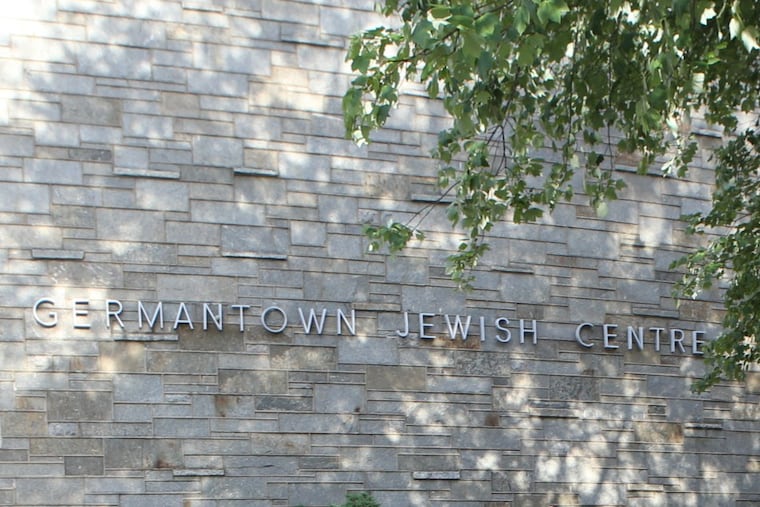
Rowan himself questioned his leadership position at Penn during a speech at a New York City synagogue in January.
“The governance at universities is so bad that I am still the board chair,” said Rowan, who launched the giving boycott and ouster of former Penn president Liz Magill and board chair Scott L. Bok in 2023 over the university’s handling of antisemitism concerns.
“Just imagine for a moment that the board chair of a subsidiary called for the resignation of the board chair of the parent company, and the president and asked all alumni on national television not to give to the university and to only give a dollar so they knew you did not forget them. I’m still there.”
But Rowan is still held in high regard at Wharton and continues to make large donations to Penn, according to an email that Wharton chief advancement officer Bill Bole wrote to development and alumni relations staff this spring.
Rowan, chief executive of the New York-based private equity firm Apollo Global Management, made a $10 million gift commitment to Wharton in May — though Bole made clear in the May 27 email, obtained by The Inquirer, that it should remain secret.
“Because of his position of volunteer leadership and his public position on events over the past two years, I know that many alumni (and others) are asking about the timing of Marc’s giving to Wharton,” he wrote, noting that it is “best practice” not to talk about any donor’s personal giving. “We will not be publishing a news announcement about this gift, and, as such, we should not share this news proactively or in answering a direct question.”
He made clear that his directive applied “both internally and externally.”
“It felt very, very different” from how other donations are handled, said one individual connected to Wharton who got the email, but asked not to be named for fear of retribution.
Rowan, a Wharton alumnus who once served on Penn’s board of trustees, also made a $1 million gift commitment to Wharton in December 2023, days after Magill and Bok stepped down, according to sources with knowledge of Penn’s donations. That donation also was not publicized.
It’s not unusual for some donors to remain anonymous, but Wharton widely touted a $50 million gift from Rowan in 2018, which was then the largest single gift Wharton had ever received. (Alumnus Bruce I. Jacobs surpassed that record last month, donating $60 million.)
Both of Rowan’s gifts went to the Penn Wharton Budget Model, described on its website as “a nonpartisan, research-based initiative that provides accurate, accessible and transparent economic analysis of public policy’s fiscal impact.”
Asked why Rowan has remained on the board, a Wharton spokesperson said “the appointment and removal of the chair … is the purview of the university trustees.”
Ramanan Raghavendran, chair of Penn’s board of trustees, did not respond to a request for comment.
Asked why Bole’s email directed staff not to disclose Rowan’s $10 million gift, the Wharton spokesperson said: “Wharton’s practice is that the announcement of any gift is at the discretion of the donor.”
Rowan declined to comment through a spokesperson.
Rowan’s roles at Penn and with the university compact
Some faculty cannot understand why Rowan still oversees the board.
“I think it’s flummoxing,” said one Wharton faculty member who asked not to be named for fear of retribution. “I don’t understand why someone who is very actively trying to undermine the flourishing of the university would still be in a leadership capacity in this way.”
The faculty member called the decision to continue to accept donations from Rowan “complicated.”
Jessa Lingel, president of the Penn chapter of the American Association of University Professors, said faculty and students deserve to know where donations to the university come from.
“We deserve to know so there is more transparency around decision-making,” she said. “Today, it’s $10 million from Marc Rowan. What if tomorrow it’s $10 million from some shadowy billionaire with questionable motives?”
University decision-making should not be done by “people with the deepest pockets,” she said. “These decisions should be made by the people who do the core work of the university, which is teaching and learning.”
Rowan’s role in Trump’s compact is now an added complication, though Penn on Thursday rejected signing the document that would have given the White House influence over key core university operations, including hiring, admissions, tuition, and, to some extent, even curriculum.
In his announcement to campus Thursday, Penn president J. Larry Jameson said that the school would “respectfully decline” to sign and that the school provided to the U.S. Department of Education “focused feedback highlighting areas of existing alignment as well as substantive concerns” with the compact.
“At Penn, we are committed to merit-based achievement and accountability,” Jameson wrote.
The proposed compact was just the latest demand from the White House as Trump works to exert authority over elite universities like Penn, which this summer reached a deal with the administration after $175 million in federal funding was paused due to the past participation of a transgender athlete in women’s sports.
Trump’s “Compact for Academic Excellence in Higher Education” asks colleges to ban the use of race and sex in hiring, admissions, and financial support for students; limit international undergraduate enrollment at 15%; and require applicants to take the SAT or other standardized admission tests. It also says the schools should freeze tuition for American students for five years, prevent grade inflation, and make conservative students feel more welcome.
Colleges also would have to commit to “defining and otherwise interpreting ‘male,’ ‘female,’ ‘woman,’ and ‘man’ according to reproductive function and biological processes,” the compact states. In effect, signing the agreement would have institutionalized the deal Penn struck for women’s athletics across the entire university’s operations.
Penn is already doing some things laid out in the compact, such as requiring applicants to submit standardized test scores, and might be willing to negotiate on others, but some items are clearly out of bounds, some observers said. In any case, none of it should be dictated by the federal government, critics say.
Rowan, through a spokesperson, declined to comment on the compact. But in an op-ed for the New York Times, he acknowledged he played a part “in the compact’s initial formulation.”
He called the higher education system “broken,” citing costs, poor job outcomes, international students who he asserted take away opportunities from U.S. students, and “uniformity of thought” among faculty.
Given federal funding that universities receive, the government has a right to be involved, he argued. He dismissed critics’ assessment of the compact as unfair.
“For more than 20 years, government mandates on a host of issues — including diversity, discrimination and student discipline — have been welcomed on college campuses because they fit within the prevailing partisan ethos,“ Rowan wrote. ”But this government mandate, intended to promote excellence in core academic pursuits and to protect free speech, is being met with prophecies of doom."
Colleges, he said, must remain neutral on “hot button political issues.”
“As many leading colleges have learned, the alternative is chaos and an environment that stifles rather than promotes individual expression,” he said.
Rowan’s efforts to oust Magill and Bok
Rowan began a public drumbeat of university criticism after the Palestine Writes Literary Festival was held on Penn’s campus in September 2023. Critics attacked the festival for including speakers with a history of making antisemitic comments but supporters defended it as a celebration of Palestinian art.
Days after Hamas’ Oct. 7, 2023, attack on Israel, he urged donors “to close their checkbooks” until Magill and Bok resigned, faulting their handling of the festival.
And he continued the efforts for months in daily emails to the board of trustees. Both Magill and Bok resigned in December 2023 after Magill’s congressional testimony on the campus’ response to antisemitism set off a bipartisan backlash.
In the aftermath of their resignations, Rowan sent what was characterized as his final email to the trustees, questioning the university’s instruction, faculty hiring, and political orientation. Among the questions, he asked whether the school should look at eliminating some academic departments — though he did not identify which — and examine “criteria for qualification for membership in the faculty,” citing a provision in the charter that allows trustees to set general policies around admission to the faculty.
The email, titled “Moving Forward,” included 18 questions, some with as many as five parts. That raised fear among faculty leaders that Rowan was attempting to set the agenda for the university, in the style of a “hostile takeover.”
In 2024, donations to the Penn Fund plummeted. In April of that year, donations were down 21% compared with the same period in 2023, the Daily Pennsylvanian, the student newspaper, reported. (Donations rebounded the following year, with the fund reporting a record $70 million-plus in the fiscal year ending June 30.)
In March 2024, Rowan publicly criticized Penn’s School of Arts and Sciences, the home of 27 departments, including a few that sponsored sessions of the Palestine Writes festival. He said faculty members in Wharton — as well as the engineering and medical schools — care about academic excellence and research.
“If you are in our arts and sciences school,” Rowan said, “not so much.”
His remarks raised questions about the propriety of the leader of one of Penn’s boards publicly criticizing another school at the university.
A ‘close, trust-based relationship’
Rowan is in the final year of his third three-year term on the Wharton advisory board. The term is up June 30, according to a Wharton spokesperson. There is a three-term limit, though there have been cases where members remained on longer, according to sources.
The advisory board is one of eight at Wharton, largely made up of alumni members who are invited to participate by Wharton’s fundraising team.
At a board lunch earlier this year, Rowan encouraged people to donate to the Wharton fund, while reminding them that “other philanthropy is a deeply personal choice,” according to Bole’s email. Bole made clear that Rowan has strong ties within Wharton’s fundraising apparatus, including Lisa Millman, senior managing director.
“I want to congratulate … Millman on having built a close, trust-based relationship with Marc, such that he felt comfortable making this gift right now,” Bole wrote.