Radnor school board is considering charter’s plan to open on Valley Forge Military Academy campus
The Valley Forge Public Service Academy Charter School is seeking to open in September on the grounds of the military academy, which is closing.
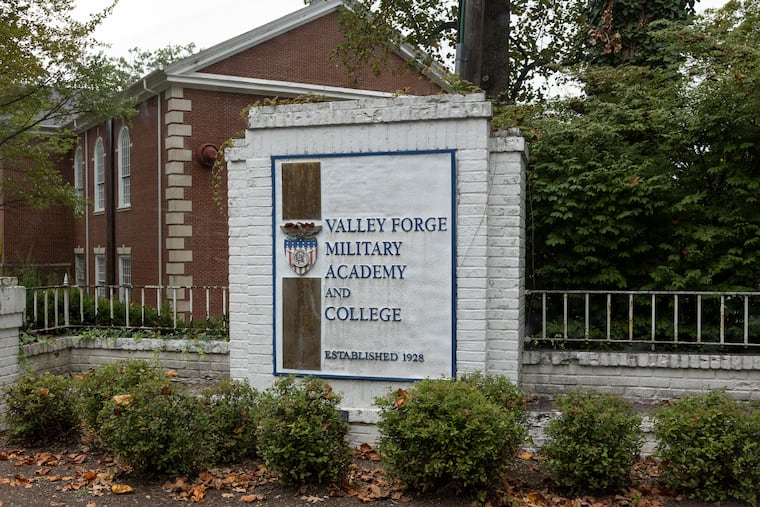
Radnor school board officials are now considering a plan for a charter school seeking to open in the fall of 2026 on the Valley Forge Military Academy campus.
A group seeking to open Valley Forge Public Service Academy Charter School on the site of the closing military school is already equipped with a leadership team and board, but it cannot open as a publicly funded charter school without approval from the local school board.
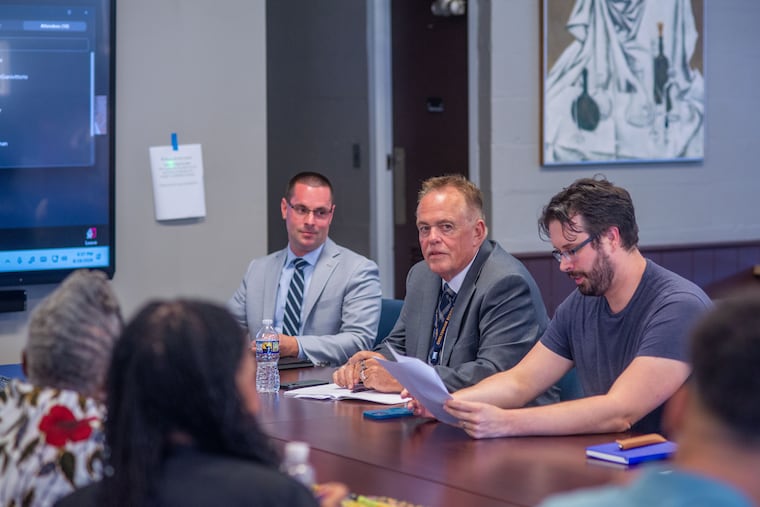
The group began the formal charter approval process Tuesday at a Radnor school board meeting with a presentation pitching a nontraditional high school experience that could prepare students for public service jobs.
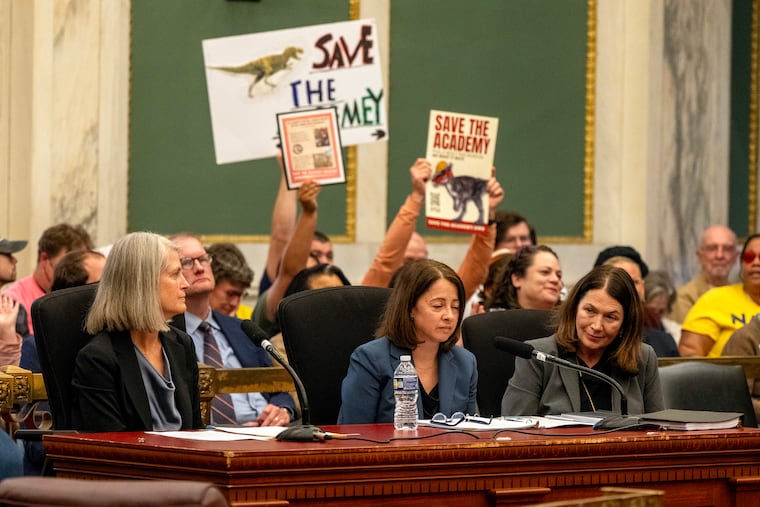
Liz Duffy, the board president, said the board entered the hearing “with an open mind toward gathering information.”
“And no decisions have been made or will be made on the application today,” she added.
At least one more hearing will follow before the board votes on the proposal. Radnor has never approved a charter school, despite receiving earlier proposals.
Why is there a charter proposal?
Valley Forge Military Academy is slated to close for good in May. The once-elite private boarding school was plagued with myriad problems amid declining enrollment, rising costs, publicity over unaddressed abuse concerns, and, according to some parents, misplaced priorities. A two-year college on the campus will continue to operate.
The Radnor school board has voted down two previous proposals to add a military-themed charter school to the campus, which the board had argued would serve as a way to subsidize the military academy. The current proposal, The Inquirer has reported, has been in the works since March — months before the private military academy announced it would shut down.
Chris Massaro, a Radnor native who runs a firm that advises educational institutions, had begun working to help the military academy in January and thought a new charter school could be a way to preserve the institution’s legacy.
Massaro said at the hearing Tuesday that he introduced charter school consultant Alan Wohlstetter to the Valley Forge Military Academy Foundation in April and “they got to work” on the plan. Massaro and Wohlstetter are both listed as founders of the potential new school.
The applicants and the foundation are presenting themselves as separate entities that would simply have a landlord-tenant relationship.
“This proposal is entirely new,” said Stephen Flavell, the prospective charter school’s founding CEO. “It has a new mission, new leadership, and a new board.”
He said the school would provide a “uniquely different” experience for students who might not be a good fit for a regular public school.
“This is an ‘and’ for Radnor, not an ‘or,’” he added.
Charter schools are publicly funded but privately run, and receive per-pupil funding from school districts.
What would the charter school offer?
Organizers said the school would prepare students in grades six through 12 for public service jobs, such as law enforcement, emergency response services, and the military. The entity’s website says its mission is “to provide a rigorous, service-oriented education that emphasizes character, discipline, academic excellence and career readiness.” Applicant spokespeople emphasized providing students with career-path alternatives to four-year college degrees.
The school would cap the number of Radnor School District attendees at 25%, and would also cater to students from nine other local school districts, according to the applicant team. “Every student graduates with a diploma plus,” said Deborah Stern, a board adviser for the prospective school. She said the school would give students opportunities to secure college credits or industry-recognized credentials in addition to their high school diploma, alongside connections in the field of their choice.
Would there be any construction?
Dave Barbalace of BSI Construction said the applicant team would pursue a $2.4 million renovation that would take six to seven months to “repair, refresh, and modernize” the building.
The renovation would include making the restrooms on the first floor bigger, a new roof, walkway repairs, and an Americans with Disabilities Act-accessible ramp, he said.
When would the charter school open?
The applicant team said the school would be ready to open in September 2026 if it is approved by the Radnor School District.
The school would have 50 students per grade, starting with just sixth through eighth grades in the fall and adding another grade each year through 12th grade..
A few students have already pre-enrolled, according to the applicant team.
What feedback has the proposal gotten?
Jim Higgins, a lifelong Radnor resident who grew up across the street from the military academy, told the school board he did not support the prior two charter school proposals but is supportive of this one.
“I care personally about what happens to the property, so I’ve been watching it,” said Higgins, who previously worked as a CEO and principal of a North Philadelphia charter school and has two kids in the Radnor school system.
“I did not support the other charter applications. I thought they were the wrong people. There wasn’t a community investment. I’m excited by this one,” he added.
Jibri Trawick, a member of the applicant team, said the team has done over 35 outreach events and collected 115 petition signatures, though not all are from Radnor residents since the school would serve the region. The applicants also have 18 letters of support from local businesses and organizations, Trawick said.
One person at the hearing expressed concern about young students sharing a campus with college students, and another questioned what was different between the proposed school’s programming and the existing options for students at Radnor’s district schools and the Delaware County Technical School.
Michael Kearney, a Wayne resident, expressed concern over whether the applicant team was planning for the unexpected expenses that come with using an aged building.
“I caution you that we don’t get too excited about what is a great idea and ignore the uncertainty and risk that are inherent in the proposal,” he said.
What comes next?
This hearing was designed for the charter school team to present its project, and a second hearing set for Jan. 20 is designed for the board, the school district’s administration, and its solicitor to question the applicant team.
The school board has to make a decision by March 1.
If Radnor rejects the application, the group could reapply, and ultimately could appeal to the Pennsylvania Department of Education.