CBS kills Stephen Colbert’s interview with a Democratic candidate. So why was Josh Shapiro allowed on the show?
Colbert blamed Trump's FCC for CBS banning "The Late Show" from airing an interview with Democratic Texas U.S. Senate candidate James Talarico.
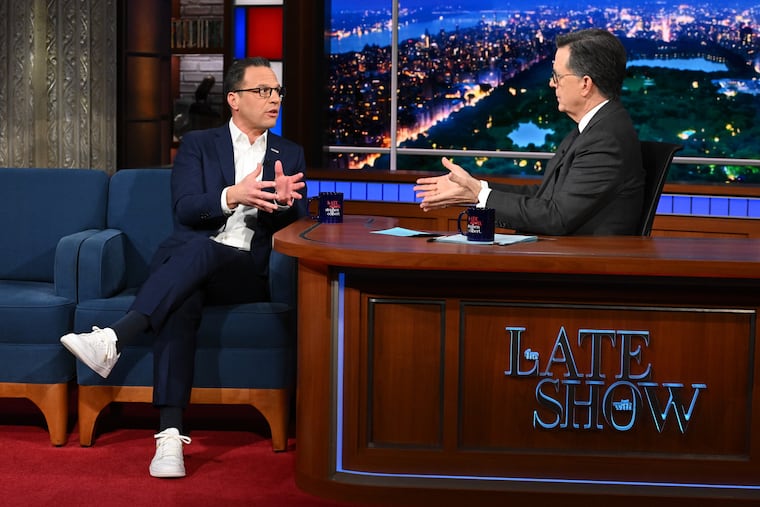
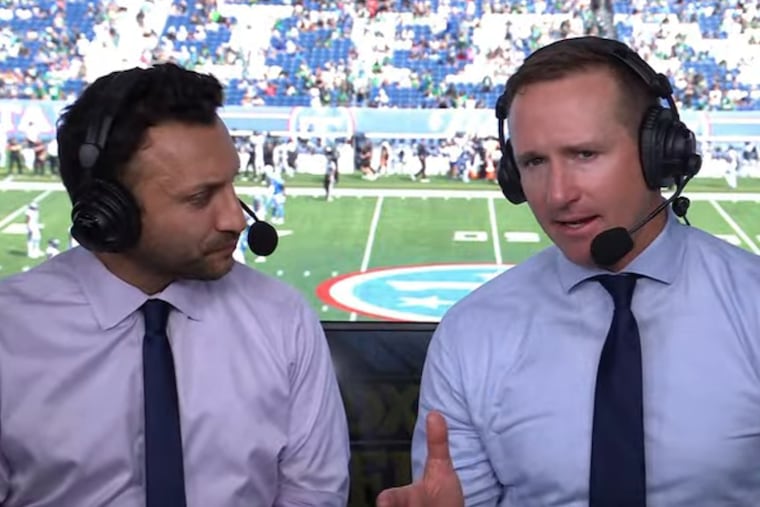
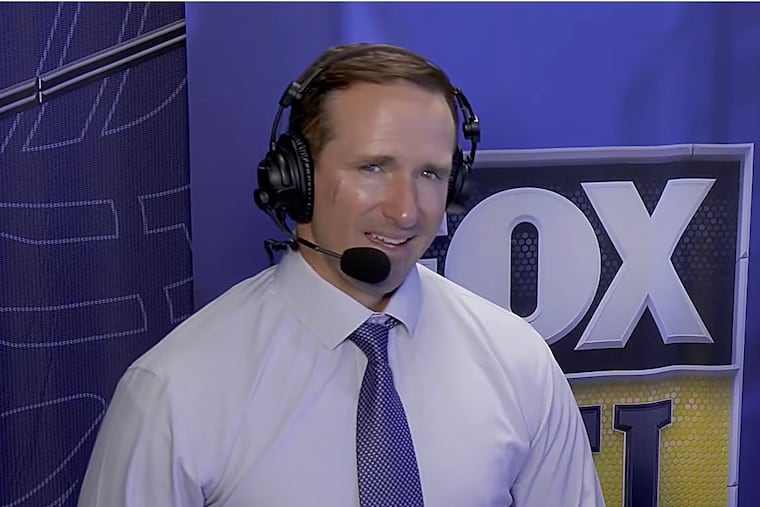
A defiant Stephen Colbert blasted CBS on Monday for killing an interview with a Texas Democrat, blaming arcane rules being enforced by the Trump administration.
“He was supposed to be here, but we were told in no uncertain terms by our network’s lawyers, who called us directly, that we could not have him on the broadcast,” Colbert said of State Rep. James Talarico, who is running in the Democratic primary for a U.S. Senate seat in Texas.
CBS issued a statement claiming they didn’t prohibit him from running an interview.
"The Late Show was not prohibited by CBS from broadcasting the interview with Rep. James Talarico," the statement read. “The show was provided legal guidance that the broadcast could trigger the FCC equal-time rule for two other candidates, including Rep. Jasmine Crockett, and presented options for how the equal time for other candidates could be fulfilled. The Late Show decided to present the interview through its YouTube channel with on-air promotion on the broadcast rather than potentially providing the equal-time options."
The decision comes down to something known as the equal-time rule, a federal requirement put into law in 1934 that requires broadcast stations like CBS to provide comparable airtime to political opponents during an election. Cable networks like Fox News and Comedy Central, home to The Daily Show, are not bound to those rules, allowing them to be as partisan as they choose.
News programs on broadcast TV (such as Meet the Press and Face the Nation) are exempt from the rule, and the Federal Communications Commission has not enforced it on late-night shows since 2006, when it ruled then-California gubernatorial candidate Arnold Schwarzenegger’s appearance on The Tonight Show with Jay Leno qualified as a “bona fide news interview.”
But that is changing under the Trump administration. FCC chairman Brendan Carr, who pressured affiliates to take ABC late-night host Jimmy Kimmel off the air in September, issued a notice to broadcasters last month stating that late-night and daytime TV talk shows may no longer be exempt from the rule, claiming some were “motivated by partisan purposes.”
The move was criticized by FCC commissioner Anna Gomez, a Democrat appointed by former President Joe Biden, who called it “an escalation in this FCC’s ongoing campaign to censor and control speech.”
Colbert said CBS prohibited the interview with Talarico from airing Monday night. Instead, it was posted in its entirety on Colbert’s YouTube channel.
“At this point, [Carr has] just released a letter that says he’s thinking about doing away with the exemption for broadcast for late night. He hasn’t done away with it yet,” Colbert said. “But my network is unilaterally enforcing it as if he had.”
Talarico told Colbert that Trump and Republicans ran against cancel culture during the last election, but now the current administration is “trying to control what we watch, what we say, what we read.”
“And this is the most dangerous kind of cancel culture, the kind that comes from the top,” Talarico said. “Corporate media executives are selling out the First Amendment to curry favor with corrupt politicians.”
Bill Carter, who covered late-night television for decades at the New York Times and currently writes for the website LateNighter, called CBS’s capitulation “shameful,” especially since the FCC has not moved yet to enforce the rule.
“Trump’s intention is to mute free speech of his critics, and he’s found the rule in the FCC and decided he can do this,” Carter said. “And he’s got the broadcasters cowed a bit.”
“Let’s just call this what it is: Donald Trump’s administration wants to silence anyone who says anything bad about Trump on TV, because all Trump does is watch TV,” Colbert added.
How was Josh Shapiro able to appear on Colbert’s show?
Despite the FCC’s threat to crack down on networks, Pennsylvania Gov. Josh Shapiro was able to appear on The Late Show last month, using his time to bash Trump’ immigration crackdown in Minneapolis as “pure evil” and Vice President JD Vance as a “sycophant” and a “suck-up.”
So why didn’t CBS ban Colbert from airing Shapiro’s interview?
The FCC’s equal-time rule applies strictly to a “legally qualified candidate for any public office.” Despite announcing his reelection campaign in Philadelphia on Jan. 8, Shapiro did not become an official candidate until Tuesday, when the state’s official filing period opened. It runs through March 10.
Shapiro was able to appear not only on Colbert’s show, but also on ABC’s daytime talk show The View, which has also found itself a target of the FCC under Carr.
“I think it’s worthwhile to have the FCC look into whether The View, and some of these other programs that you have, still qualify as bona fide news programs and therefore are exempt from the equal opportunity regime that Congress has put in place,” Carr said in a September interview with conservative CNN commentator Scott Jennings.
It’s also why U.S. Sen. Jon Ossoff’s forthcoming interview with Colbert is still slated to air on the network Wednesday. While Ossoff (D., Ga.) has announced he is running for reelection in Georgia, the window for candidates to officially file paperwork for their primaries does not open until March 2.
Neither CBS nor Ossoff’s campaign has commented on the interview.
The equal-time rule also applies to radio broadcasts, where conservative talk shows are among the most dominant formats and regularly feature Republican candidates for office during election years. Then-candidate Trump did multiple interviews on 1210 WPHT in Philadelphia during the 2024 election.
Carr has said he does not plan to enforce a stricter equal-time rule on radio stations the way he has for television networks, claiming in a news conference last month there wasn’t a similar bona fide news exemption “being misconstrued on the radio side.”