The New York Times called Delco ‘rural America.’ But it did get a key part of ‘Task’ right.
“This HBO miniseries gets rural America right.”
On Monday morning, while scrolling on my laptop, I came across a post on X that asked a seemingly absurd question.
“Is Delco rural America?” it asked.
Of course not, I thought, but then I saw the attached photo and a New York Times headline: “This HBO miniseries gets rural America right.”
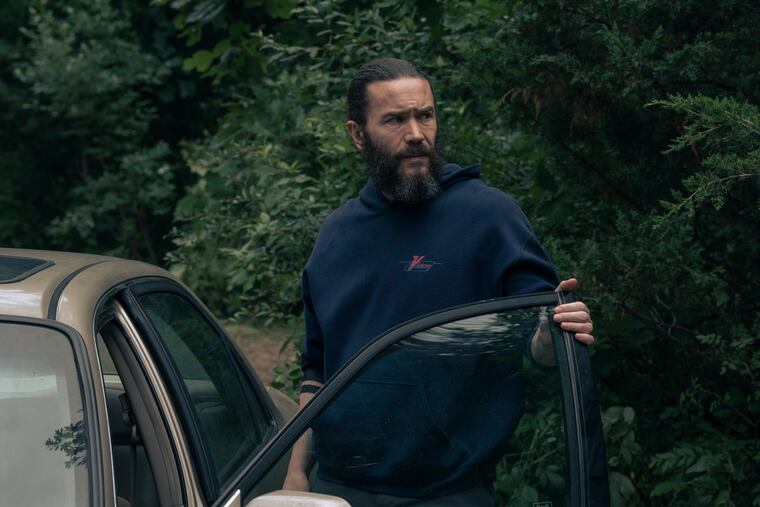
In the opinion piece, television journalist Alan Sepinwall, a New Jersey native who went to Penn, says show creator Brad Ingelsby — who grew up in Chester County — “transports us to a downtrodden stretch of rural America where a guy like Robbie has to resort to stealing from drug dealers in order to make ends meet.”
Downtrodden? Parts of it, perhaps. But I mean Villanova University, Swarthmore, and Haverford are in Delco, along with Neumann University, where the show filmed some scenes.
Statistically, there’s really no argument to support that Delco is rural. It had 54 working farms in 2022, according to the Pennsylvania Farm Bureau. Chester County had 1,558 and Lancaster County, where in Task, the Dark Hearts dabbled in meth sales, had 4,680. Knowing the trends well, all of those numbers are surely down today. According to the Center for Rural Pennsylvania, none of Delco’s 49 municipalities are considered rural based on population density.
Delco’s not much different from Philadelphia’s other ring counties on both sides of the Delaware: mostly suburban, with some more urban, post-industrial areas mixed in, along with a ton of strip malls, golf courses, and islands of great affluence. I grew up in a middle-class Camden County “pike town.” I know the vibes. I’ve known Robbies and Jaysons. I still see them at Wawa or read their obituaries. I’ve had beers with outlaw bikers and I’ve been threatened by them.
I’m also uniquely qualified to talk about rural issues because that’s what I’ve covered at The Inquirer for close to a decade. I’ve written about deer urine farmers, counties with one traffic light, the difficulties of getting cell coverage, a decent workout, and even delivering pizza up mountain roads.
I see the Times used the word “rural” to describe the show in a prior photo cutline too. It isn’t the only news outlet to call the show’s setting rural, either.
To be fair, Ingelsby did present Delaware County as more rural than it is and the characters travel to a cabin. The quarry played a big role in the show, a sacred space for Robbie if you will, though one quarry in the show is 85 miles north, in the Lehigh Valley. Another is in French Creek State Park. In the piece, the author described the quarry as a “hot spot” and, perhaps, evidence of how little the area had. I grew up playing in an elaborate, questionable fort built atop a marshy, tidal creek behind an industrial park near my house. I get it.
The characters in Task reminded me of the 2013 film Out of the Furnace, a crime drama set in post-industrial Western Pennsylvania. I just learned, while writing this, that Ingelsby co-wrote the script.
I’ve covered the kind of places you’d see in Task: not quite rural or urban or even suburban, the in-between towns haunted by better days. Many of those towns lost vital industries, the ticket to a nice middle-class life, and nothing filled the void. In Delco, that dream’s still possible. A lot of those Dark Hearts could have good-paying union jobs.
I just wrote about Shamokin, a hardscrabble, former coal town fit for Task. It became the butt of jokes after a news clip of locals mourning their burned-out Dunkin’ Donuts went viral.
I go back to Shamokin time and time again for stories, but also because my great-grandparents are buried there in a mountain cemetery.
I think Sepinwall was getting at something beyond statistics and density studies. Ingelsby, he wrote, takes viewers “somewhere other than their own reality to see the stories of people with whom they might identify.”
Like Ingelsby, I’d like to think I’m offering readers a chance to better understand a place they’ve never been and flex their empathy.
Jason Nark has written a handful of freelance pieces for the New York Times, like ones on crab boat races and the demise of rude carnival clowns.
