Does your restaurant need caviar? Philly’s got a guy named Gary
Gary Shusman supplies thousands of dollars’ worth of fish eggs to Philly’s top restaurants.
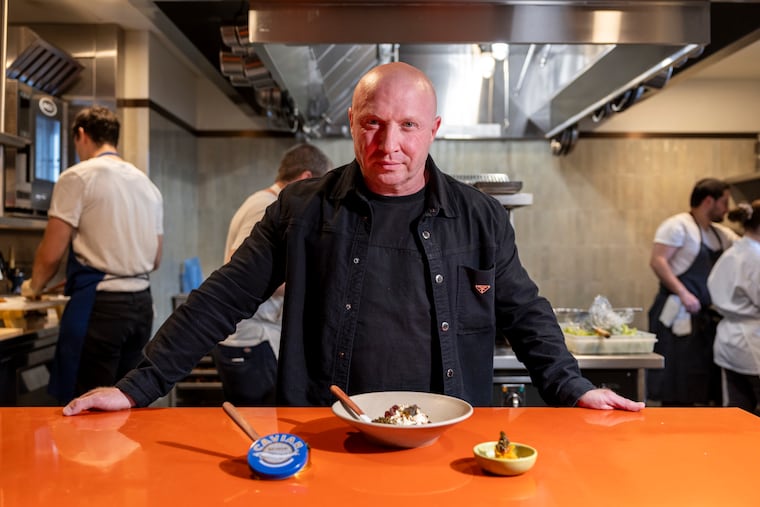
On a November afternoon, Gary Shusman slid hundreds of dollars’ worth of caviar across the counter for inspection at the Center City oyster bar Pearl & Mary. The seven 1-ounce tins were flipped upside down so the chef could scan the individual eggs for irregularities. Deep-green pearls of golden osetra glistened like tiny emeralds in the overhead light.
They were all perfect.
Shusman, 50, is in the business of tiny fish eggs. His company CaviarXS supplies the Philadelphia region’s most in-demand restaurants with sturgeon caviar imported from parts of Europe and Asia. Shusman only sells wholesale so his prices don’t reflect retail rates, he said, but a single kilogram of similar-grade caviar could cost consumers roughly $3,500.
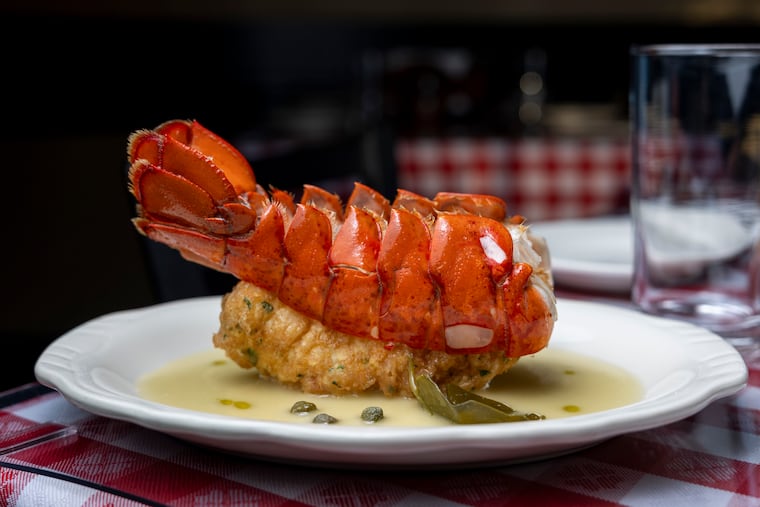
These precious beads are on the menu at nearly 50 upscale hotels and restaurants in and around Philly. They’re heaped on bluefin tuna nigiri at Jesse Ito’s notoriously difficult-to-book Royal Sushi omakase. They ooze out of a $65 double cheeseburger from Honeysuckle. They’re spooned onto petite rye tartlets filled with wagyu tartare at Emmett and plated next to crispy gold pierogis at Harp & Crown.
Provenance, Her Place Supper Club, and Friday Saturday Sunday — three of Shusman’s top clients — all took home Philadelphia’s first Michelin stars. Several others, including Honeysuckle, earned recommendations from the storied gastronomic guide.
Chefs choose to work with Shusman because his concierge-esque style adds an extra layer of luxury to caviar — something his clients say they appreciate as the fish eggs become trendier and more “accessible.”
“I think chefs are artists,” Shusman said, “and what I do is like supplying paint to Michelangelo.”
Caviar for all?
Long considered a bourgeois delicacy, caviar exploded into the mainstream in 2023 thanks to the growth of mass-produced Chinese varieties and viral TikToks from caviar heiress Danielle Zaslavskaya, who encouraged followers to spoon roe on Doritos and plain bread with butter. Suddenly caviar seemed attainable.
Soon after, “bump bars” started popping up in cities across the U.S. to sell microdoses of fish eggs, and Philly’s not immune. The Biederman’s caviar kiosk opened outside the Four Seasons Hotel late last year, and caviar is set to rule the menu at a forthcoming Rittenhouse Square Champagne bar.
Despite the hoi polloi’s enthusiasm, caviar still occupies a mostly rarified space in Philly. It’s largely reserved for high-end tastings and prix fixe menus, meted out carefully with a mother-of-pearl spoon. The fish eggs’ growing presence represents a rising tension in Philly’s food scene, which attracts national acclaim — and with it, more expensive restaurants — as the city continues to have a stark poverty rate.
Some chefs say, let caviar be caviar.
Class dynamics are top of mind at North Broad Street’s Honeysuckle. Chef Omar Tate uses Shusman’s caviar for the McDonald’s Money: a pricey burger sandwiched by milk bread that’s adorned with black truffles, flecks of edible 24-karat gold, and golden osetra pearls.
It’s an ode to Tate’s childhood in Germantown. When he would ask parents for money to get McDonald’s, “I’d get told no because we didn’t have it,” he said. “There’s truffle on this burger, there’s caviar … It’s a metaphor for consuming the money you don’t have.”
Like most everything at Tate’s culinary celebration of the Black American diaspora, the burger elicits a big reaction. The presentation’s dramatic irony makes the fish eggs feel more relevant, said Tate, who didn’t learn what caviar was — let alone taste it — until his mid-20s. He doesn’t feel like he was missing out.
“Caviar was never meant to be something consumed at scale, Tate said. ”It’s not food … it’s more closely related to a drug.”
In Society Hill, Provenance chef-owner Nich Bazik agrees that caviar isn’t meant for mass consumption. “Making it cheaper and more accessible just dilutes the product and takes away that exclusiveness, takes away from that moment you want to save up for,” said Bazik, who has a course dedicated to caviar at his French and Korean tasting counter.
From nightclubs to caviar bumps
Like Tate, Shusman remembers what it’s like to go without. He and his parents immigrated from Kyiv to Philly in 1989 as the Soviet Union collapsed. He can still recall the scarcity he felt during his childhood in Ukraine, where supermarket shelves would frequently be bare from food shortages.
Caviar has captivated him since he was a kid. He had his first taste while still living in the U.S.S.R. The pearls, served straight from the tin, were a rare treat procured from the black market by his uncle, a butcher, or his mother, who worked in food transportation. Once stateside, Shusman’s father made his living by importing Eastern European foods, including caviar.
“I don’t remember ever not liking [caviar], mostly because there was no telling when I would have it again,” said Shusman, licking his lips. “It transports you. You taste the sea.”
Caviar eggs take a decade to develop inside the stomachs of female sturgeon, a hulking freshwater fish most closely associated with the beluga native to the Caspian Sea. To harvest the eggs, you must kill the sturgeon — a controversial process that involves slicing open the stomach to reveal walls of tiny black, amber, or deep-green pearls.
Caviar was inexpensive until the 1990s, when the overfishing of beluga in the Caspian led to trade embargoes and, eventually, a complete ban as the fish became critically endangered. Today, most sturgeon are bred for caviar production in disparate pockets of the globe — Israel; China; Sacramento, Calif.; and Florida among them. The time- and resource-intensive breeding process drives up prices.
» READ MORE: Caviar on Doritos? TikTok loves it. Chefs, not so much.
While the caviar industry was undergoing its first major transformation, Shusman, then in his 30s, was partying in Philly. He owned a trio of now-shuttered nightclubs — including Rittenhouse Square’s Rumor and beloved EDM venue Soundgarden — when his wife asked him to consider leaving the industry to focus on fatherhood.
“It was a nonstop party, but it was a lot of work, a lot of stress,” said Shusman, who lives in Richboro, Bucks County, with his wife and two preteen sons. (So far, only one son likes caviar.)
Shusman was working as a real estate developer in 2017 when he found his way back to caviar. He was dining at Royal Sushi’s omakase counter when he gave chef Jesse Ito some unsolicited feedback about the caviar being served.
“His caviar wasn’t — I don’t want to say it was bad. It was just OK," recalled Shusman. “I told him I could find him something better.”
Shusman has supplied Ito with caviar ever since, establishing CaviarXS in 2018. His business largely comes from word of mouth: Bazik learned of Shusman from a Bon Appétit video about Royal Sushi, then recommended him to Evan Snyder at Emmett. Friday Saturday Sunday co-owner Chad Williams connected him to Tate. Chef Amanda Shulman sent Shusman’s number to her husband, Alex Kemp, before the couple opened My Loup in 2023.
CaviarXS’ clients almost exclusively choose golden osetra caviar, a mild, slightly nutty variety that Shusman believes to be the best. He sources it from the Caspian region, though he declines to divulge the names of the farms (or his prices).
“It’s hard to get an exact answer out of people as to where the caviar really comes from, which creates a general distrust,” said Provenance’s Bazik. “I could go online or talk to a rep from a company that says they source their caviar from this place or that place with no stamp of authenticity. Or I could call Gary.”
A milkman for fish eggs
Origin aside, chefs choose Shusman’s caviar because he personally delivers it, kind of like a high-end milkman.
“It’s about the way you make them feel … Chefs like when you hold their hand,” Shusman said. “It’s my personality. I’m very likable.”
Twice a month, Shusman travels to the Brooklyn warehouse where his caviar is stored to handpick the roe he sells to chefs. He searches for perfect pearls — uniform beads of amber that sparkle. They should burst when pressed to the roof of your mouth, he said.
On any given Tuesday or Thursday, Shusman drives around Philly for hours in his white Mercedes-Benz, dropping off tins of caviar in cooler bags printed with photo-realistic fish eggs. In between stops, he take meetings on his phone for his real estate business.
Shusman makes upward of 10 caviar deliveries a day. Often, he’ll clinch a sale by asking chefs to taste the product on the spot.
» READ MORE: What does Michelin mean for the Philly restaurant scene?
The pearls permeate much of Shusman’s life. He spoons beads of golden osetra atop of fluffy scrambled eggs for breakfast. Even Shusman’s dog — a 6-year-old Yorkie — gets caviar as a treat. Every time he starts the engine of his car, Shusman’s electronic dashboard beams the words “Hello, Gary Caviar.”
Shusman’s personal deliveries stand out because Philly doesn’t yet have a caviar market large enough to demand that level of service, said Bazik, unlike New York City or Chicago. (That may change now that the Michelin Guide has landed here, Bazik hopes.)
“I’m so spoiled … I can count on Gary to go above and beyond,” said Alex Kemp, whose wife and My Loup co-owner earned a Michelin star for Her Place Supper Club.
At My Loup, Shusman’s caviar currently speckles a $35 whitefish doughnut. In the past, Kemp said, he’s used the osetra to top a sour cream-and-onion pork rind and creamy sea urchin mousse: “It tastes so clean.”
Kemp’s loyalty to Shusman runs deep. When My Loup first opened, the restaurant lost over a pound of caviar overnight after a cleaning company accidentally unplugged its refrigerator. Shusman replaced it free of charge.
“I could’ve been lying, but he didn’t ask any questions. It was big for us as a new business,” Kemp said.
That loyalty boosts sales. Provenance goes through roughly a kilo of golden osetra eggs a week for its caviar course. In the fall, Bazik spooned it atop a whipped tofu mousse that enclosed a firm block of a sweet potato-and-licorice powder custard. Puffs of sorghum sat contrasted with the fish eggs, Bazik said, giving each bite a simultaneous crunch and pop.
The dish was inspired by things Bazik’s 4-year-old son eats (minus the caviar). Provenance pays roughly $2,000 a week — or $8,000 a month — for the fish eggs alone.
“The amount of money we spend on caviar for that one dish isn’t the best business decision I’ve ever made,” Bazik said. “But I keep doing it because it’s Gary. It comes with generosity.”

- Does your restaurant need caviar? Philly’s got a guy named Gary
- Porch pirates stole Christmas and Donna Kelce went full Traitors | Weekly Report Card
- I always shovel beyond my own sidewalk, but my neighbor doesn’t. Am I expecting too much?
- How to have a Perfect Philly Day, according to jewelry designer Emily Phillippy
- The best things we ate this week
- Citywide Quest: Do you know where in Philly these Christmas-themed photos were taken?
- Cozy inns, vintage finds, and wintery walks in the Western Catskills | Field Trip
- A seller backed out after verbally accepting their offer. It led to their dream home in Point Breeze.| How I Bought This House
- Seeing four SEPTA drivers in one trolley
Inquirer Food Festival
Get your ticket to Philly’s ultimate food party! Join top Philly chefs and bakers for one unforgettable day of food.