The most memorable things Craig LaBan tasted in Japan
The prospect of following one of America’s best sushi chefs on a food journey across Japan is tantalizing enough. But as I’d learn firsthand, Japanese food culture is about so much more than raw fish. As we traveled with Royal Izakaya & Sushi chef Jesse Ito and his father, chef Matt “Masaharu” Ito, through Tokyo, Osaka, and to the Ito ancestral home on Kyushu island, I found true delight at every level, from rarified tasting menus to the snack aisles of 7-Eleven.
Considering there are an estimated 160,000 restaurants in Tokyo alone, this is hardly a “best of” list. I’ve written about an incredible ramen crawl across Tokyo with the owners of Neighborhood Ramen and a visit to Nihonbashi Philly, a Tokyo bar/shrine to Philly culture making its own cheesesteaks and soft pretzels, in separate stories. But there were so many other great flavors along the trip. This is an account of several more highlights from a nine-day journey I’ll never forget.
Edomae-style sushi at Shimbashi Shimizu in Tokyo
We’d just touched down at Tokyo’s Haneda airport and it was 5 a.m. Philly time. Jet lag be damned! I was ready for my first omakase in Japan at this eight-seat hideaway off an alley near Shimbashi station. No pictures are allowed. No English is spoken. The only way for a foreigner to get a seat is on the recommendation of a regular. Chef Kunihiro Shimizu is revered as a master of the classic Edomae-style sushi, which means, among other things, the rice is seasoned with a startlingly assertive vinegar tang. Nearly 20 hearty pieces of nigiri and sashimi landed in waves directly on the wooden counter: velvety saltwater eel; red-tipped akagai (blood clam) cut into a pompom that crunched like sweet and briny ocean threads; a silky chawanmushi custard with hairy crab. This was also my first “wow” moment with the winter delicacy of shirako, the crinkly white pouches of cod milt that came doused in warm dashi with grated daikon. Each creamy bite melted away like a cloud.
Onigiri at 7-Eleven (everywhere)
The Japanese version of this iconic convenience store is legendary for a reason. They’re ubiquitous and stocked with fresh-made egg salad sandos, warming cases of fluffy pork buns, multicolored mochi doughnuts, and a dizzying array of onigiri rice balls that make easy snacks, including my first few breakfasts in Japan. Onigiri laced with pickled plum and seaweed and the tuna with mayo were my go-to moves.
King crab legs at Tsukiji Outer Market in Tokyo
The legendary wholesale fish market at Tsukiji moved to Toyosu in 2018, but the site remains an essential retail destination for tourists to graze the many food stalls. I ate some of richest pink toro of our visit for breakfast here, as well as skewered cubes of buttery grilled A5 Wagyu. The real star was a bucket of steamed king crab legs so sweet and tender, it was pure luxury to swab the moist plumes of white meat through garlic butter sauce laced with spiced pollock roe.
Whiskey and hand-carved ice at Abbot’s Choice in Tokyo
I wandered spontaneously into this corner bar in Shibuya’s entertainment district, looked at the impressive collection of well-priced Japanese whiskeys, and promptly took a seat. My snifter of Nikka single-malt Miyagikyo was outstanding. But the real show was watching the bartender cradle huge blocks of ice in one hand and deftly whack them into tumbler-sized cubes with a swordlike blade.
Happy salad at Den in Tokyo
Chef Zaiyu Hasegawa’s modern take on the seasonal kaiseki at Den is one of Jesse Ito’s favorite meals for a reason: It marries total mastery of techniques and traditional dishes with an inventive sense of humor and a relaxed atmosphere. That whimsy threaded throughout our meal, from the monaka rice cracker sandwich stuffed with miso-marinated foie gras and fig jam to the “Den-tucky” fried chicken wing stuffed with gingko nuts and sticky rice in a takeout box emblazoned with Hasegawa’s grinning face. We marveled at a bouncy cube of cashew milk fried like agedashi tofu (inspired by the chef’s trip to the Amazon), while two classics, a duck-and-turnip soup in bonito broth and a crispy-rice donabe bowl topped with warm ikura, radiated understated beauty.
But Den’s masterpiece is an intricate salad with 15 ever-changing ingredients, each cooked by a different technique (steamed, fried, dashi-poached, raw) — essentially a seasonal kaiseki within the larger kaiseki. It always comes topped with pickled carrot coins carved like grinning emojis that could not help but make us smile, too.
Sushi for breakfast at Iwasa, Toyosu Market in Tokyo
The fish doesn’t get fresher than what’s on display at Iwasa, which has maintained deep connections to market sources since moving to Toyosu from its original location at Tsukiji. Our omakase was meticulously crafted in small batches on still-warm rice seasoned with neutral white vinegar to showcase the fish, and it was especially strong with fatty in-season horse mackerel — whose silver skin was slit and stuffed with grated ginger — as well as sardines, black-speckled whelk, silky squid, and buttery sweet ama ebi (shrimp) that are rarely available live in the U.S. This was also my first taste of sushi abalone, whose tender, cup-shaped flesh cradled a puddle of sweet and savory soy glaze.
Tokyo Bananas at Haneda airport
When flying in Japan, there’s no shortage of good things to eat at airport concessions. But the Tokyo Bananas are essential. These are not actual bananas. They are banana-shaped sponge cakes filled with banana-flavored custard (among other variations) that are, essentially, the greatest Twinkie ever made — and shelf-stable souvenirs. My first box, however, never made it to the airport gate.
Takoyaki at Gindaco in Beppu
This iconic street food of orb-shaped fritters stuffed with octopus have their origins in Osaka but are ubiquitous across Japan. The best I ate were at a food court stand of the popular Gindaco chain in Beppu on Kyushu island. Every batch was griddled fresh to order so each ball was crisp on the outside, with a red ginger-flecked batter inside that was still molten and gooey. Shower it with all the fixings — Japanese mayo, dark sweet katsu sauce, seaweed powder, wavy bonito flakes, and tempura crunchies — then good luck not finishing an entire snackboat on the spot.
Eel box gondola in Yanagawa
One moment we’re viewing a seaweed farm and the factory of one of Japan’s leading nori producers; the next, our hosts at Maruho have shepherded us onto a donko-bune long boat in the coastal town of Yanagawa, where we glided through canals lined with cherry trees with a gondolier who serenaded us with folk songs by poet Hakushū Kitahara. A box lunch of warm eel over rice and cups of cold sake suddenly appeared from out of nowhere. After candied chips of crispy eel spine for dessert, more serenades, and multiple bridges so low we had to lie flat to slide past, we were thoroughly charmed.
Vinegar tasting at Ukonsu in Saga
High-quality vinegar is a sushi chef’s secret weapon because of the character it can lend rice when paired with raw fish. Whereas neutral white rice vinegar is most commonly used in American sushi bars, high-end sushi bars in both Japan and the U.S. increasingly prize akazu, a flavorful red vinegar from sake lees that can lend rice a brownish tint, due to its deep umami and mellow acidity. We tasted exceptional, traditionally made examples at Ukonsu in the city of Saga on Kyushu. At this nearly 200-year-old producer, prayers are offered to the vinegar gods before each batch is aged in massive wooden vats covered in straw mats that can be heard softly bubbling away as wild yeasts work their magic for up to half a year. Aside from the exceptional red rice varieties, Ukonsu steeps vinegars with fruits and vegetables — tomato, persimmon, plum, and especially roasted onion — that were a revelation.
Mentaiko bonanza at Ganso Hakata Mentaiju in Fukuoka
Prior to this trip, I’d mostly had the spicy pollock roe called mentaiko in small dabs as a zesty fish egg garnish for onigiri or creamy pastas. It is a regional specialty in Fukuoka on Kyushu, though, and at Ganso Hakata Mentaiju, it is the main event. Served inside a white box, the tiny, bead-shaped eggs infused with chile, sake, and yuzu citrus came still encased in their snappy membrane, rolled inside a kombu wrapper. Eaten over warm rice covered in ripped nori, it was one of the most intensely marine-flavored combinations I’ve tasted. The full combo set brought a bonus of tsukemen ramen for dipping into a smoky bonito broth soup enriched with, yes, more mentaiko.
Shochu night in Fukuoka
The island of Kyushu is known as the “Shochu Kingdom.” The clear spirit has been distilled there since the 15th century thanks to its agricultural riches in barley, rice, and sweet potatoes, as well as a warm climate that favored distilled alcohol over fermented sake before the advent of refrigeration. There are now 500 distilleries producing 5,000 varieties on Kyushu alone. So I was grateful to have one of the world’s preeminent experts, James Beard-nominated author Stephen Lyman, give me a thirsty crash course and a brief tour of some favorite shochu haunts in Fukuoka, where he currently lives.
We began with an earthy and tropical purple sweet potato shochu from Yamatozakura that was blended into a refreshingly fizzy highball at Ansic, a brightly lit shochu bar crammed with hundreds of bottles. The evening’s highlight, though, was our jaunt past the riverside food stalls of the Nakasu entertainment district, past a cluster of sumo wrestlers surrounded by entourages, and deep into a warren of narrow, ancient alleyways, where we landed at a snug hideaway called Bar Untitled. Owned by Sayuri Ajisaka, one of just three women to run a shochu bar in Fukuoka, the bar has a single bench for eight drinkers. Perched at the end, I took an abbreviated sipping tour of its 200-bottle collection, savoring the Chiran Tea Chu made in Kagoshima from a blend of sweet potatoes and green tea, and another sweet potato shochu from Yanagita Distillery. Each one was more proof of the elegance of a diverse spirit category too often wrongly compared to vodka. By this point, I was thoroughly transfixed by the bar’s elite-level munchie mix, which came with an ingenious plastic toy that turned shelling sunflower seeds into a Zen-like, shochu-driven trance.
Ramen breakfast at Ganso Nagahamaya in Fukuoka
Hakata ramen is famous for its superrich, cloudy tonkotsu broth and skinny, straight noodles. This legendary shop, founded in 1952, is known for a deliberately lighter version known as Nagahama-style ramen, ideal since it caters to workers getting off early-morning shifts from the Nagahama Fish Market right next door. The broth is thinner but still incredibly flavorful. The ultrathin noodles cooked for just a minute or less before they landed in the bowl with finely shaved pork and scallions, to be topped tableside with sesame and pickled red ginger. The portion is also slightly lighter than usual, so as not to weigh the workers down. But Ganso Nagahamaya also originated the noodle-refill order (known as kaedama) so hungry diners can eat extra helpings of fresh-cooked noodles at peak firmness. A perfect start to our day at 7 a.m.
Ekiben feast on the bullet train
There’s nothing like rocketing across land at 185 miles per hour on a bullet train to stoke my appetite. Japan excels in elaborate meal kits for rail travel that are sold in stations everywhere. Known as ekibens, the options are vast, from plastic bentos shaped like bullet trains to self-heating bentos stuffed with mackerel, stuffed squid, or chicken-shiitake stew. Craving a respite from all the seafood, I went for a double hambāgu feast with patties that were more like a meatloafy Salisbury steak than an American burger. I was drawn to its thick but flavorful brown mushroom gravy. Served with rice, a katsu chicken stick, and a cool scoop of potato salad, it was a much heartier feast than I needed at 11 a.m. Was it my most delicious meal in Japan? No. But it was an essential cultural experience fulfilled.
Coffee tasting at Glitch Coffee in Osaka
Coffee culture thrives in Japan at all levels, from vending machines dispensing heated cans of brisk, milky joe to the most meticulously performed pour-overs at high-end Third Wave haunts like Glitch. Glitch’s Tokyo outlets are famously crowded, but we made several easy visits to a location in Osaka that met the buzzy hype. Friendly but formal baristas hand customers their business cards as they engage in deep-dive conversations to determine personal preferences, offering customers sniffs of beans from 10 different vials with elaborate tasting notes that were spot-on.
A Colombian Huila La Loma billed as “chocolate malt, rum raisin” and an Ethiopian Yirgacheffe Idido described as “jasmine, green tea ... long finish, juicy” tasted exactly like that. Yes, it cost 2,700 yen ($17!) for a cup of primo Bolivian beans. But I savored one of the best cups I’d ever sipped.
Dotombori food crawl in Osaka
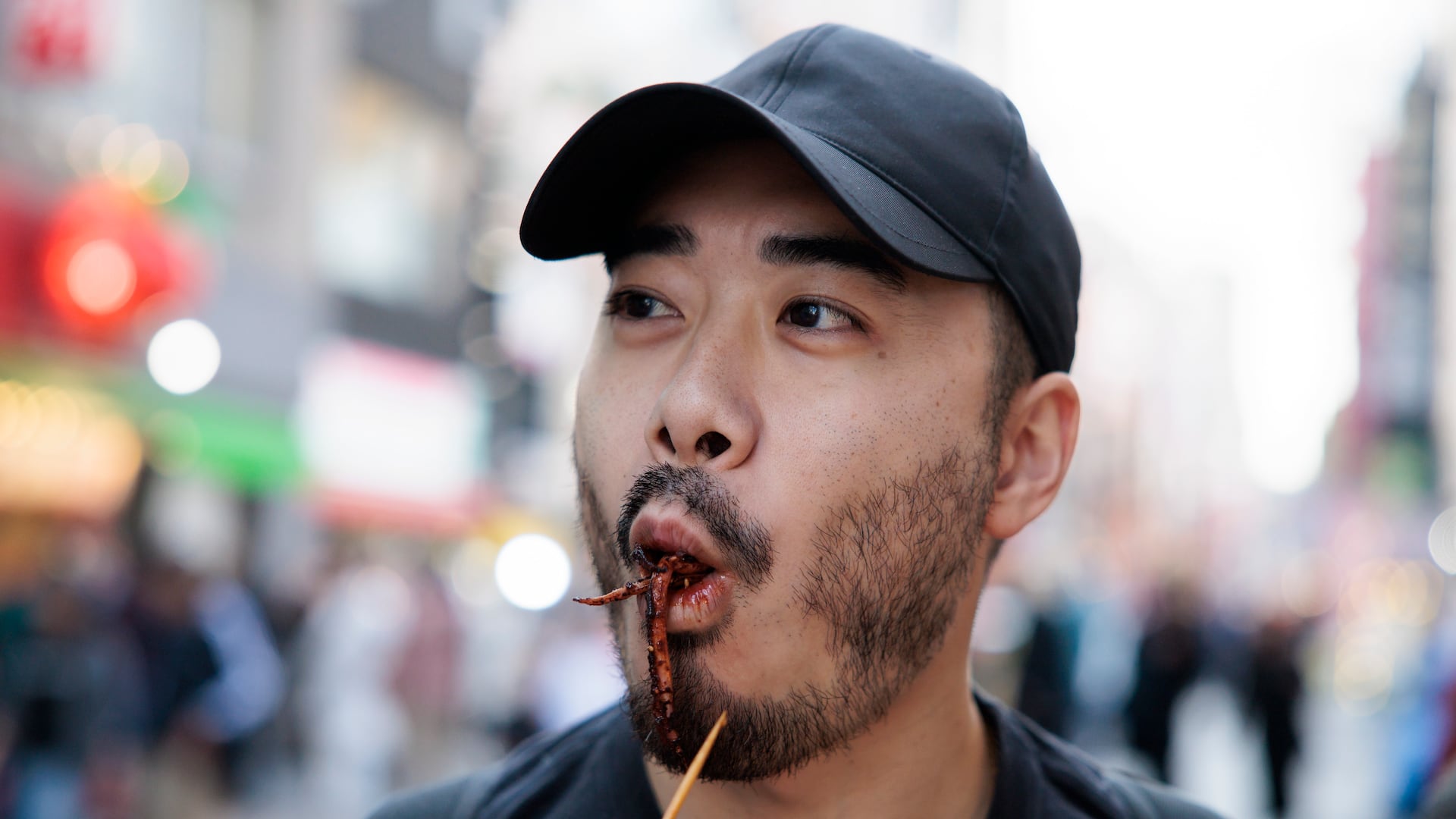
Strolling along the canal and crowded pedestrian streets of Osaka’s historic Dotombori district is an obligatory activity for tourists, and it was worthwhile if only to take in the colorful lights and massive signs of animatronic king crabs, golden cows, and octopi waving their arms above restaurant facades. As with most tourist hubs, quality varies widely. Our ultimate choice from the dozens of stands making the local specialty of takoyaki octopus fritters was sadly burnt. But there were two genuine highlights: skewers of whole squid ikayaki scissored to frilly ribbons, grilled to order, then glazed in sweet soy and dusted with spice; and tall cups of freshly fried sweet potato chips whose massive, salt-speckled chips were impossible to stop eating.
Barracuda fillet at Yohaku in Osaka
If Dotombori is a boisterous festival of lights and street-food classics, dinner at Yohaku revealed Osaka’s low-key-creative modern side. This husband-wife atelier in the Shinsaibashi neighborhood is a canelé bakery by day and restaurant by night, where chef Yoji Arakawa works solo behind a counter to produce an elegant 10-course tasting that spins beautiful Japanese ingredients with French techniques. Briny snow crab came in a tartlet with refreshing grapefruit, crunchy radish, and earthy Jerusalem artichokes. Custardy shirako (more cod milt!) was served with fruity cubes of pear beneath a foamy cloud of ricotta that mimicked its creamy fluff. Arakawa paired a fruity Japanese merlot with gorgeous Hokkaido beef alongside a brûléed fig and velvety hunk of taro. Local herbs and grains inspired a memorable duo: a savory churro made from buckwheat smeared with liver pâté and sweet red beans, and a chewy green mochi cake infused with mugwort. Our favorite dish, however, was a barracuda fillet with perfectly pan-roasted skin. It was set over a celery root puree layered with lacto-fermented banana — a funky pulse of tropical sweetness that gave this elegant dish an unexpected shimmer of delight.
Katsu curry at Hakugintei in Osaka
Jesse Ito told us to hustle so we could arrive early to this popular lunchtime destination near Honmachi station. We still waited 90 minutes to nab one of the 16 counter seats that ring its diner-like kitchen — but it was absolutely worth it. The rich brown curry is the star, a thick and fragrant sauce that swirls with fruity spice, sneakily building heat as you go. The menu options are simple: a fried tonkatsu pork cutlet, fried shrimp, spinach, or a combination of them all, mounded atop a pedestal of white rice with optional shredded cheese and raw egg yolk. It’s all thoroughly drenched in that gorgeous gravy. Easily one of my top-five favorite plates of the trip.
Yakitori at Matsuri in Osaka
At Matsuri, we feasted part-by-part on a coveted Hinai Jidori chicken, served as a parade of individual cuts on skewers, coal-grilled and basted with tare sauce. The cured “chicken ham” was the most eye-catching course — a pale leg that looked raw on the stand, but was actually cured. The salty translucent flesh, served atop a crispy sheet of nori with spicy micro-herbs, was more novelty than memorably delicious. But there were other rewards to come: tender chicken “oysters,” earthy gizzards and hearts, ground meat kebabs, fluffy dumplings, and thigh meat threaded with scallions. The most delicious bite was a rarely eaten cut from the back, a morsel of tender chicken wrapped in a thick pad of skin that arrived dripping with golden schmaltz, having been roasted over the coals till bubbly and brown.
Tea and pastries at Souen in Tokyo
If we’d had more time in Tokyo, I would have spent it at the Sakurei Tea Experience, where a modern tea ceremony pairs rare teas with pastries and tea-infused spirits. Instead, we popped into its more casual and low-key sibling, Souen, a glass-walled cafe in residential Setagaya where manager Ayumi Imamura led us to a world of options beyond the usual matcha. She meticulously prepared sencha blended with freeze-dried persimmons, another with shiso and orange peels, and yet another infused with whole cinnamon and cardamom that she toasted and ground to order then simmered in a copper ibrik pot over hot sand. A platter of exquisite seasonal pastries — griddled black-sesame dumplings, steamed castella cake with chestnuts and roasted tea, mooncakes stufeed with walnuts — completed an experience so soothing it made me wish our itinerary wasn’t quite so busy.
Pizza Y at Savoy’s Tomato and Cheese in Tokyo
Is Tokyo pizza heaven? It just might be. There are at least a dozen great pizzerias in Tokyo to explore, but we landed at the tiny Tomato and Cheese branch of Savoy, one of the pioneers. Gravel-voiced and jolly, chef Bungo Kaneco cooked our pies in his sunglasses, rocking back and forth at the shaping station to give our crusts an almost wavy edge that lent them peaks of texture that swiftly crisped in the wood-fired hearth. I loved all of the pies, including Pizza O, with braised Ozaki beef. But the true star is the Pizza Y, topped with a fistful of chopped bluefin that, when it emerges from the oven, gets crushed to reveal a tuna tartare that’s been only half-cooked. Spread across the pie along with tangy bufala mozzarella, chopped scallions, and dabs of spicy wasabi, it’s the luscious Tokyo love child of sushi culture and a fanatical pizza scene. Jesse and Matt each told me separately it was among their favorite food memories of Tokyo together.