This hidden North Philly gem serves exquisite slow-cooked Korean soups
Don’t skip the pork trotters, either.
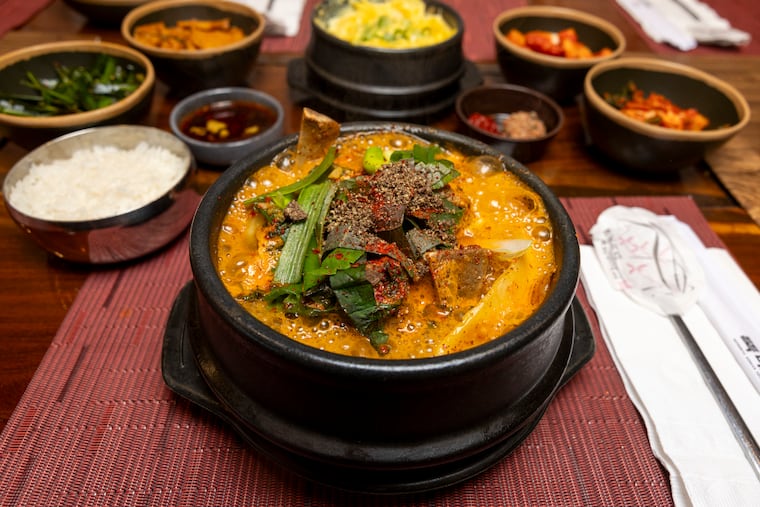
The blazing hot clay bowls on the tables at Ddukbaegi bubbled with the steam clouds of roiling red broths. Most of the diners were dressed in black. That’s because yukgaejang is the traditional Korean soup for mourners, and on this particularly busy recent Thursday night, at least 60 guests at this strip mall restaurant in North Philadelphia had come directly from a funeral for the comfort of this brisket stew.
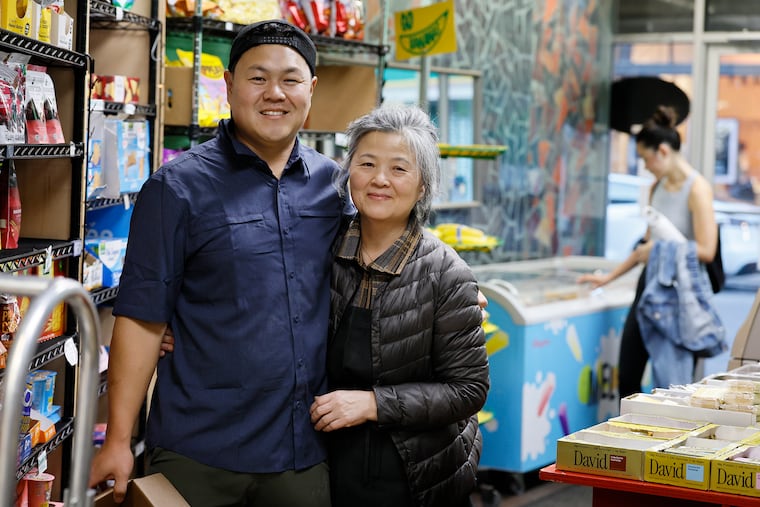
“Korean people believe those red flavors kick out the bad luck and ghosts,” says the restaurant’s owner and chef, Steven Lee. “It’s for protection.”
It’s not just the spice that makes this specialty potent. Like so many of the soups and stews at Ddukbaegi, which is named for the heat-retaining earthenware casseroles they are presented in, yukgaejang’s broth draws a powerful and nuanced flavor from several days’ worth of labor: The patient simmering of brisket into silken threads. The slow infusion of licorice root, peppercorns, bay leaves, and scallion roots. The careful skimming of beef fat to be reserved and blended with multiple kinds of gochugaru chile pepper flakes.
That orange paste is then reintroduced before serving so the soup’s spice glows, illuminating translucent glass noodles as they tangle with threads of scallion greens and shredded beef.
I get such tingles of pleasure from each fiery spoonful that I’d like to eat yukgaejang regularly. Thankfully, it is on the daily menu, along with several other stewy delights. And if you believe in the nourishing virtues of slow food, the impressive variety of traditional Korean soups at this East Oak Lane destination are among the most impressive examples we have.
The focus on the art of broth at Ddukbaegi (pronounced “Dook Bay Ghee”) is a rarity in our vibrant Korean restaurant scene, which has plenty of options for faster-cooking genres like galbi barbecue, bibimbap rice bowls, and Korean fried chicken. Lee, 45, who helped open and run one of my other favorite local Korean restaurants, Dubu, was well aware of this when he stepped in after the previous operator of Ddukbaegi left after just a few months.
Since taking over last May, Lee has narrowed the previous menu’s wider-ranging offerings to refocus the menu more on soups and other time-consuming preparations. And with at least six base broths in his arsenal, the multiple soup options are destination worthy.
Another of the signature soups, dwaeji gukbap, takes even longer to make than yukgaejang but could not be more different. It’s a blank white canvas of a soup, whose milky hue does not come from dairy, but rather, from the cloudy emulsion of meticulously cleaned pork bones simmered in water for four days.
The soup is filled to order with thinly sliced tender pork meat (including snappy ribbons of shaved pork stomach), a fistful of green onions, and a generous dusting of toasted and ground wild perilla seeds, which lend a nutty whiff of anise to the steam. The first sip can be startlingly bland, at least, if eaten within the vicinity of yukgaejang. But add a dash of salt and some few spoonfuls of steamed rice to thicken the broth (“Gukbap” means “soup with rice”) and the soup’s soft-spoken flavors reveal themselves gently with a pervading sense of comfort and warmth. Munch into the quarter-moons of radish kimchi on the side and note how its spice, well-fermented funk, and resonant crunch are deliberately calibrated to spark against the white-brothed soup, and the meal takes on three dimensions.
“Hug this bowl and stare out the window,” said Jin David Kim, a reader who alerted me to Ddukbaegi with an email about his enthusiasm for its soups, which he said remind him of his mother’s cooking and “make me deliriously happy.”
I was struck by the fact that Ddukbaegi’s soups essentially land in one of either two styles. There are the austerely plain white soups, including the soondae guk, which is similar to gukbap but includes chunks of housemade blood sausage. The sam gye tang, which brings a whole baby chicken stuffed with ginseng, chestnuts, and jujube dates, nestled inside a hot bowl filled with a fragrant clear broth is a popular choice during summer’s hottest days thanks to its deep chicken savor and herbal notes.
On the other side of the equation, there are the fiery red brews that look like bubbling portals to a volcano, selections like the popular gamja tang, a bone-in pork neck stew flavored with ssamjang bean paste, star anise, perilla seeds, and gochugaru pepper powder, with meat so tender it slides right off the rustic hunks of spine.
Lee, who notes that Korean food often excels by embracing the contrasts of sweetness, salt, and spice (sometimes all at once on the same fried chicken wing), suggests that his soup repertoire is a reflection of that yin-yang culinary tradition.
My correspondent, Jin David Kim, communications director for Mayor Cherelle L. Parker’s Office of Education and the son of a Korean studies professor at the University of Waterloo in Ontario, said the two styles reflect different historical periods in Korean food. The white soups are a throwback to an era before chile peppers made their way to Korea from the Americas in the late 16th century, when black peppercorns ruled the seasoning pastes for gochujang and even with fermented kimchi. The chile-fired reddening of Korean cuisine, he said, only took root in the 19th century. Both styles remain vital anchors of the cuisine.
“Koreans have a tendency to eat white soups for health, healing, comfort,” Kim says. “They eat the red soups for energy and a boost of vitality.”
What separates Ddukbaegi is Lee’s refusal to take shortcuts and his attention to details, including his insistence on serving kimchi whose Napa cabbage is lightly fermented for a few days — “for that refreshing, carbonated tang” — rather than made to order raw, as is typical in most local restaurants.
The sweet and spicy sauce for his pork stir-fry, jeyuk bokkeum, is also one of the best I’ve had, the marinade blending garlicky gochujang chile paste with Asian pear and apples to tenderize the meat, which takes on extra smoke from the hot wok as the finishing glaze of sweet soy sauce singes and caramelizes.
The bulgogi also benefits from the tenderizing powers of fruit (Asian pear, but also kiwi) before the beef is seared with sweet soy and onions. Try it piled over a hot stone bowl of bibimbap that sizzles with the aroma of rice toasting in sesame oil. Lee, who was born in Jeonju, the South Korean city considered the origin of bibimbap, uses a splash of anchovy broth for depth in his sauce blend with gochujang, sesame, and ripe, sweet pineapple.
I’m curious to return for the sudubu jjigae tofu stews, which Lee says are distinctly punchier than the recipe he helped craft for Dubu, whose chef remains a friend. I’d also love to come here with a big group to embark on a “grand hot pot” of budae jeongol “Army Stew” filled with sausages, Spam, and ramen; or one of the ssambap jeongsik combo meals that pair the bulgogi or spicy pork with a steamed egg casserole and all the accoutrements for lettuce wraps.
The other unique draws here, aside from the soups, are the labor intensive pork preparations of bossam and jokbal, both of which take days to make.
The bossam brings a sharing platter of the most tender pork belly, the meat perfumed from simmering in a broth with licorice and ginger before it’s chilled and sliced. The jokbal also arrives as a platter, but it comes from the hock and trotters, which get torched and shaved of their bristles before being braised in a sweet and herbal soy brew. They’re then completely deboned and sliced into what looks like a mosaic of tender meat, soy-tinged skin, and translucent collagen.
But since “ssam” is Korean for “wrapped,” the accompaniments to these platters also help define them. Both arrive with the standard offerings of fresh lettuce and perilla leaves with sides of shaved raw garlic, chilies, dollops of nutty ssamjang bean paste, and saeujot, an umami bomb of fermented minced shrimp-and-chile paste Lee tempers with a sweet splash of Sprite.
For the bossam, there are additional treats: a blanched stack of Napa cabbage leaves for wrapping that have been lightly fermented in anchovy broth for two days, alongside a vibrantly fresh kimchi made with raw oysters blended into the sliced radishes and red pepper paste. The mollusks, which more or less melt into the saucy mound, lend a tidal backnote to the radishes’ spicy crimson crunch. So when you build your own intricately layered bundle and finally eat it — soft squares of white meat, the heady spark of those radishes, leafy herbs, ssamjang paste, and chilies all snug inside a tangy fermented cabbage wrapper — it’s a sensation to experience that chorus of such boldly contrasting elements fall into thrilling harmony. It’s a one-bite culinary event, worthy of its own celebration.
“That strip mall [space has] been cursed with struggling Korean restaurants since I moved to Philly 18 years ago,” writes Kim. “But I think the curse is broken.”
Ddukbaegi
6783 N. Fifth St., Philadelphia, Pa. 19126, 215-842-5489; on Instagram
Open Wednesday through Monday, 11 a.m.-10 p.m. Closed Tuesday.
Wheelchair accessible.
Not suitable for gluten-free diners due to the amount of soy used in many recipes.
BYOB. Korean sojus are the drinks of choice.
Menu Highlights: Pajeon; pan-fried mandu; Soups (dwaji gukbap; gamja tang; yukgaejang; sam gye tang); bulgogi dolsot bibimbap; jeyuk bokkeum; bossam; jokbal.