Manong brings creative Filipino-American flavors to Fairmount — plus, it’s a lot of fun
It may not be quite the Filipino-American twist on a chain "steakhouse" it was initially described as, but Chance Anies' follow-up to Tabachoy is something far more interesting and original.
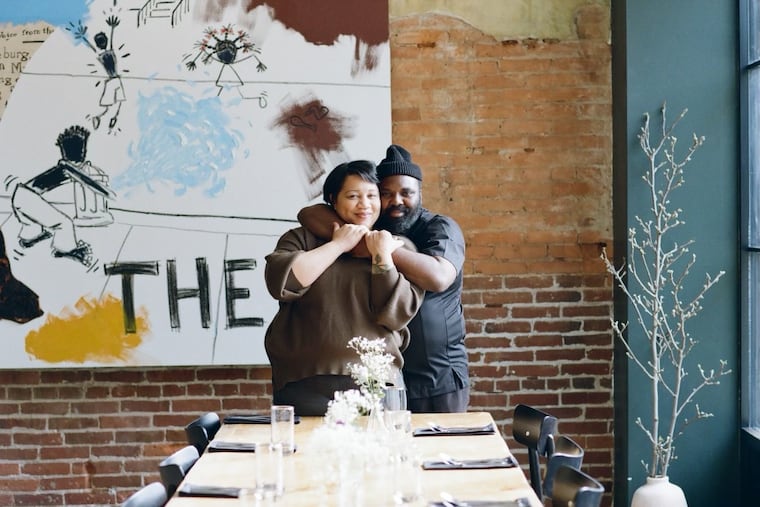
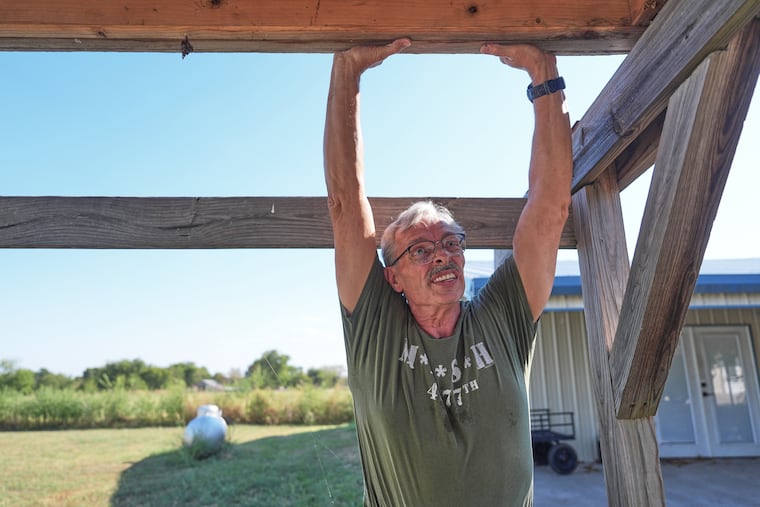
Chance Anies grew up at the tables of America’s chain restaurants. His mom’s career as a manager opening locations for TGI Friday’s, Olive Garden, Dave & Buster’s, and others meant he and his siblings spent some of their most important life events in the glow of neon flair illuminating bottomless breadstick bowls and blooming onions.
“There was something magical about growing up there,“ says Anies, 34. “There was always something for everybody, for anyone who walked in the door, including kids. They were also affordable. And what I’ve found over the years is that middle-class dining like that has been dying.”
Manong, which opened three months ago in the former Tela’s space at 19th Street and Fairmount Avenue, is filled with references to the mid-tier chains of his youth. From the longhorn skull emblazoned on the sign at its front door, to the Teenage Mutant Ninja Turtles arcade game being played for free by guests in the corner, to actual neon signs from both Applebee’s and Outback alight in its two bathrooms, the cues are here for what Anies calls his chain-inspired Filipino-American steak house.
There’s even the signature Bloom Shroom, a fantastic fungi riff on the blooming onion, whose deep-fried thatch of enoki mushrooms is irresistible — at least, when it isn’t overcooked or oversalted, as it was on my first visit.
This kitchen has largely been more reliable than that and nailed the shroom on a following visit, when its broom-like sweep of crunchy-earthy mushroom threads lived up to their potential. It was also clear after my visits here that catchy labels trying to characterize Anies’ sequel restaurant to Tabachoy, his Filipino BYOB hit in Bella Vista, really don’t do its concept justice.
For one thing, it’s not a steak house, considering that Manong didn’t even have a steak on the menu (beyond grilled beef skewers) for its first three months, when an intriguing hanger steak with fish sauce and pickled onions replaced the prime rib.
The swap was a pragmatic concession to keep the menu on the more affordable side, a prime characteristic of chain restaurant culture that Anies says inspires him. With check averages around $50 to $60, including drinks, dinner at Manong costs more than going to Longhorn. But it succeeds in hitting a more accessible sweet spot than most of Philly’s pricier destination restaurants without sacrificing the quality of from-scratch food. There’s a balancing act of handcraft and value here most chain restaurants simply can’t touch.
There’s also a level of personality, bold flavors, and storytelling to the food at Manong that is the antithesis of the sanitized corporate restaurant. This menu is a unique reflection of Anies’ childhood and life experiences as a Filipino American — including his previous careers as an English teacher, medical researcher, and food truck operator — that also diverges with its whimsy and creativity from the more traditionally framed Filipino flavors anchoring Tabachoy.
There’s an equivalent to mozzarella sticks at Manong, the dynamite lumpia, but they’re wrapped inside crispy spring roll wrappers and laced with tender pork and minced jalapeños alongside a sweet chile dip. Manong also offers one of the most distinctive new cheeseburgers in the city, a half-pound patty that spans the width of four small pandesal rolls that are still attached, like King’s Hawaiian bread.
The connected rolls can easily be divided into shareable sliders, but avoid the urge to supersize it into a full one-pound of meat because it throws off all the proportions. The standard serving maximizes its many Filipino flourishes, from the light sweetness on the fresh-baked bread to the tropical backnotes of the house banana ketchup, the calamansi-tanged slaw, and a mayo shaded by bangus (tinned milkfish), whose oily fillets are buzzed into an umami-rich spread that Anies says carries a Pinoy schmear of “je ne sais quoi.”
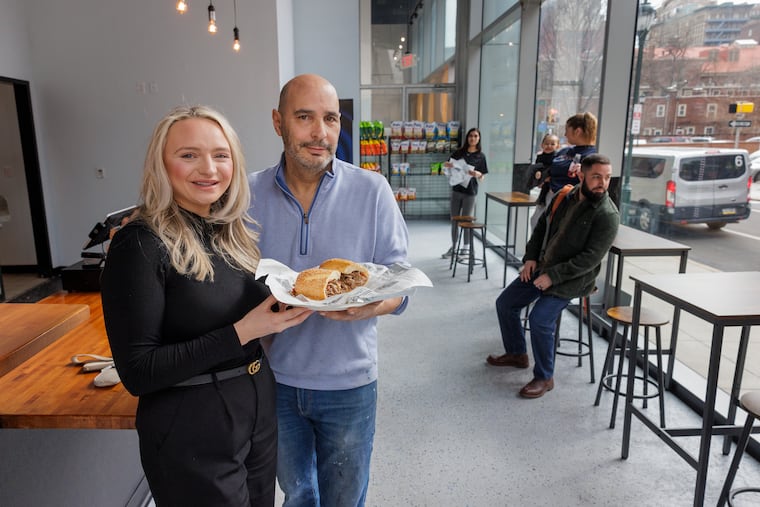
Manong, which means “elder brother” in Ilocano, the Filipino dialect of Anies’ father’s family, has 75 seats and is close to three times as big as Tabachoy, a 28-seater in Bella Vista so snug you need to access the bathroom through an alley door at the rear of the building. But Anies has made good use of this sunny, high-ceilinged corner space, warming its interior with rustic walnut accents and adding convivial booth seating to both its window walls and a central banquette.
With room for large parties, including a back alcove beneath mounted horns and a vintage truck grill with illuminated headlights, plus 13 seats at the bar, there were more groups of people simultaneously celebrating at Manong than any restaurant I’ve visited in recent memory. Conjuring that kind of joy, and for such a broad cross section of customers, is one aspect of “everyone’s family” magic that Anies has successfully channeled.
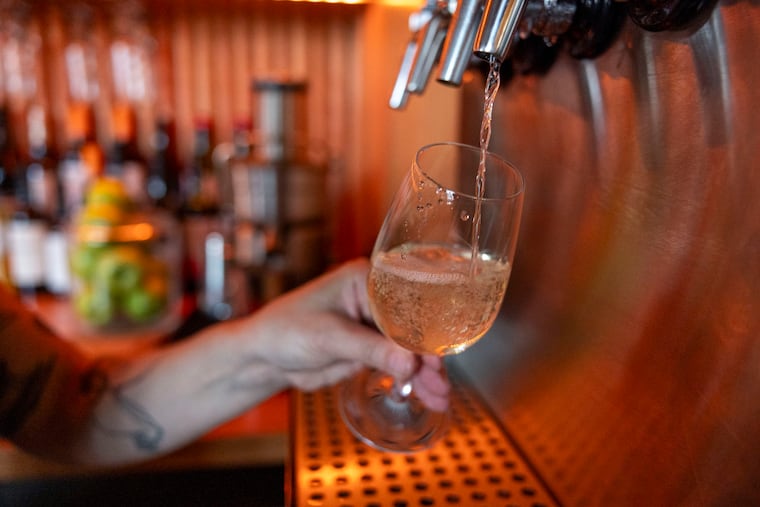
A drink program overseen by beverage manager Eliezer Santiago helps buoy the festive mood with a variety of fun, colorful drinks that also offer thematic twists, like the sky blue Otso Otso, a riff on a spicy margarita infused with green peppercorn, lemongrass, and calamansi, or an espresso martini with the added taste of sweet corn (a combo with roots in the Philippines), or a Pinoy version of the Citywide, pairing San Miguel Lite with a shot of Kasama rum.
It’s no surprise this room has a serious noise problem, and it will eventually require some significant investment to soundproof hard surfaces. It recently opened for new daytime cafe hours to pump out purple ube and pandan lattes with Herman’s Coffee, along with a limited selection of pastries, and plans to expand the daytime menu with breakfast sandwiches for a brunch debut this spring. There’s also a retail bottle shop where a fridge case full of Red Horse beer, natural wines, and sakes add yet another reason to visit.
For now, however, Manong’s dinner is more than a worthy enough draw on its own. Aside from the bloom shroom, all of the skewers are winners, including the juicy grilled chicken thighs glazed in Filipino barbecue sauce and tagalog beef sticks that evoke Japanese negimaki with thin-sliced flank steak bundles on the skewer rolled around crunchy scallions in a calamansi soy-garlic glaze.
Anies aims to evoke the rich chain restaurant pastas of his youth with the “creamy pasta” entree, but it’s infinitely more interesting here with basil fettuccine tangled in a sauce creamed with coconut and Parmesan, flavor-boosted with ginger, garlic, and thin slices of pork belly. The “super duper creamy” version may be tempting, but once again, like that burger, the “more” option was less appealing. When we opted for the bonus of trout roe and shrimp on my second visit, it came in an overly thickened cream sauce that bordered on sludge.
One of Manong’s most creative dishes is its singular option for vegans, kalabasa pyanggang, a koginut squash marinated in a garlicky paste of charred coconut husks served with a sweet vinegar lemongrass drizzle over a rich coconut milk sauce scattered with pepita seeds.
I would have loved the grilled swordfish with green mango-bitter melon salad if it had been fully cooked. That’s one fish I don’t enjoy medium-rare. But Manong has its roasted half-chicken down, a juicy lemongrass-infused bird glazed in tart calamansi vinegar and orange annato butter — at $28, a relative bargain in an era of high-priced chicken entrees
The kitchen’s pork dishes are also exceptional, including a traditional lechon liempo pork belly whose superbly tender chunks of meat are set beneath shattering amber sheets of crispy pig skin, atop a silky swoosh of creamy liver sauce.
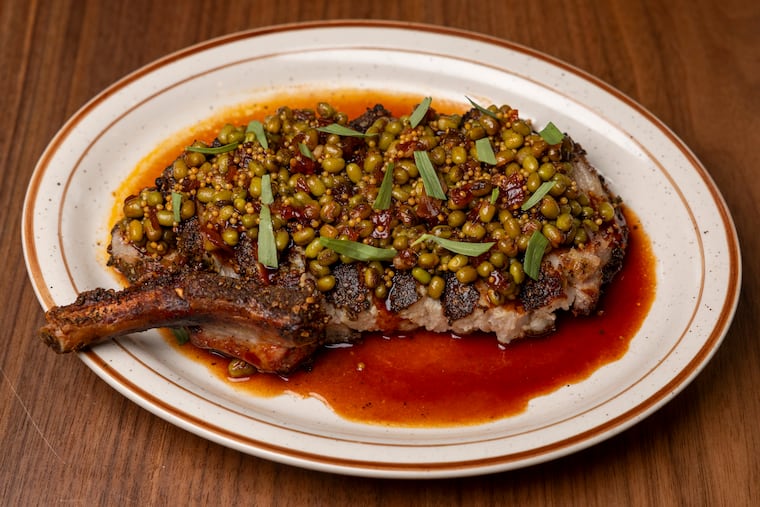
Perhaps my favorite dish at Manong is the “pork & beans,” a multicultural mash-up of a juicy grilled pork chop encrusted with green peppercorns and smothered with sweet and zesty mung beans. Think of the canned Heinz baked beans classic, but with a Filipino swagger of cane vinegar, the sweetness of brown sugar, and red yeast rice (typically used in Chinese char siu bbq), and firmer beans that possess a nutty snap of extra texture.
“Is it American? Is it Filipino? It’s neither, but also both,” says Anies, summing up not only this dish, but so much of the menu at Manong, where steaming sides of garlic rice, coconut-creamed spinach, and whipped potato salad studded with more crunchy garlic, corn, and shear potato skin chicharrones create a spirited fusion feast like no other.
Add some calamansi or mango water ice for dessert sandwiched on those fresh pandesal rolls, or the deep purple richness of its ube ice cream, and Manong’s Filipino fusion takes on a distinctly Philly vibe, too. Anies’ chain restaurant childhood may have been the impetus for the affordable and fun spirit of Manong, but he’s created something here that feels like an original.
Manong
1833 Fairmount Ave., Philadelphia, Pa. 19130, 445-223-2141; manongphilly.com
Dinner Wednesday to Sunday, 5-11 p.m. Cafe open for coffee and pastries Wednesday to Sunday, 8 a.m.-2 p.m.
Dinner entrees, $19-$35.
About 30% of the menu is gluten-free, including the bloom shroom, cooked in a gluten-free fryer.
Wheelchair accessible.
Menu Highlights: Bloom shroom; dynamite lumpia; beef stick tagalog skewer; balong burger; cream pasta; pork & beans; lechon liempo; kalabasa pyanggang; mango water ice; ube ice cream.
Drinks: The cocktail list delivers affordability and style, with a series of classic templates transformed by colorful tropical twists, from the sky blue Otso Otso infused with green peppercorn and lemongrass, to a backnote of corn in the espresso martini and Filipino rum mixed with coconut and purple sweet potato for the Ube Halaya. The beer list features both local brews and Filipino imports, including the smooth but potent Red Horse. There’s also a selection of natural wines by the six-ounce carafe. In addition, a retail bottle shop has a fine selection of natural wines and sakes to go.