One of America’s most decorated Chinese chefs brings his full-flavored cooking to the Philly suburbs
The former chef from the Chinese Embassy, who built a cult following during nomadic years of roaming through multiple kitchens, has landed in Philly with locations in King of Prussia and Colmar.
If you weren’t paying attention, you could easily drive past the nondescript storefront beside the Giant supermarket in King of Prussia’s Henderson Square. But there, glowing red from the strip-mall space wedged between a yoga studio and a dental office, is a sign with a name that caused me to hit the brakes: Peter Chang.
Chang is something of a legend in the Washington, D.C., area, especially after being profiled in 2010 by the New Yorker’s Calvin Trillin in an article — “Where’s Chang?” — that detailed a local cult following for the talented Chinese chef, despite (or perhaps because of) his perpetual moves from one Sichuan kitchen to the next. By 2011, however, Chang finally put down roots with his name attached to a restaurant in the DMV, starting in Charlottesville, Va. It became the first of a rapidly growing family empire that has since expanded to 20 restaurants of varying concepts across the Mid-Atlantic, from Chang Chang in Dupont Circle to Baltimore’s Nihao. The run that has earned this onetime chef at the Chinese Embassy multiple nominations from the James Beard Foundation, including a finalist nod for national Outstanding Chef in 2022.
Now, having debuted in the Philadelphia region with not one but two new restaurants — Peter Chang in KOP and Mama Chang in Colmar — the once-elusive Chang is virtually everywhere.
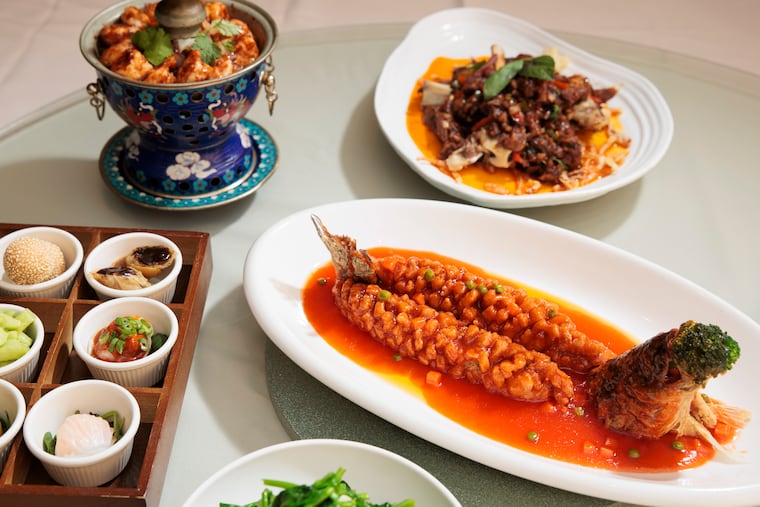
I popped the steaming hot balloon of his wife Lisa Chang’s signature bubble scallion pancake, then hungrily grazed across the nine cubbies of the dim sum sampler box, savoring the clean white snap of a crystal shrimp dumpling, the hoisin-dabbed crunch of a meaty Peking duck spring roll, and the fragrant spice of a wonton swirled with the house chili oil. I immediately concluded Chang’s arrival to Philly is a very good thing.
Figuring out where, exactly, these new restaurants sit within the context of the Philadelphia region’s already rich Chinese dining landscape is a separate question.
Chang has long been referred to by fans (and even the company’s own website) as a Sichuan chef since many of his dishes buzz with the lip-numbing “málà” hum of Sichuan peppercorns and earthy cumin perfume typical of Sichuan cooking. But he is, in fact, from the province of Hubei, a Central Chinese crossroads threaded by train lines and the Yangtze River, where the cuisines of neighboring provinces like Sichuan and Hunan have been influential, but where the flavors of those traditional dishes are also interpreted in distinct ways.
Chang’s take on dan dan noodles, for example, is simultaneously lighter, brighter, and more potently spiced than those I’ve tried in other local Sichuan restaurants — the usual ground meat subbed out for vegetarian diced tofu, then scattered with crushed peanuts and umami sparks of preserved olives and mustard greens. His black pepper shrimp, dramatically presented in a beautiful blue and yellow hot pot, is a delicious personal fusion of multiple regional styles; the bold-yet-balanced sauce blends Sichuan kung pao with the pungent tingle of Hunan black pepper and splashes of Maggi and Worcestershire sauces, which Chang’s daughter and business partner, Lydia Chang, says is a typical move in Cantonese kitchens.
The group’s flagship concept, Peter Chang, of which there are currently 15 locations, opened in a modest King of Prussia BYOB last summer, while the much larger Mama Chang debuted in October with a liquor license in a 400-seat Colmar space previously occupied by Golden City, a Chinese standby for 39 years.
In theory, the two are different concepts, with Peter Chang presenting a broad array of classic Chinese dishes, many of them presented in tapas-style small dishes, while Mama Chang, originally opened in Fairfax, Va., was created to showcase the Hubei-style home cooking and larger family-style portions inspired by Chang’s mother, Ronger Wang. In practice, the two Philadelphia-area restaurants share almost identical menus while the company figures out what each audience will respond to most.
The restaurant group has typically favored suburban locations in part because of their access to easy parking, but also for the opportunity to offer diverse communities unfamiliar with traditional Chinese cooking a taste of something different, says Lydia Chang. In the case of this region, however, there’s already been a major demographic shift of Chinese families moving to Philly’s northern and western suburbs over the past two decades. Restaurants like Mama Wong, the original locations for Han Dynasty in Exton and Royersford, and Margaret Kuo’s Kitchen have successfully found their audiences without having to make too many compromises.
About 40% of Peter Chang’s King of Prussia customers are of Chinese descent, Lydia Chang says. But in Colmar, that number drops to 20%, she says, and preferences for Americanized Chinese food remain strong. (“We try to be flexible,” she says, noting some Americanized standards like chicken lo mein and shrimp fried rice are still available.) The value of Peking duck combo meals and a $33 all-you-can-eat brunch and dim sum on weekends have been a draw.
There are so many distinctive dishes at both locations, however, I‘d encourage diners to skip the impulse to order General Tso’s and try the Wuxi sweet-and-sour chicken, whose larger chunks and lighter batter feature a sauce with a punchy dose of garlic. The various dim sum here are also a great place to start, whether as the sampler or ordered in individual gems such as the firecracker cilantro fish roll, a shiitake-bok choy dumpling wrapped in a kale-infused dough, or the vibrant take on garlicky cucumber salad, which glows pale green with a dressing of pureed jalapeños and scallions.
Sticking with Chang’s green trend, try the jade tofu duck soup, whose verdant broth is tinted with kale puree but also meaty with duck stock thanks to all the carcasses left over from the restaurant’s brisk Peking duck trade. Chang’s birds are cooked the classic way: inflated twice with a pump to separate the skin from the flesh, massaged with five-spice salt, scalded in a bath of baking soda, then roasted with a vinegar-and-corn syrup glaze until the tawny skin snaps like a candied cracker, to be wrapped tableside in pliant house-steamed pancakes with shaved scallion and a sweet dab of hoisin.
The duck is a sure crowd-pleaser, as is the meaty branzino in sweet-and-sour sauce, whose deep-fried fillets are crosshatched like a pine cone in a show of the kitchen’s technical proficiency with classic dishes. Another personal favorite, the dragon eggplant in garlic sauce, showcases more impressive knifework, using a series of angular cuts in the suoyi style that lets it expand, Slinky-like, through a saucy glaze that balances sweetness, tang, and spice.
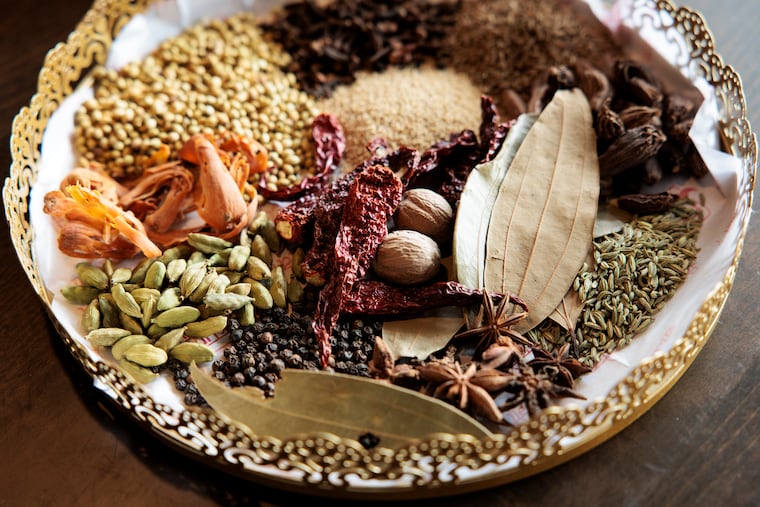
Chang has a special fondness for spice, says his daughter, and that’s particularly evident in dishes that employ a double-cooked “dry fry” method, in which ingredients are precooked or crisped in batter, then refried in the wok with shimmering aromatic spice. The eggplant fries are one delicious example, but so is the bamboo fish: crispy flounder fingers seared inside a crust that crackles from the addition of cooking wine and cornstarch, and radiates the heat of chilies and herbal fresh cilantro. House-steeped chili oil infused with cardamom and star anise, which takes days to make, transforms shredded tofu skin salad into irresistibly snappy noodles. Pickled fresh chilies are key to the soybean beef pot, a rarely seen rustic specialty that arrives simmering in a clay vessel. The hand-pulled noodles on Mama Chang’s menu employ chewy, hand-pulled Xi’an “belt” noodles as a springboard for garlic, ground Sichuan peppercorn powder, and coarse pepper flake garnishes that actually sizzle with aromatic steam when hot chili oil is drizzled over the base sauce of vinegar and soy.
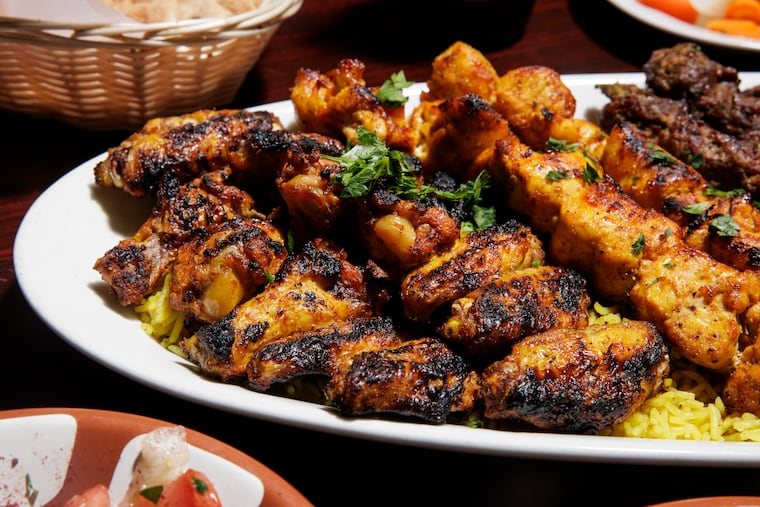
But no dish brings a wallop of earthy flavor quite like the massive serving of double lamb shanks, an Uighur-style dish I could not get enough of, whose tender meat comes falling off the bone, absolutely encrusted in cumin and pickled chilies.
It’s not all spice bombs. Some of the best offerings at both places reflect subtler flavors. One is the “farmer’s stir-fry,” which incorporates rough-chopped celery, bell peppers, and tofu skin scrambled into eggs, a nod to what Peter Chang’s mom used to whip together from their family farm.
Another classic, the Yangzhou-style Lion’s Head meatballs are the height of comfort perfected through a knowing touch. These massive, cloudlike orbs of pork, impossibly fluffy in mild brown gravy, are the result of careful handiwork — both on the mince and the whipping, incorporating the meat into a high percentage of fat that simply melts away over the course of a slow braise in rich sauce scented with sesame oil and soy. I’ve had this dish multiple times in Chinatown, but never such an airy rendition. Served in a hot pot topped with a ceramic Buddha, it’s the kind of nostalgic dish that bridges the elegance, say, of an embassy banquet with the homespun feeling the restaurant group would like Mama Chang to eventually embrace more fully in Colmar.
I’ll be curious to observe as these two locations evolve, especially once the wider public realizes one of America’s most decorated Chinese chefs has finally landed in our region. As is, they’re both already worthy additions to the suburban dining scene. Once Chang and his family find their footing and dive deeper into their culinary mission, there’s potential for the pair of restaurants to become a wider draw.
Peter Chang KOP
Henderson Square, 314 S. Henderson Rd., Suite C, King of Prussia, 717-431-0488, peterchangkop.com
Open 11 a.m. to 9 p.m. Sunday through Thursday, until 10 p.m. Friday and Saturday.
Larger plates, $16-$40.
Wheelchair accessible.
Not ideal for gluten-free dining.
BYOB
Menu highlights: Dim sum box platter (firecracker cilantro fish roll; Peking duck roll; chili oil pork and shrimp wonton; garlic cucumber salad); scallion bubble pancake; tofu skin salad with chili oil; dan dan noodles with tofu; spicy dry fried eggplant; farmer’s stir-fry; dry fried bamboo fish; twice-cooked pork belly; dragon eggplant with garlic sauce; Peking duck; soy bean beef pot; cumin lamb shank; fried branzino with sweet and sour sauce.
Mama Chang
118 Bethlehem Pike, Colmar, 215-822-0299, mamachangphiladelphia.com
Open 11 a.m. to 9 p.m. Sunday through Thursday, until 10 p.m. Friday and Saturday. Brunch 11 a.m. to 3 p.m. Friday through Sunday.
Larger plates, $16-$42. Bottomless dim sum weekend brunch, $33 per person.
Wheelchair accessible.
Not ideal for gluten-free dining.
Drinks: Full liquor license showcasing simple, colorful cocktails with tropical twists, Chinese beers, and baiju.
Menu highlights: Many of the above Peter Chang dishes are available here, including also: jade tofu duck soup; Lion’s Head pork meatballs.