‘The Frog Commissary Cookbook’ remains a Philadelphia icon over 40 years after its debut
Drawing from menu items at the Frög and the Commissary, the cookbook introduced Philly home cooks to unfamiliar ingredients. Forty-one years later, the book still has devoted fans.
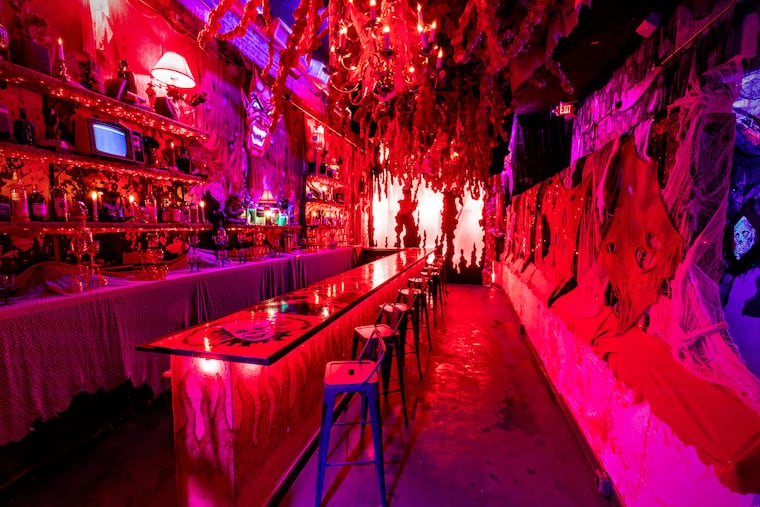
Chef Justin Bacharach hadn’t read up on the history of 1710 Sansom St. before he opened dancerobot there in September. He knew it was previously a bottle shop with a deli, but was otherwise too busy to give it much thought.
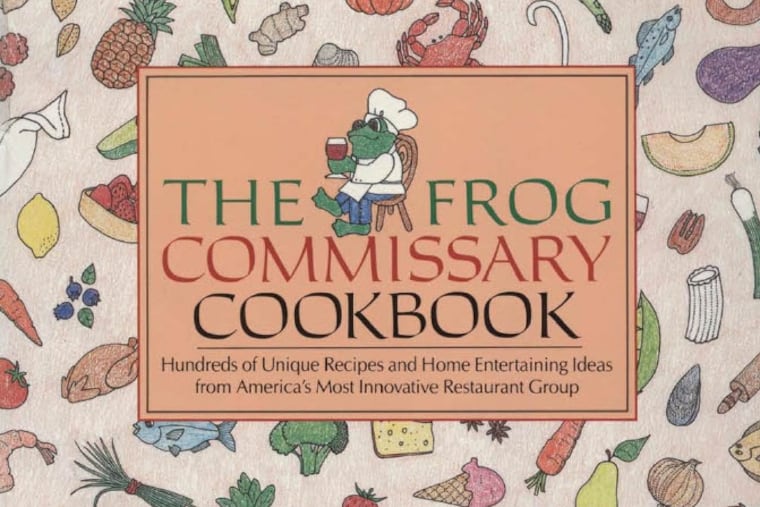
That changed just before opening night, when Bacharach’s business partner, chef Jesse Ito, brought in a copy of The Frog Commissary Cookbook. A regular at Royal Sushi gifted it to the James Beard Award-winning chef, telling Ito that dancerobot was once home to the Commissary, a legendary counter-service spot that was part of Philadelphia’s dining renaissance when it opened in 1977.
The gift triggered an immediate reaction: “It was the first cookbook that I really put eyes on and paged through,” Bacharach, 35, said. His parents kept a copy in their Bucks County home, and his mother baked the book’s most famous recipe, an elaborate carrot cake, for special occasions.
“This is fate,” Bacharach said. Now, more than 30 years after the Commissary closed, the cake is once again being served at the same Sansom Street address.
Written by Steven Poses, Anne Clark, and Becky Roller, and published in 1985, The Frog Commissary Cookbook pulled together recipes from the Commissary, its innovative older sibling Frog, and Poses’ other restaurants. The peach-colored volume, peppered with Roller’s charming illustrations, quickly became a Philly staple. It taught home cooks and industry professionals alike how to entertain and introduced them to ingredients then unfamiliar to many Philadelphians, such as Sichuan peppercorns, Thai curry pastes, and good-quality balsamic vinegar.
Today, The Frog Commissary Cookbook remains an essential part of Philadelphia’s culinary fabric. But it still feels like a secret: beloved locally, yet relatively unknown elsewhere.
“This was the book that everyone wanted because it was our book,” said Lexy Bloom, a Philadelphia native and editorial director at Knopf Cooks, a major cookbook publisher. It was Philly’s version of The Silver Palate Cookbook, the era’s national breakout cookbook. “Everybody had it; everybody cooked from it,” she said.
The Frog Commissary Cookbook allowed home cooks to make recipes like the carrot cake and strawberry heart tarts that they knew and loved, but also had “this really interesting global palate that I think was unusual at the time and exciting to people,” Bloom said. “This book is so playful and experimental.”
A post about the book in the 183,000-member Vintage Philadelphia Facebook group elicited nearly 1,000 comments. Some were about copies passed down through generations. Others described editions that were packed up as keepsakes. At least one was about a copy lost in a divorce and later replaced at an estate sale.
“Each tear and mark tells a story of countless delicious meals shared with family,” said one commenter with a tattered book. When it came out, another added, young women like her were “so excited to cook something that their mothers couldn’t.”
Barb Cohan-Saavedra, who owned the longstanding French-Mexican restaurant Paloma, used to serve The Frog Commissary Cookbook’s cheesecake. “I now have 1,500+ cookbooks and this remains one of my favorites,” she wrote.
(The book has also played an important part in this author’s life — particularly the sweet recipes, like the heart tarts developed by Clark, my unofficial culinary tutor and teacher at the Philadelphia School.)
For help, just call
The cookbook included a note in early editions: “Because this book is the result of a living organization, should you have a problem with any recipe in the book, just call us … or write to us,” it read. “We will find someone who can help you.”
From the book’s 1985 publication until the Commissary’s 1994 closure, the restaurant received three to five calls a week from readers, Poses estimated in a recent interview. One of them was Nanci Schwartz Gilberg, 75, of Penn Valley, who called about making the book’s Champagne cream sauce for capelliniwith bay scallops for a party of 100. Wondering if she could prepare the dish ahead of time, she rang the restaurant. Someone there asked if she would like to speak to Poses.
“Are you kidding? I would love it,” Schwartz Gilberg remembered responding. Poses recommended making the sauce á la minute. Schwartz Gilberg ultimately didn’t follow his advice, but the recipe worked anyway, she said.
Answering questions was simply “part of the commitment we made,” Poses said. “It was part of the philosophy from the very beginning: ‘How can we help?’”
The result struck “the note of a community cookbook,” explained Bloom, likening it to volumes published by churches and synagogues that were popular at the time. “It gives a great sense of how essential the Frog/Commissary was.”
Even before the book came out, the restaurants’ staff would write down recipes for guests who asked. And while Frog and the Commissary closed in 1987 and 1994, respectively, Poses and Clark still field the occasional questions.
A carrot cake — and a culture — endures
Like its inspirations, The Frog Commissary captured a time when Philadelphia’s culinary scene started to push beyond steakhouses, red sauce joints, and fish houses to create its own version of New American food. Alongside Western recipes like country pâté and chicken with brandied mustard cream sauce were ones for Thai beef and Siamese chicken curries enriched with pastes that Thai kitchen staffers introduced to Poses.
The book is also a time capsule of the 1980s, an era when corn oil was more common, salt was less important in desserts, and people weren’t debating over the term “fusion.”
The restaurants’ — and subsequently the book’s — recipes drew inspiration from the team’s travels and heritage, plus the Foods of the World series published by Time-Life. The staff would taste and discuss everything as a group. “We were not afraid to tweak it and make it ours,” Clark said. “If it didn’t taste good, it didn’t fly.”
The Commissary and its accompanying market were a favorite of High Street Hospitality founder Ellen Yin. In some ways, they inspired her to open Fork and its erstwhile offshoot Fork: etc, she said. The book’s sidebars on setting up a bar and serving oysters taught her how to entertain.
For a time, the book remained in the group’s cookbook library at the old High Street on Market. When staff needed ideas for canapés or instructions for making spring rolls, Yin would tell them to look through its pages. “These passed hors d’oeuvres are classic,” she said.
Now out of print, the cookbook has staying power thanks to an e-book (including one available from the Free Library of Philadelphia) and a steady stream of copies that cycle through the city’s used bookstores. Many of its recipes — mushroom-barley soup, vegetarian chili with bulgur, and the chocolate chip fudge cake referred to as “killer cake” — are still home-cook staples.
But, most of all, readers bake and reminisce about Clark’s carrot cake. At dancerobot, slices are available on Fridays and Saturdays, and may eventually become a permanent offering, Bacharach said.
It’s a mostly faithful adaptation. When the restaurant’s pastry chef and baker, Sophie Wieber, tested the cake, Bacharach tasted something slightly new: “You did something different. I think I know what it is,” he said. It was more salt — Wieber’s only tweak — “and it was perfect.”
Inquirer Food Festival
Get your ticket to Philly’s ultimate food party! Join top Philly chefs and bakers for one unforgettable day of food.