How two Philly chefs are preserving their Palestinian and Lebanese roots — one tightly rolled grape leaf at a time
Saif Manna and Miled Finianos are teaching a grape leaf rolling class at Minimal Chaos Studios in the Bok building on Saturday.
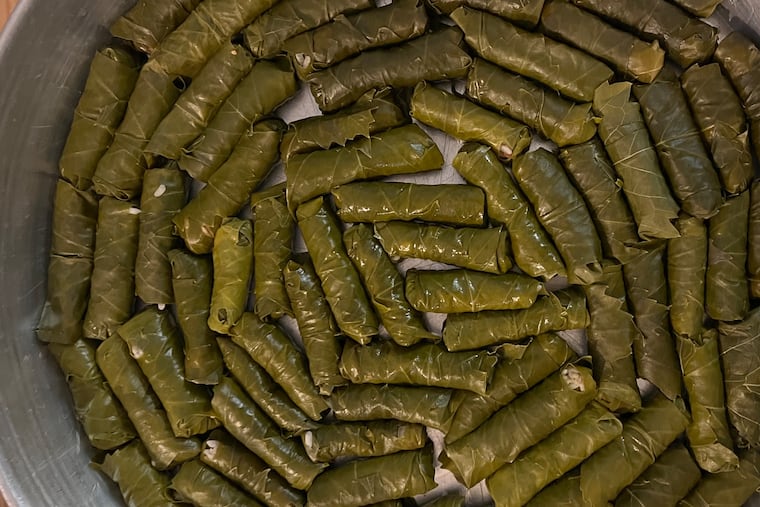
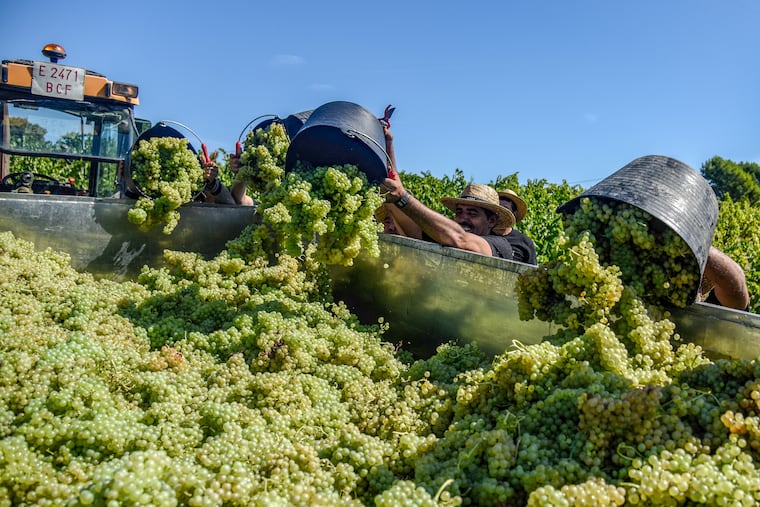
Growing up in Amman, Jordan, Saif Manna would wake to the smell of grapevine leaves drifting in with the morning breeze. He’d find his Palestinian grandmother in her kitchen, stuffing the leaves from the backyard with tiny heaps of meat and rice, then rolling them into cigarette-size bundles.
Manna tried it himself, only for it to burst open, and quickly learned the secret: roll tightly enough to keep the rice from bursting when cooked.
It was the same lesson Miled Finianos learned in his grandmother’s home over 200 miles away in Zgharta, Lebanon, watching her effortlessly fill, fold, and roll hundreds of grape leaves in one sitting.
Now, the two rising chefs — Manna, who helms Manna Bakery, known for what some call Philly’s best cookies, and Finianos, who runs the underground Habibi Supper Club — are passing down the tradition to Philadelphians.
The meat and spices tucked inside the Middle Eastern dish — known as dolma in Turkey and yabraq in Syria — vary slightly from country to country, even village to village. But what remains consistent throughout the region is the method of rolling.
“There’s a lot of variations with warak enab,” said Manna, who makes his with ground lamb and Egyptian short grain rice. “But when you see someone rolling it, it takes you back home — regardless of what’s going to be inside, you know it’s going to be a delicious dish.”
In the Middle East, making dishes like warak enab is often laborious and made with community, bringing people together to feed many. Both chefs remember their grandmothers gathering with friends and family to gossip and roll grape leaves.
That sense of community is at the heart of why they’re offering a hands-on workshop teaching people how to make warak enab — a collaboration between their pop-up ventures and a tribute to the women who shaped their culinary roots.
The event will take place Saturday, June 14, at Minimal Chaos Studios in the Bok Building.
“We’ve seen each other in the same circles as two of a few Arab chefs in Philadelphia,” Finianos said. “So, [a workshop] came up naturally. We both are serving food from the same region where there’s overlap — not all the time, but this is one dish that does.”
For many in the Arab diaspora, food is a way to hold onto identity and history, especially when physical ties to homeland feel distant or fragile. Teaching people about a beloved dish is an act of cultural preservation for the chefs — a way to share the history and heritage of the homelands these recipes come from.
Food is rooted in resilience — with dishes born from tradition, resourcefulness, and the effort to keep culture alive across generations. “Bringing people together and trying to preserve what is being destroyed at the moment is primarily what we are doing here through dishes from our homelands,” Manna explained.
Attending the workshop, Philadelphians will “learn about the land and about the people who are trying to take care of the land,” Manna said, just as his and Finianos’ grandmothers’ taught them.
“Food is part of our identity and spirit as Arabs — we feel very strongly about our land, our people, our food, our community, and that all ties together," Finianos said. “When you preserve one dish and you share it, you’re sharing it all — and I think that’s important now more than ever.”

The workshop will be June 14 at 6 p.m. at the Minimal Chaos Studio in the Bok Building (3rd Floor, Room 310). Tickets are $90 and available for purchase online. All materials will be provided.
(Note: There are limited spots left, but there will be more workshops in the future.)
🕒 Sat., June 14, 6 p.m.📍1901 S 9th St, Philadelphia, Pa. 19148,🌐 instagram.com/p/DJ2PFgCyCO2/