When your java is from Java: Philly’s new era of Indonesian cafés
A new generation of Indonesian cafés is reshaping Philly’s coffee culture with bold design, playful flavors, and global flair.
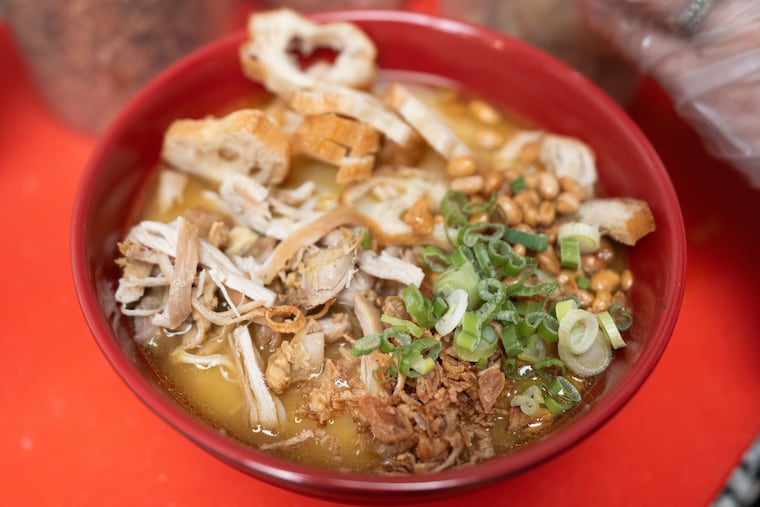
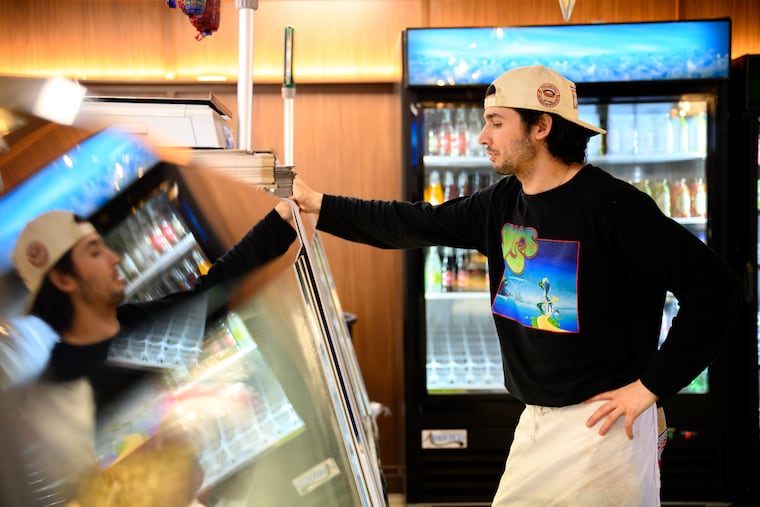
Deep in South Philly, Griddle & Rice’s storefront is a burst of color. The fast-casual, always-crowded café — with its checkered tile and pop-art-inspired branding — looks a bit like what you’d get if Middle Child went Indonesian.
Just like at Middle Child, Griddle & Rice, which opened in May, serves egg sandwiches on airy bread with arugula and cheddar cheese. There’s no pork bacon here (Indonesia’s population is majority Muslim), but you can select turkey or beef bacon instead.
A new wave of Indonesian cafés is blending Western and Indonesian snacks and comfort foods with Indonesian-style coffee drinks — sometimes made with beans from literal Java and often mixed with Milo or matcha. These spots aren’t just evolving Philly’s Indonesian food scene; they’re injecting fun into the larger dining culture of the city, expanding upon the cartoon-heavy, youthful aesthetic that Martabak OK — which introduced the city to hefty, stuffed Indonesian pancakes in 2018 — helped start.
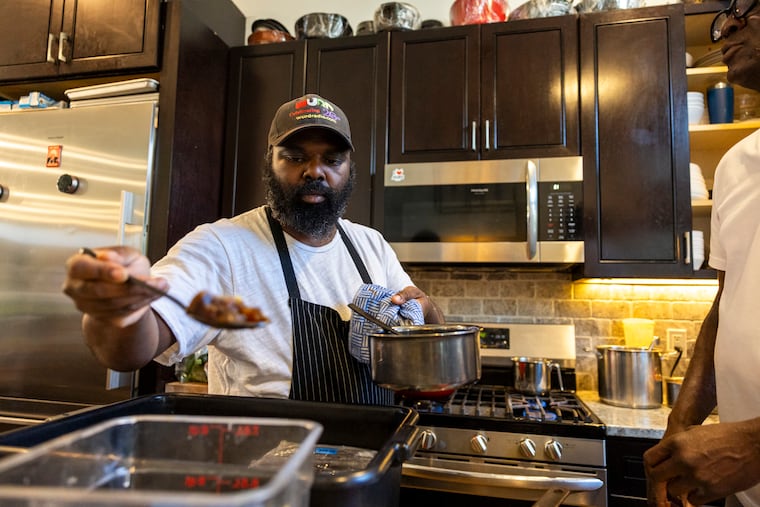
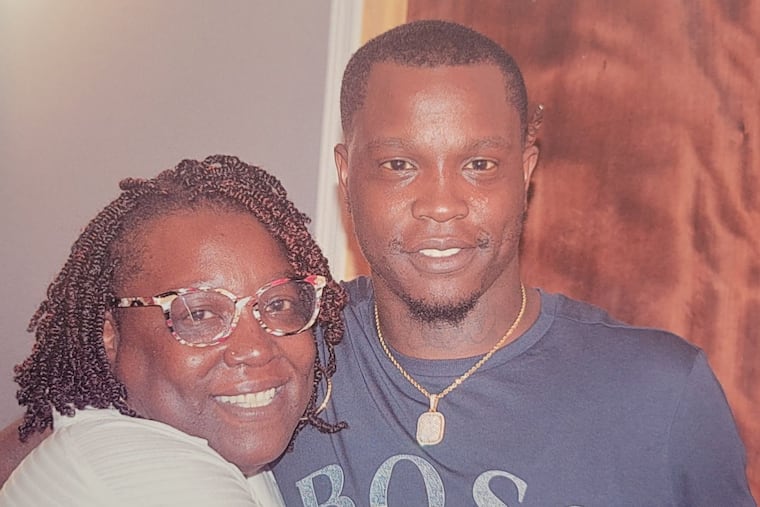
“Our menu has a whole section for my dad’s comfort foods, which he learned from his mom, and that we sold as preorders from our home and at Indonesian food festivals,” said Amalia Utama, speaking for her father, Mohamad Holil, one of Griddle & Rice’s owners. “When we opened the restaurant, we wanted to make it friendly to other people — we didn’t want it to be super traditional, but more up to date and keeping with trends.”
» READ MORE: The 76 best restaurants in the Philly area in 2025
Youthful, modern — and distinctly Indonesian
Griddle & Rice is a significant departure from longtime Indonesian stalwarts like Sky Cafe and Hardena — and from the home caterers that dominate Philly’s Indonesian food scene. It feels more youthful than the other new but less-coffee focused spots on The 76 and its dissents list, like Indo Spice, Djakarta Cafe, and Niki Echo, which also serves Indonesian coffee but, as one Inquirer colleague put it, has a “karaoke auntie vibe.”
The bold blue-and-yellow design of Griddle & Rice was conceived by Utama and her parents, then brought to life and implemented by a designer in Indonesia. It’s a slick, modern — but adorable — backdrop for the large selection of smoothies, strawberry matcha lattes, Milo dinosaurs, and es kopi susu, or Indonesian iced coffee, which has become wildly popular in recent years. They also serve kopi tubruk, traditional unfiltered Indonesian coffee similar to Turkish style, and coffee with gula aren, or Indonesian palm sugar.
When Utama visited Indonesia last month, she was delighted to find how much Griddle & Rice resembled the cafés she went to there, both aesthetically and on the menu.
The menu at Griddle & Rice marries Indonesian traditions with current Indonesian trends (along with American breakfast foods). The roti bakar, a sweet toast ($9), comes blanketed in chocolate sprinkles held in place by condensed milk and so large and fluffy that it induces giggles of delight. It’s a snack that Ariel Tobing, the executive chef at Forin Cafe, who is Indonesian, grew up with. Tobing was surprised to see it on the menu, along with the ayam geprek — smashed, fried chicken topped with sambal matah and served with rice ($14) — another trending dish in Indonesia.
“Indonesia has a strong baking culture, as an offshoot of Dutch baking traditions, and there are also fluffy buns, which I feel has more Chinese influence,” said Tobing.

Blending tradition and trend
Don’t mistake these fusions or their wide appeal as an attempt to assimilate into American culture. If anything, they’re mirroring trends in Indonesia itself, where there’s also been a significant increase in coffee consumption. The country has long exported its beans, but domestic consumption has climbed steeply, fueling a wave of stylish new cafés and creative drink menus.
Just off East Passyunk’s main drag, Omi Kitchen is a yellow-and-pink beacon of light.
Owner Onika Wiriadinata opened Omi — which means “grandma” in Indonesian — a year ago, enlisting a local Indonesian high school artist to fill the walls with cartoonish drawings of pastries and coffee. The café’s airy breads are stuffed with ayam lemper (herbaceous chicken made with lime leaves, bay leaves, galangal, and lemongrass), kari ayam (chicken curry), spicy tofu, corn and cheese, or cheese and chocolate. There are also bagels and tiramisu on the menu.
“My aunt has a bakery in Indonesia — in Rambang, my mother’s hometown — and she helped me start up with recipes, styles, and baking tips,” said Wiriadinata. Omi’s best sellers are its chocolate banana and chocolate cheese long johns. “There are a lot of similarities between her bakery and ours, and they’re adding more croissants. In Indonesia, there are a lot more Western and international café concepts now — they’re always evolving.”
Both Griddle & Rice and Omi Kitchens’ espresso drinks are made with locally roasted Vibrant Coffee beans. One day, they hope to use Indonesian beans, but costs are steep — especially with the recent 19% tariff on Indonesian goods imported into the U.S., imposed by the Trump administration.
The rise of Southeast Asian cafés
This new wave of Southeast Asian cafés dovetails with the broader bakery boom, fueled by the same “little treat” culture and by the tastes and aesthetics of first-generation immigrants, millennials, and Gen Zers. Cuteness covers the walls, Asian American flavors mingle freely, and matcha abounds on the menus — a drink that, before the current craze, was largely absent from these cafés’ source cultures.
Matcha is trending, not just in America, but across parts of Asia that were never particularly obsessed with it. It has swept through bubble tea shops and traditional cafés alike, which is why you’ll now find it everywhere from Baby’s Kusina, rooted in Filipino cuisine; to Warung Filadelphia, a cozy South Philly café run by Kristina Jauwana, who’s originally from East Java and began by cooking out of her home; to Griddle & Rice, whose owners hail from Jakarta and Madura but whose college-age daughter, raised in Philly, is the face of the business; and to Hannah K, a Point Breeze café serving both American and Vietnamese comfort foods. Even more conventional American coffee shops — like Rival Bros., ReAnimator, and Elixr — have embraced the matcha wave.
The marriage of classic American coffee shop fare — pancakes, French toast, and the like — with reinterpretations of Southeast Asian foods that are normally made at home defines many of these spots. You’ll find those bicultural unions at Griddle & Rice, Baby’s, Hannah K (and its sister restaurant The Breakfast Den), Càphê Roasters, and the forthcoming Manong.
You could write a guide to Philly’s Asian-inflected pancakes alone: purple with ube (the Filipino yam), green with pandan (a fragrant leaf with hints of grass, vanilla, and coconut), or stuffed with cheese, peanuts, chocolate sprinkles, and condensed milk, like the ones at Martabak OK.
Eater has just declared that the future of coffee is Filipino. In Philadelphia, the future of coffee (and cafés) is Southeast Asian — it’s Filipino, Vietnamese, and Indonesian.