For cookbook author Katie Parla, a great sandwich has only two ingredients
The recipe for panelle and vastedda rolls are in Parla’s seventh cookbook "Food of the Italian Islands."
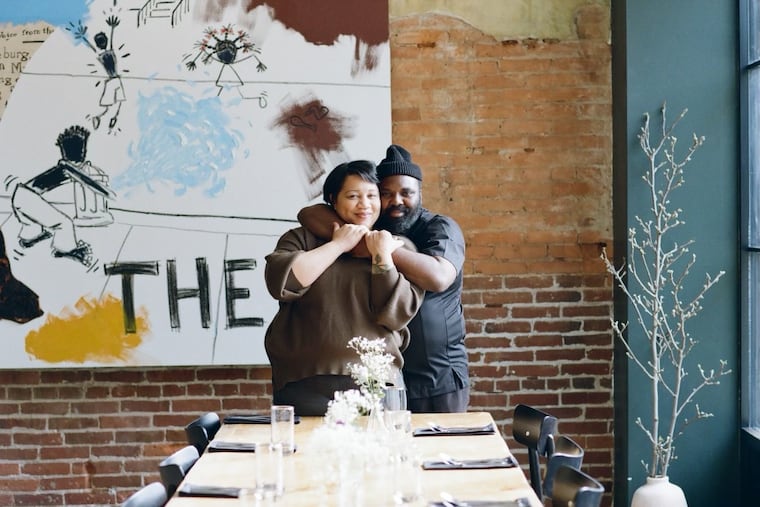
Katie Parla was a rising college senior when she took her first trip to Sicily from Rome, in 2001. “It was all pretty new to me,” Parla said.
Parla, who is originally from Princeton, has spent the last 20 years living in Rome. Like many Philadelphians, Parla counts the Italian islands as part of her ancestral heritage. Her curiosity about her family history as well as the differences between what she grew up eating in an Italian American household and what she ate in Italy, led her to explore the islands of Sicily and Sardinia.
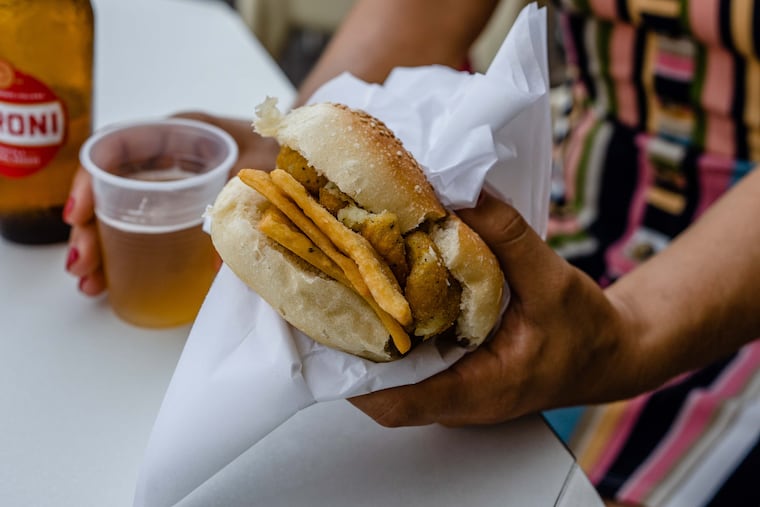
At the marina-side Pani Câ Meusa Porta Carbone shop in Palermo, Parla became acquainted with the city’s street food culture. Known for both its lard-poached veal spleen sandwich and its panelle chickpea patty and cazzilli potato croquette sandwich, Porta Carbone became an instant favorite.
Parla was already aware that if a sandwich had only two ingredients on it, it was best to not ask for adaptations — it was meant to be that way. “There’s no menu or prices written anywhere. So you just have to hang back, observe, and then copy what people are doing and hope that you didn’t say something that will make them laugh at you.” (Sound familiar, Philly?)
The recipe for panelle and vastedda rolls ended up in Parla’s seventh cookbook, Food of the Italian Islands: Recipes from the Sunbaked Beaches, Coastal Villages, and Rolling Hillsides of Sicily, Sardinia, and Beyond, she said, because it’s not something most Sicilians would eat at home.
The book includes more than 85 recipes including Catanian grilled horse steaks to Sardinian sos papassino raisin and nut cookies. Parla will host a lecture and tasting during the Drexel Philly Chef Conference on April 18.

Courtesy of Katie Parla, recipe adapted from Food of the Italian Islands
Parla’s panelle are parsley-flecked chickpea fritters that can be eaten on vastedda rolls or alone with a little lemon and salt sprinkled on top. If you’re not ready to fry the panelle, the set batter keeps well — put it in the fridge for up to a day or two before you plan to get frying.
Serves 6
Ingredients
5 cups water
3 cups chickpea flour
Sea salt and freshly ground black pepper
¼ cup fresh flat-leaf parsley, roughly chopped
Neutral oil, such as safflower oil, for frying
6 Vastedde or crusty rolls sliced open, for serving (optional)
Lemon wedges, for serving
Directions
Heat the water in a large saucepan over high heat. When it reaches a rolling boil, reduce to a simmer. Rain in the chickpea flour slowly, whisking to eliminate clumps. Season with salt and pepper. Cook, stirring continuously, until reduced and thickened, about 20 minutes. Stir in the parsley.
Pour the chickpea mixture onto a clean work surface or rimless baking sheets and spread it out until it is 1⁄4 inch thick. Set aside to cool and set, about 20 minutes. Cut the chickpea mixture into 3-inch squares and set aside.
Fill a medium frying pan or cast-iron skillet with 2 inches of neutral oil and heat the oil over medium-high heat to 375°F. Fry the panelle in batches at 350°F, turning once to ensure even browning, until golden brown, about 2 minutes each side. Drain on paper towels, sprinkle with salt, and serve hot on a sliced vastedda or on their own with a wedge of lemon.
While it’s not essential to make the vastedda rolls that go along with a panelle sandwich from Pani Câ Meusa Porta Carbone, Parla’s recipe is remarkably simple and yields rolls that you’ll want to use for every kind of sandwich, not just Sicilian ones. They keep well when wrapped tightly in plastic wrap or in a sealed container, though are truly delicious when warm straight from the oven and stuffed with hot panelle.
Makes 4 rolls
Ingredients
2 ½ grams (1 scant teaspoon) active dry yeast
140 grams (½ cup plus 4 teaspoons) room-temperature water
210 grams (1 ½ cups) bread flour, plus more for dusting
40 grams (¼ cup) finely milled semolina flour (farina di semola rimacinata)
6 grams (1 teaspoon) fine sea salt
5 grams (1 heaping teaspoon) sugar
12 grams (1 tablespoon) extra-virgin olive oil, plus more for greasing
10 grams (1 tablespoon) sesame seeds
Directions
Combine the yeast and water in a small bowl or ramekin and set aside to bloom for 10 minutes.
Combine the bread flour and fine semolina flour in a large bowl, then add the yeast mixture. Stir with a spoon or your hands until there is no dry flour left in the bowl. Cover the bowl with plastic wrap and set aside at room temperature for 20 minutes to allow the flour to hydrate.
Uncover the bowl. Add the salt, sugar, and olive oil and mix until incorporated, then knead for 10 minutes until smooth and elastic. Transfer the dough to a lightly oiled bowl. Cover with plastic wrap and set aside at room temperature to rise for 25 minutes.
Line a baking sheet with parchment paper. Uncover the bowl and invert it over a lightly floured surface, allowing the dough to gently detach. Using a dough scraper or sharp knife, cut the dough into four pieces, each weighing about 100 grams. Working with one piece at a time, shape the dough into round buns, using a cupped hand to tighten the ball by rolling and dragging it over your work surface until it is a tight, compact mass. Transfer the dough to the prepared baking sheet. Using a dampened hand, press each dough ball gently to flatten into a hamburger shape. Cover with plastic wrap and set aside to let the dough rise for 1½ hours. Preheat the oven to 400°F and place an empty ovenproof pot or pan at the bottom of the oven.
Uncover the dough and brush each ball with water, then sprinkle over the sesame seeds, dividing equally. Transfer the baking sheet to the center rack of the oven and pour 2 cups hot water into the pot or pan below, closing the oven quickly to trap the steam.
Bake until the rolls are golden and feel light when lifted, about 10 minutes. Transfer the rolls to a wire rack to cool before using. The cooled rolls will keep in a sealed container at room temperature for up to 4 days. Toast before serving.