Two galettes — one sweet, one savory — for your Mother’s Day tea
When spring produce is bursting forth in all its glory, its time to make a galette (or two).
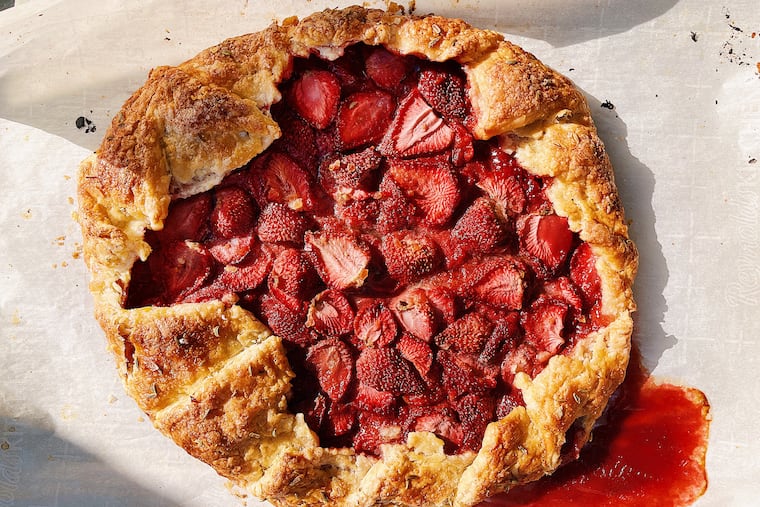
Come spring, I get greedy about produce. Radishes of every shape, size, and hues of red and purple stain my eye line, bunches of asparagus snuggled together with thick rubber bands, long spring onions with tails like reeds: Please, get comfy in my tote bag. And don’t even get me started on the fruit. I grab pinky-green rhubarb stalks by the fistful, because if you know, you know. And the strawberries! Tiny, perfect jewels that really shouldn’t be allowed the same name as the ones in the supermarket in December. I drag home the bounty and there’s only one thing to do: make a galette.
A galette is a free-form tart of pie dough pleated around seasoned produce. The technique and ingredient list is similar to pie, but it’s infinitely more chill. Fruit galettes make for a dessert that requires no more fancy baking equipment than a sheet pan and a rolling pin (or, in a pinch, a wine bottle). A savory galette can be a meal in and of itself or at least the main component of brunch, lunch, or dinner accompanied by a simple bean salad or rotisserie chicken.
The following two galettes, Strawberry & Preserved Lemon and Roasted & Raw Radish, sing the praises of spring produce, but their beauty also lies in the fact that, if you happen to stumble upon these recipes in the dead of winter, any ol’ berries and roots will taste great. Because when wrapped in buttery dough and baked until just shy of burned, any strawberries go jammy-sweet and even the most bland of radish is enlivened with enough acid and salt.
Strawberry & Preserved Lemon Galette
Serves 6-8
Strawberries are mysterious things. Though largely available year-round in American supermarkets, they really only taste good raw during a couple months in the spring. (Unless you happen to live in California, in which case I hear that window is longer.) When cooked, strawberries — any strawberries — chill out a bit, releasing their jammy sweetness. If you do happen to have a hookup to really great, in-season berries, you may not need extra sugar, which is why I must implore you to taste your unbaked galette filling. You also may note that there’s no salt in this filling: not an accident. Instead, preserved lemon does that seasoning for you — but if you can’t get your hands on the salty-tangy citrus, use ½ very finely chopped whole seeded lemon (yes! The whole lemon!) and ½ teaspoon Diamond Crystal kosher salt or ¼ teaspoon Morton, plus more to taste.

For the crust:
1 ¼ cups plus 2 tablespoons (173 grams) all-purpose flour, plus more for rolling out the crust
1 teaspoon granulated sugar
½ teaspoon Diamond Crystal or ¼ teaspoon Morton kosher salt
½ cup plus 2 tablespoons (141 grams; 1 ¼ sticks) unsalted butter, cut into ½”-cubes, chilled
3 tablespoons ice water, plus more as needed
1 tablespoon apple cider vinegar
For the galette:
¼ cup (50 grams) granulated sugar, plus more to taste and for sprinkling
2 tablespoons almond meal or flour (or any raw nut, coarsely ground or very finely chopped)
1 tablespoon cornstarch or 3 tablespoons all-purpose flour
½ teaspoon ground cardamom
½ preserved lemon
1 ½ pounds strawberries, hulled and sliced ¼-inch-thick
1 large egg
Fennel seeds, for sprinkling (optional)
Flaky sea salt
For the crust: In a large bowl, use your fingers to combine flour, granulated sugar, and salt.
Toss butter into the bowl to coat in flour, then use your fingers to smash and rub the butter into the flour mixture until it forms flat crumbs the size of lima beans. Drizzle water and the apple cider vinegar over the mixture, then use your fingers to gently toss the mixture together until a shaggy, crumbly mixture forms. Pick up a handful of the mixture and squish it together with your palm: it should mostly hold its stuck-together shape (if it totally crumbles out of your hands, drizzle over another tablespoon or two of water.)
Dump the dough onto a clean work surface and use your hands to pat it together into a rectangular mass about 2 inches thick. Using your hands, knead together the dough a few times. Alternatively, a bench scraper comes in handy here: Cut the dough in half and stack pieces on top of each other, then smash down with your hands; repeat a few times. Whether using your hands or a bench scraper, as you fold the dough over itself, the more crumbly-dry mass will form into a cohesive dough. The butter will not blend all the way in (it’ll look marbled) and it’s OK if there are some dry bits of flour.
Pat the dough into a ½-inch-thick round, and wrap in plastic or a reusable zip-top bag (don’t use beeswax-based wraps, as their flavor will seep into the dough.) Chill for at least 2 hours, overnight if you can, and up to 3 days.
For the galette: When you’re ready to bake, remove the rested dough from the refrigerator and let sit out for 10 minutes. Place a piece of parchment paper on a work surface and dust lightly with flour. Unwrap the dough, sprinkle it with flour, and use a rolling pin to roll out, flipping and turning the dough, and adding more flour as needed to avoid sticking, into a round, rectangle, or oval about ⅛-inch-thick. (If at any point the dough starts to crack, just press it together with your fingers.) Pick up the crust by the parchment and place on the sheet pan. Refrigerate for 20 minutes while you make the filling.
Heat the oven to 425ºF with a rack in the center. In a large bowl, whisk together ¼ cup sugar, almond meal, cornstarch, and cardamom.
Thickly slice the preserved lemon, removing and discarding any seeds. Very finely chop the lemon (peel, pith, and flesh!) until it nearly forms a paste. Scrape into the large bowl. Gently toss in the strawberries. Taste a berry: if it’s not quite sweet enough (common with out of season berries) add more sugar by the teaspoon.
In a small bowl, beat the egg. Remove sheet pan with rolled out crust from the refrigerator. Sprinkle 2 tablespoons sugar over the surface of the crust, leaving a 2-inch border around the sides. Spread the filling over the sugar. Fold the border over the filling toward the center, overlapping as needed. If you have time, freeze the galette for 10 minutes.
Brush egg wash all over the exposed edges of the dough. Sprinkle the edges with fennel seed if using, more granulated sugar, and flaky salt.
Bake for 10 minutes, then reduce oven temperature 375. Continue to bake until fruit is bubbling and crust is deeply golden brown, another 40-50 minutes. Let cool for at least 30 minutes, but ideally 2 hours (or up to 8) before serving.
Roasted & Raw Radish Galette
Serves 6-8
Crunchy radishes slathered with good butter and sprinkled with salt is one of my favorite snacks. A thickly sliced radish topped with a wedge of Parmesan cheese and drizzled with bitter, grassy extra-virgin olive oil is a close second. This galette is an excuse to eat both of those snacks in excess. Which brings me to my next point: If you’re not roasting radishes, turn on the oven already. What follows is a celebration of texture.
For the crust:
173 grams (1 ¼ cups plus 2 tablespoons) all-purpose flour, plus more for rolling out the crust
1 teaspoon granulated sugar
½ teaspoon Diamond Crystal or ¼ teaspoon Morton kosher salt
141 grams (½ cup plus 2 tablespoons; 1 ¼ sticks) unsalted butter, cut into ½”-cubes, chilled
3 tablespoons ice water, plus more as needed
1 tablespoon apple cider vinegar
For the galette:
All-purpose flour, for rolling out crust
1 ¼ pounds mixed radishes, tops (if any) reserved, washed, divided
½ pound red onion or shallot, thinly sliced
¾ cup finely grated parmesan, cheddar, or gruyere cheese, divided
3 tablespoons lemon juice or white wine vinegar, divided
½ teaspoon Diamond Crystal or ¼ teaspoon Morton kosher salt
Freshly ground black pepper
1 large egg
Flaky sea salt
1 tablespoon sesame seeds (optional)
2 tablespoons unsalted butter, cut into small pieces
Good extra-virgin olive oil
For the crust: In a large bowl, use your fingers to combine flour, granulated sugar, and salt.
Toss butter into the bowl to coat in flour, then use your fingers to smash and rub the butter into the flour mixture until it forms flat crumbs the size of lima beans. Drizzle water and the apple cider vinegar over the mixture, then use your fingers to gently toss the mixture together until a shaggy, crumbly mixture forms. Pick up a handful of the mixture and squish it together with your palm: it should mostly hold its stuck-together shape (if it totally crumbles out of your hands, drizzle over another tablespoon or two of water.)
Dump the dough onto a clean work surface and use your hands to pat it together into a rectangular mass about 2 inches thick. Using your hands, knead together the dough a few times. Alternatively, a bench scraper comes in handy here: Cut the dough in half and stack pieces on top of each other, then smash down with your hands; repeat a few times. Whether using your hands or a bench scraper, as you fold the dough over itself, the more crumbly-dry mass will form into a cohesive dough. The butter will not blend all the way in (it’ll look marbled) and it’s OK if there are some dry bits of flour.
Pat the dough into a ½-inch-thick round, and wrap in plastic or a reusable zip-top bag (don’t use beeswax-based wraps, as their flavor will seep into the dough.) Chill for at least 2 hours, overnight if you can, and up to 3 days.
When you’re ready to bake, remove the rested dough from the refrigerator and let sit out for 10 minutes. Place a piece of parchment paper on a work surface and dust lightly with flour. Unwrap the dough, sprinkle it with flour, and use a rolling pin to roll out, flipping and turning the dough, and adding more flour as needed to avoid sticking, into a round, rectangle, or oval about ⅛-inch-thick. (If at any point the dough starts to crack, just press it together with your fingers.) Pick up the crust by the parchment and place on the sheet pan. Refrigerate for 20 minutes while you make the filling.
Heat the oven to 425ºF with a rack in the center. Set aside 2 ounces radishes. Halve, quarter, or slice remaining radishes into bite-sized or about ⅛-inch thick pieces, and roughly chop greens if using. Toss radishes (and greens if using) and onions in a large bowl with ¼ cup parmesan, 1 tablespoon lemon juice, ½ teaspoon salt, and few grinds of pepper. Season with more salt to taste.
In a small bowl, beat the egg. Remove sheet pan with rolled out crust from the refrigerator. Sprinkle remaining cheese into the center of the crust, leaving a 2-inch border around the sides. Spread the filling over the cheese. Fold the border over the filling toward the center, overlapping as needed. If you have time, freeze the galette for 10 minutes.
Brush egg wash all over the exposed edges of the dough. Sprinkle the crust with a pinch of flaky sea salt and sesame seeds if using. Scatter the butter over the exposed radishes, mostly in the center (not near the crust).
Bake for 10 minutes, then reduce oven temperature 375. Continue to bake until radishes are tender and starting to brown, and crust is deeply golden brown, another 40-50 minutes. Remove galette from the oven and let cool for at least 30 minutes or up to 8 hours.
Just before serving, very thinly slice (a mandoline is great if you have one) reserved 2 ounces radishes. Place in the bowl along with remaining 1 tablespoon lemon juice and a big pinch of flaky salt. Gently scatter raw radish mixture over the galette and drizzle with olive oil before serving.