A dimmer dining experience
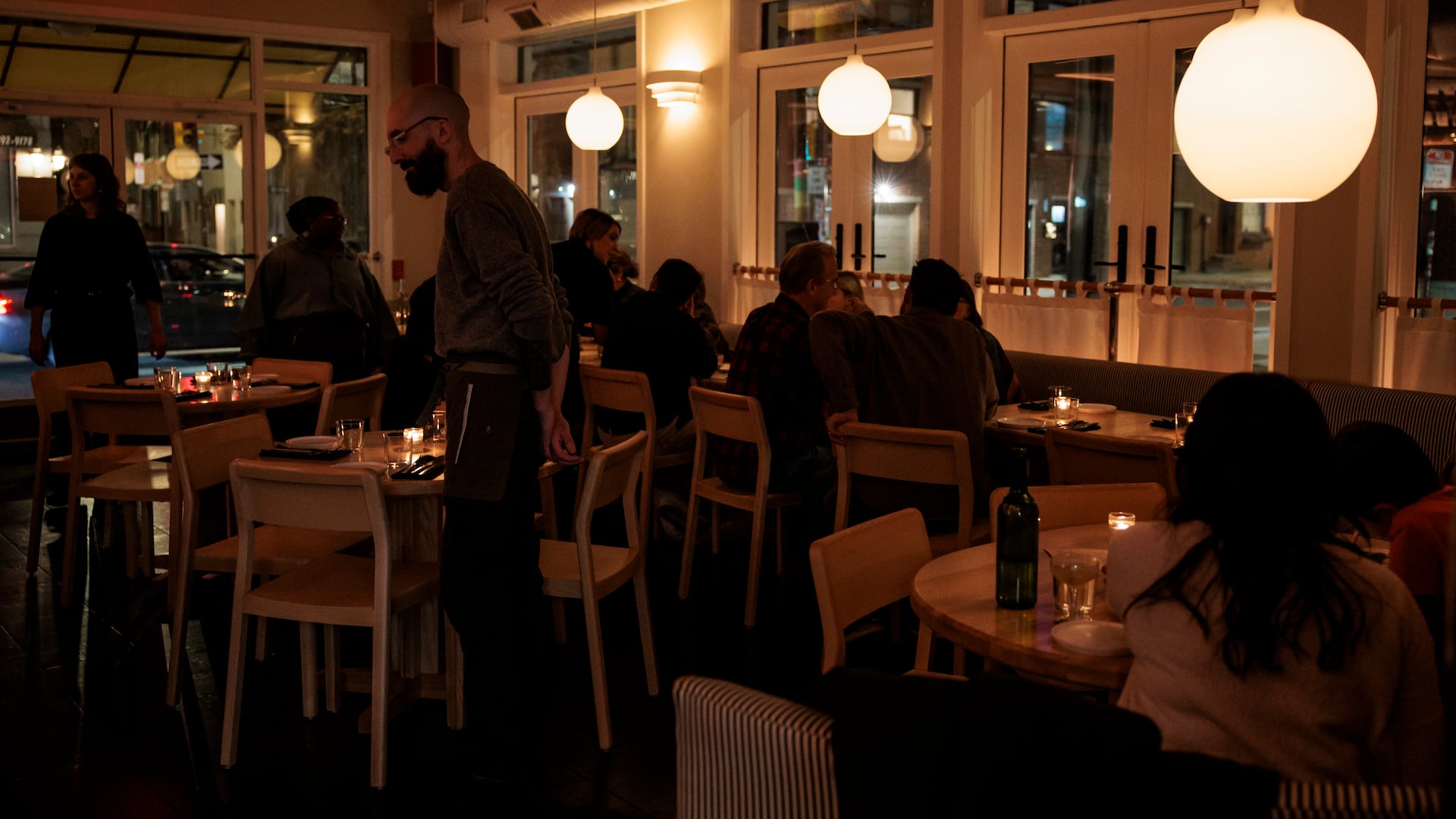
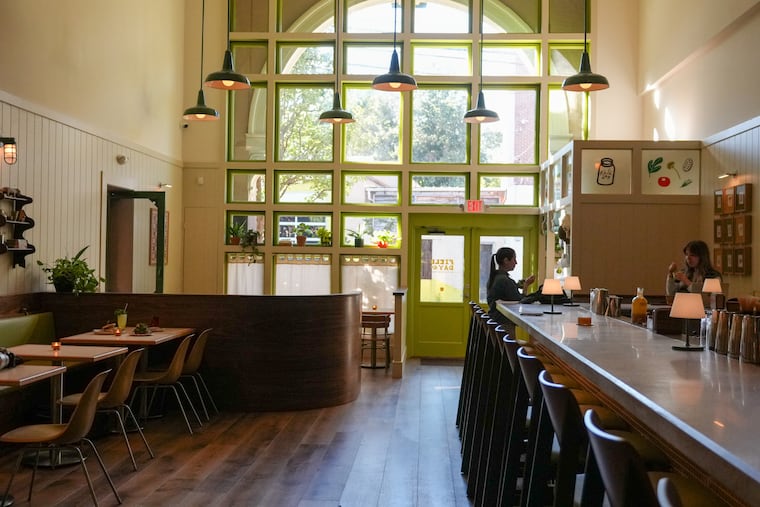
As night falls over South Street, the modern American bistro Banshee glows through its fling-out windows, the restaurant’s earth-toned dining room lit like a lantern. Warm light catches the tambour wood ceiling, candles pool softly on the tables, and opal globes cast a low radiance. The bar shimmers in layers of amber light. It is the kind of room designed to make dinner feel like an occasion, not a backdrop for cell phone food photography.
If upscale dining rooms seem dimmer than they used to, that is often intentional. Designers are using warmer tones, lower light levels, and tighter pools of illumination to make restaurants feel more intimate and immersive. Lighting has become part of the mood, the brand — and the sales pitch.
Rapid advances in LED systems have given designers far more control over various areas of the dining room, said Lance Saunders of Stokes Architecture & Design, whose recent projects include Banshee, Provenance, and Borromini.
“Color temperature, color tuning, dimming systems — all of that has become much more advanced, and it gives you much better quality of light and much more flexibility in how you light a space,” Saunders said.
It’s not darkness for darkness’ sake.
While trying to make dinner feel like an experience rather than a meal, owners have made lighting part of the branding — a way to borrow some of the mood of cocktail bars, lounges, and boutique hotels. The goal is not just to illuminate the room, but to shape how the night feels from the moment guests walk in.
Lighting can be described in two main ways: intensity, or how bright a room feels, and temperature, or whether the light reads warm and amber-toned, or cooler and whiter. Warmer, lower-intensity light tends to soften a room, flatter the people in it, and make people want to linger and order more. Brighter, cooler light feels sharper and more functional. LED systems allow restaurants to fine-tune both, and shift the mood over the course of an evening. The high-tech controls alone can add upwards of $75,000 to the budget for a 200-seat restaurant.
A balancing act
Walk into the Rittenhouse izakaya Dancerobot at 5 p.m., for example, and you can easily see the saba shioyaki at the next table. After 9 or so, especially in the back corners, you may wish you had brought a miner’s helmet.
That, too, is intentional.
“Lighting is about creating a feeling,” said Dancerobot co-chef/owner Jesse Ito. “When people go out to dine, food is just part of the equation.”
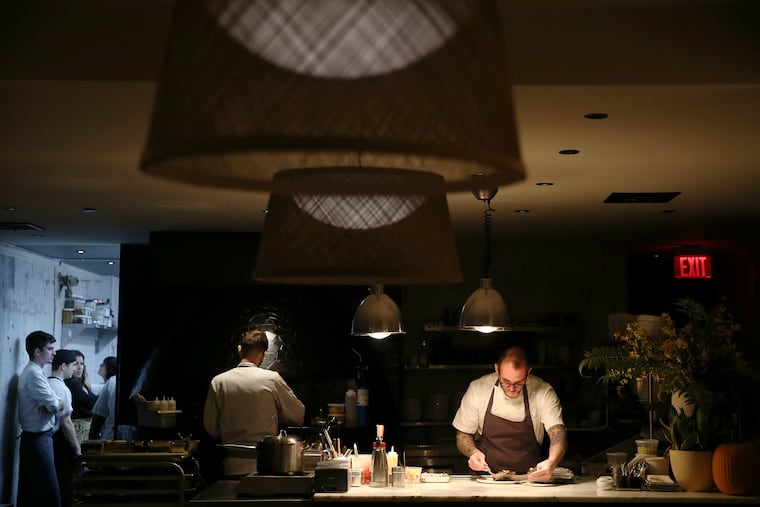
Ito’s Royal Sushi & Izakaya in South Philadelphia is also dimly lit, but behind the curtain at his adjacent $355-a-head omakase counter, he said, “everything’s perfectly lit, immaculately, the right temperature, white light — you can see every piece of food, every bite.”
“But that’s different, because the food is the show,” Ito said. “A lot of restaurants are dimly lit, but sometimes the temperature is off. If it’s too cool or too green, it almost makes you feel sick. You have to get the right temperature. If you do, it creates that feeling of comfort, a place where you can let loose.”
Sam Kim of Ambit Architecture, who designed Dancerobot, said he often finds himself urging clients not to go too dark. At Dancerobot, he said, even less lighting had originally been proposed.
“I kept saying to the team, ‘I know you want this moody atmosphere, but we can do that if we balance the light,’” Kim said. “It can still be dimly lit and comfortable without being dark. You want balance, and you want the ability to turn things up a little bit.”
That balancing act runs through many restaurant projects. At Banshee, Saunders said, the aim was “a very softly lit environment” that would still feel warm and inviting from the street. The wood ceiling, inspired by Scandinavian architect Alvar Aalto, helps reflect light through the room. Globe lights and candles (real ones, not battery-powered ones) create intimacy at the tables, while uplighting at the bar bounces light toward guests.
The spectrum of dim lighting
Carey Jackson Yonce of Canno Design described a similarly layered approach at Emilia, Greg Vernick’s new restaurant in Kensington. The main dining room uses five separate light sources: a globe fixture for general light, concealed LEDs that wash the ceiling and mirrors, sconces, task lighting, and candles.
“It’s not brightly lit,” Yonce said. “But we try to make it nice, even, and consistent.”
Not every operator is chasing the same kind of darkness. At the new Tesiny in South Philadelphia, owner Lauren Biederman deliberately kept the room brighter than many of the city’s newer upscale spots. She likes warm light and dark ceilings, but said she wanted her oyster/wine bar to feel lively rather than murky.
“I think a dark restaurant invites too many flashlights, and that was something I wanted to avoid,” Biederman said. “When I was a server, I used to carry a penlight around with me, which drove me nuts. Now it’s cellphones, and to me that’s just light pollution.”
Biederman said she prefers uplighting to harsher downlighting and favors very warm light, nearly orange in tone, to make the room feel cozy without making guests squint at the menu. “I spent a lot of money on decor,” she said. “I want people to see it.”
Her argument is partly practical and partly sensory. If a restaurant is going to be loud and energetic, she said, it does not also have to be so dark that diners are fumbling for their phones.
That distinction matters. The best restaurant lighting, designers say, is often less about making a room dark than about directing attention: toward the table, the plate, and the face across from you, while allowing the rest of the room to recede.
Research suggests that instinct is not merely aesthetic. Laurie Wu, an assistant professor at Temple University and lead author of a 2021 study in the International Journal of Hospitality Management, said the project grew out of a familiar ritual: She and friends pulled out phone flashlights to read the menu in a very dark restaurant.
Wu and her coauthors found that the most appealing formula was not simply a dim room, but a dim room paired with focal lighting at the table — the sort of glow created by a candle or small lamp. That combination made restaurants seem warmer, more attractive, and more worth visiting than either a bright room or a dim room without a focal point. The effect was strongest when people imagined an intimate dinner rather than a business meal.
Energetic meets intimate
Some restaurants do this very well. At the new Terra Grill in Northern Liberties, designer Olya Volkova said the corner location and the owner’s desire for brunch and daytime business called for a room that could feel energetic in daylight and still turn more intimate at dinner. The answer was not blanket brightness, but focused table lighting. The effect is dramatic: warm lighting puts your dining partners in a warm glow, while strategic spots light up menus and food.
Still, atmosphere has limits. The downsides are familiar to anyone who dines out: You see menus angled toward candles, older guests and those with vision problems struggling to read in low light, and the now-common sight of a phone flashlight flicking on at the table. What designers describe as mood can tip into inconvenience.
“I can’t tell you how many times I’ve gone into restaurants and had to turn on the camera on my iPhone just so I could read the menu,” said Kevin Kelley, who owns Kitchen + Kocktails by Kevin Kelley in eight cities. He opened a branch in Center City last year.
The tension is especially obvious in an era when diners are more likely than ever to photograph their meals. Kelley said he wants customers to take pictures not only of the room but of the food. But low lighting can make that awkward, especially when a flash goes off in the middle of dinner. At his restaurants, he said, staff are trained to help guests get their photos.
Lighting as a business tool
Many owners don’t see photography as the priority. Michael Reginbogin, owner of the new Mi Vida, a Mexican restaurant in East Market, said he is less interested in helping guests document the moment than in shaping it. For him, lighting is not just aesthetic. It is behavioral. It can make people feel attractive, relaxed, and inclined to stay longer — and, potentially, spend more while they do.
That makes lighting a business tool as much as a design choice. A room that feels flattering and comfortable may encourage guests to order another round or stay for dessert. In that sense, lighting is not just décor. It is part of how restaurants position themselves and, operators hope, drive revenue.
Reginbogin said his restaurants use dim-to-warm technology, allowing the light not just to dim but to shift warmer over the course of the evening, creating what he described as a fireside glow. It costs roughly 30% to 40% more than traditional LED dimming, he said, but he sees it as central to the experience.
“Lighting plays an incredibly important role in restaurant design,” Reginbogin said. “We believe it not only elevates the space, but it can also make you feel and look a certain way.”
He said that logic extends even to the restroom, where bad lighting can abruptly puncture the mood.
“A restroom is often overlooked as a place to design lighting, but think about it,” Reginbogin said. “The average guest will go to the restroom, and if that lighting is brutal and bright, they look in the mirror and think, ‘I don’t look so good. I need to go home.’ Versus, ‘Wow, I look really good. I feel good. I’m going to have another drink. I’m going to stay a little longer.’ Lighting is transformative — not only for the space itself, but for the individual in that space.”
There is another wrinkle, too. The darker rooms of today are not always quiet ones. Many restaurants pair low lighting with hard surfaces, energetic music, and a livelier sense of nightlife than old-school fine dining once allowed. Ito, of Dancerobot, said that kind of ambient noise can actually help people relax. A room that is too quiet can make diners feel self-conscious; a room with some life in it can make conversation easier.
At Tesiny, Biederman sees that trade-off clearly. She said a somewhat brighter room helps support the energetic atmosphere she wants, rather than compounding darkness and volume at the same time.
“So many people say they hate a loud restaurant,” she said. “I hate that people hate a loud restaurant. To me, a loud restaurant means it’s fun. It means people are there, they’re drinking, they’re eating, there’s a crowd.”