An ube shortage threatens popular drinks and snacks at Philly’s restaurants
The popular purple-colored yam has recently been a staple of everything from coffee drinks to ice cream—but real ube is increasingly hard to find.
Even if you’ve never tasted ube, you’d likely recognize it. That’s because the Filipino yam, with its signature vivid purple color, has taken over social media in the past year.
In Philly, you can find it baked into pastries at Baby’s Kusina and Market. Plus, there is a veritable onslaught of bright purple beverages sweeping through Philly’s cafes presently, most of them proclaiming to be made with ube.
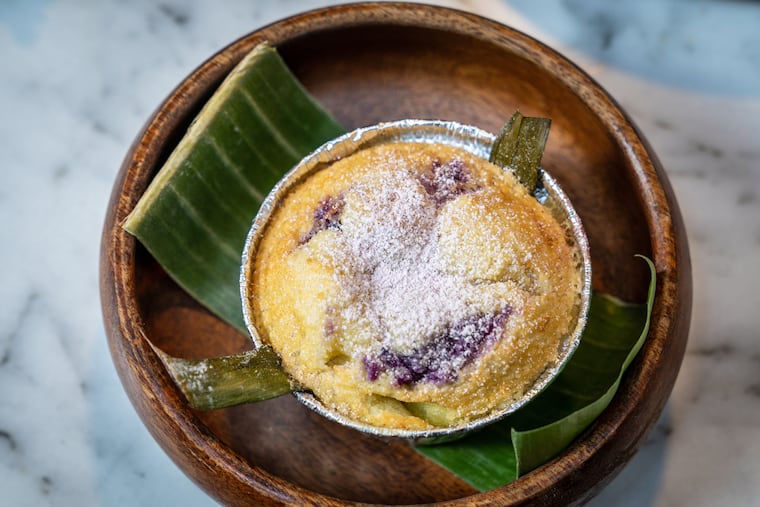
Baby’s ube halaya or sweetened coconut milk-based jam that forms the base of all their vibrant purple pastries is slowly and patiently made from scratch.
Swirled into cupcake-sized bibingka, rice flour, and coconut-based cake, the ube jam gives it visual pops of lavender and a milky, earthy sweetness. Their ube-flecked banana bread is equally satisfying, nutty, and warm. But neither dessert is as vivid purple as other ube-flavored items that have, in the last year, taken social media by storm.
Dang’s insistence that Baby’s makes their own ube halaya is unusual in Philly, as the Filipino purple yam also surges in popularity on the city’s grocery market shelves, at its coffee shops and new wave bakeries, and far beyond. The word “ube” simply means “tuber” in Tagalog, and one can ascertain how central it is to the Filipino diet just by considering the word linguistically. It is one of the pillar ingredients of Filipino cuisine. Recent popularity is creating a dearth of supply for Filipino chefs.
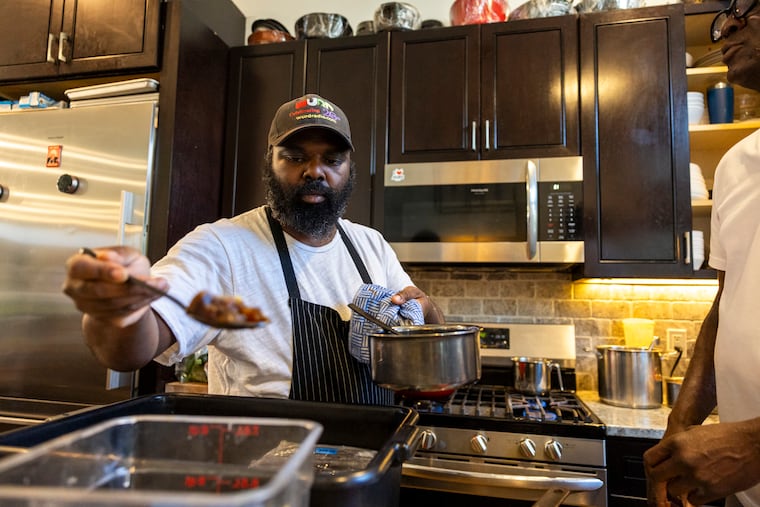
“I’ve never seen fresh ube in the States,” said Baby’s owner Raquel Villanueva Dang. “The last time I saw it was in the Philippines, last year.” Dang makes her ube halaya from frozen ube. She resists other ube-flavored products. “How do you represent your food properly? It’s always with ingredients. The fact that we have to use something artificial or extract is unfortunate.” Dang has navigated the ube shortage by prioritizing her supply for the pastries at Baby’s. Ube is no longer on the coffee bar menu.
Like matcha, another ingredient that has faced global shortages, and whose cheaper, lower quality forms are increasingly touted by food businesses eager to jump on trends, the supply of ube in its true form has become a great rarity, despite (or perhaps, because of) its entrance onto chains like Starbucks’ menus. The production of ube in the Philippines has also dropped significantly due to extreme weather fueled by climate change. Farmers in China and Vietnam have rushed to grow purple yams to meet global demands.
The Philippines’ ube production has declined 6.7% in 2025 from 2024 while raw ube prices have risen 38%. Like matcha, it’s experiencing a paradox of high global demand and scarcity. Unlike matcha, its supply chain is far less robust and established.
Inconsistency in the world’s ube supply has made global chains like Beard Papa’s, a cream puff chain which opened its first location in Philadelphia in March, hesitant to put ube-flavored items on their regular menu.
Ube was relatively unknown even in Asia as recently as the early 2000s. In Hong Kong, which has a disproportionately large Filipino population due to the territory’s reliance on Filipino domestic labor, it was only really available when people traveled to the Philippines and brought back ube ice cream in their check-in luggage, packed in dry ice — a common practice throughout the 1990s and well into the 2000s.
Most coffee shops and restaurants that have ube on the menu are using ube extract. This can produce good results. The deep purple-hued ube sugar cookie at Forin is made using extract, as is the ube cold foam made of lentil cream that tops drinks at Mr. Rabbit, and the glossy purple frosting on top of Manong’s cinnamon buns. Indeed, a vanilla sugar cookie can taste delicious when made with vanilla extract and not beans scraped from a vanilla pod.
But for those like Dang, who grew up with the tuber, and whose palates are attuned to its nuances, extract should only be used in conjunction with ube’s flesh. “Ube extract can be used to enhance the aesthetic of a product, but it doesn’t capture flavor. I can taste the chemical-like aftertaste of ube extract.”
Purple-hued desserts and beverages that are not made from ube are also trending, as purple can also be achieved by purple sweet potatoes and taro, used in beverages like those at BB Tee House.
Since its purple color is what is fueling this surge of ube’s popularity, what is trending need not be actual ube, but simply purple food coloring. A visit to Hung Vuong Supermarket on Washington Avenue gave some insight into what is available to local chefs and bakers. Bottles of Butterfly brand ube flavoring, which lends pastries and beverages a vibrant purple hue, lists the following as ingredients: glucose syrup, water, propylene glycol, sorbitol syrup, artificial sweet potato flavor, ethyl vanillin (synthetic vanilla), and artificial coloring. No actual ube.
In time, perhaps allotment of the actual tuber will be more fair. But in the meantime, your next “ube-flavored” treat may just be simply, purple.