At Rittenhouse’s splashy Uchi, a Texas transplant aims to please, with mixed results
The private equity-backed sushi concept, now on Sansom Street, caters to sushi lovers and skeptics alike.
Kiki Aranita stepped into Craig LaBan’s shoes to review Uchi and followed similar critical practices — for instance, eating multiple meals over a period of time and making reservations under aliases to avoid detection. The Inquirer pays for all travel and meals eaten by its journalists.
When the fast-casual restaurant industry seized on the once-unstoppable poke trend, control over the traditionally composed dish — once marinated and prepared with a singular chef’s vision — transferred to diners, who were now free to decorate their raw fish salads with everything from carrot shavings to chicken.
A similar dynamic is at play in the omakase at Uchi, the upscale Austin-based sushi purveyor that opened a location in Rittenhouse in November. Here, the guest — not the chef, as is tradition in omakase — informs which precious dishes are presented in the restaurant’s trademark “somakase,” in which customers set a budget for their multicourse meal, spelling out their likes and dislikes. (The “s” in somakase is for “server,” since they help guide the order.)
You might say, “I like salmon, let’s have more salmon tonight.” The chef behind the counter, illuminated by the glow of refrigerated cases housing sushi toppings, prepares for you a number of courses selected from Uchi’s menu based on your feedback, peppering in the restaurant’s signature dishes.
The somakase is an adaptation of a traditional Japanese omakase (or “I leave it to you”), which also makes Uchi the perfect venue for those who want sushi but want to stay in their comfort zone. That appeal is furthered by its other “omakase” options: a set menu without the promise of customization, a vegetarian option, and a happy-hour omakase for two, with nine courses for $120.
Even forgoing an omakase, Uchi’s individual dishes defy culinary conventions. Because the restaurant’s approach is divorced from any notion of traditional Japanese cuisine, the choices and customization possibilities for your experience are vast. The food — and the rest of a night out here — are simply Japanese-inspired fusion.
Specials change constantly. Half the menu had completely flipped with each of my three visits, over the course of almost two months. There were some repeated duds. Both times I ordered the ham and eggs roll, the rice was gummy. The once-probably-crispy katsu pork was soggy and reminiscent of Chicken McNuggets; its beer-mustard dipping sauce seemed silly and overwrought. Why force these ingredients to be sushi?
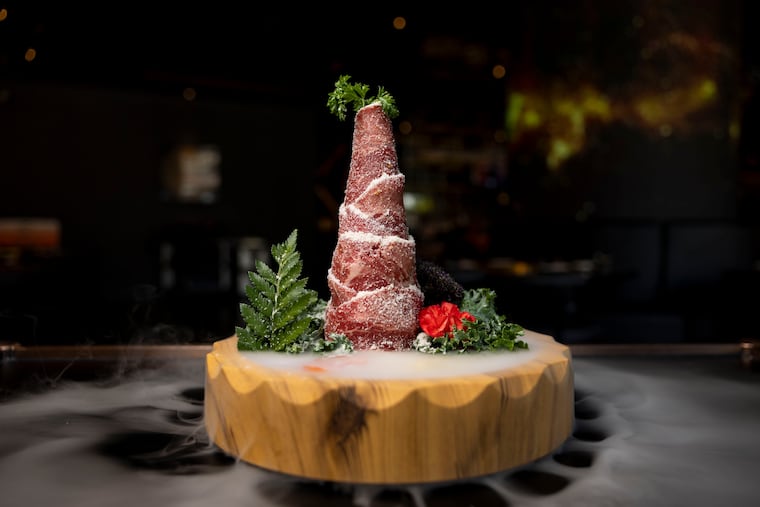
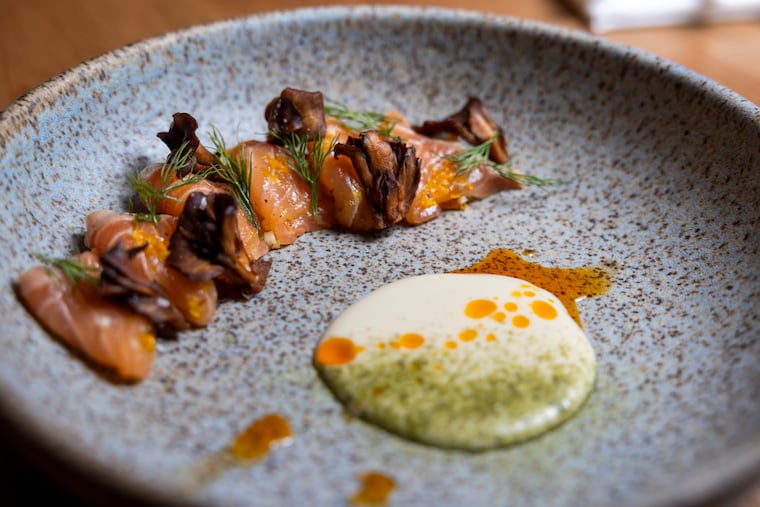
The big draw is Uchi’s core menu, including the sake tom kha, a muddling of Japanese and Vietnamese flavors. It’s a lovely balance of creamy coconut, crunchy candied maitakes, and lovely, unguent salmon. The Uchi salad consists of beautifully bundled lettuces sprinkled with puffed rice. The “hama chili” of yellowtail sashimi swims in ponzu with fresh Thai chiles and orange. And a sizzling hunk of Wagyu is presented on a blazingly hot rock with sidecars of shio koji butter and maple-laced ponzu. The rock is gimmicky, but it’s also fun. Uchi’s greatest hits really hit.
Uchi’s ownership group, Hai Hospitality, has been on an opening rampage, fueled by the 2020 investment of a Denver-based private equity firm. “Uchi” means “home” in Japanese. It pays tribute to Uchi’s first location, which chef Tyson Cole opened in 2003 in a little red house in South Austin. Cole has earned scores of accolades over the years, including a James Beard Foundation Award for best chef: Southwest in 2011.
Uchi Philadelphia’s chef de cuisine Ford Sonnenberg came up in Uchi’s Austin empire, which also includes steak house- and izakaya-inspired spinoffs. The 29-year-old chef has never been to Japan, and moving here for the job is his first time in Philly, save for a couple of events leading up to the opening.
Each Uchi location (soon there will be 11) makes some city-specific dishes. Uchi Philadelphia’s tributes miss the mark. A Wagyu-cream gyudon — a clever way of using the excellent Australian Wagyu that doesn’t get sliced for the main menu’s nigiri — is meant to evoke a cheesesteak. But the koji cream is overwhelming when paired with the fatty Wagyu, and the diner must rely on an oversize clump of turnip kimchi to cut through the richness. A broccoli rabe dish made with sesame milk, shishito relish, and pickled red pepper was overwhelmingly salty and unbalanced, an unsuccessful homage to a roast pork sandwich.
Other playful dishes also fell flat. After biting into the maguro goat — tuna draped over apple slices with a tiny plume of goat cheese and whole pumpkin seeds — my dining companion commented, “I don’t want to eat goat cheese on tuna again.” (This was a rare example of an Uchi classic that flopped.) Curled to one side of an oversize bowl, the bok choy with tomato and cashew felt like the product of a competent focus group. Creamy? Check. Crunchy? Check. A hefty price tag ($18)? Also check.
After subpar specials, my sinking spirits soared when presented with sashimi. Pristine slices of kanpachi came in a wooden box, protected from a bite of snow on artfully arranged ti leaves and a generous sprinkling of caviar-esque finger lime and flake salt. Nigiri is similarly restrained: silken slices of tuna brushed with tare and dotted with fresh wasabi, and buttery salmon splayed over a delicate finger of rice, its only adornment a thin shaving of radish.
This may be the key to optimizing your Uchi experience: The menu is vast, but stick to the classics and straightforward fish, and you’ll likely leave happy.
Uchi fares better when it comes to drinks, with some exceptions. The sake list is decent, and servers were generally well-trained. The nikko martini, their version of a vesper martini, was spectacular, laced with savory umami bitters and decorated with cornichons and a pickled onion.
But Uchi’s adherence to traditions is haphazard. The tea selection and service were sorely lacking, consisting of tea bags steeped in lukewarm water, poured table-side into large, awkward mugs. If Uchi’s staff bothers to go through the ceremony of serving sake in a glass placed inside a wooden masu box to catch overflow — a Japanese gesture that signifies the generosity of a host — why not apply that same attention to detail to tea? Even switching to a loose-leaf brew would be an upgrade.
Desserts were well-thought-out exercises in layering flavors, temperatures, and crumbly-creamy textures. The cilantro granita on the jasmine cream dessert was both daring and delicious, and every other dessert I tasted — fried milk with vanilla custard and salted fudge, Thai tea okashi with mango and lime leaf — was simply stunning.
It’s possible to look at this restaurant purely through the lens of food, and it frequently sends out dishes that are very pretty and generally well-executed. But the fusing of different culinary traditions can create discordance on the plate, and that discordance is echoed throughout the restaurant.
There are the enormous lanterns — lots of them, as if to signpost: “This is an Asian restaurant” — in a sleek, dark space that gets more illumination from its exit signs. Dining booths are flanked by pale wood-framed glass panes, evoking shoji screens. The design was executed by Hai Hospitality’s in-house design studio in collaboration with the architecture firm Zebra and local interior design studio Rohe Creative, a familiar name to astute Philly diners. (Rohe also decorated Dear Daphni, La Chinesca, Irwin’s, and many other vibey, immersive restaurants.)
At 4,900 square feet, the 148-seat restaurant is massive, but it doesn’t feel cavernous by virtue of how it’s cleverly subdivided into a bar, sushi bar, and dining room, which is packed with tables with thoughtful design flourishes like hidden cubbies to store menus in between ordering. Would that there were such a functional place to put one’s winter coats. The vast majority of diners on my visits were sitting on top of their jackets, making the high-end dining room feel like more like a Christmas party at someone’s house. (Oddly, this was the only time when I felt Uchi lived up to the meaning of its name.)
Service was consistently anticipatory and jovial, though unshakably corporate. Informing staff of my mild crustacean allergy meant that every dish was dropped with a standard short description plus the refrain “and no crustaceans,” even single-ingredient sashimi and dessert — thorough but tedious.
Private equity has parachuted this Texas-born fusion sushi concept into Philadelphia at a curious time, in the midst of a proliferation of homegrown restaurants serving their interpretations of Japanese cuisine. Uchi is in the same neighborhood as Kissho House, and it’s steps away from Jesse Ito and Justin Bacharach’s dancerobot. Outside of Center City, more recent entries like Yanaga Kappo Izakaya, Nakama, and Javelin have put Philly in its heyday of interesting Japanese and Japanese-esque options.
I found that my enjoyment at Uchi was correlated with how much alcohol I consumed. The dinner where I tried several cocktails? Fantastic. One glass of wine and one glass of sake? Mixed feelings. Stone-cold sober? It was just OK.
This is not to say one has to imbibe in order to enjoy Uchi, but an excellent cocktail does smooth the edges. You can have a great time here if in good, raucous company. Order sashimi and all the desserts. And definitely get a couple of drinks.
Uchi
1620 Sansom St., 215-647-7611, uchi.uchirestaurants.com
Dinner daily, 4 to 10 p.m. Sunday through Wednesday, 4 to 11 p.m. Friday and Saturday. Happy hour is 4 to 6 p.m. daily.
Entrees $21-40, omakase menus $120 and up
Menu highlights: sashimi; hama chili; Uchi salad; sake tom kha; fried milk; jasmine cream
Drinks: There’s a robust menu of signature cocktails with sake integrated into the martinis. There’s also a handful of low-ABV and zero-proof mixed drinks, an international wine list, and a small, but decent sake list that leans heavily on offerings from Brooklyn Kura.