Choosing death over Alzheimer’s
After an Alzheimer’s diagnosis, former Rothman CEO Mike West feared for the changes to come. “I’m not afraid to die, but I am afraid to lose my brain and my mind and my dignity.”
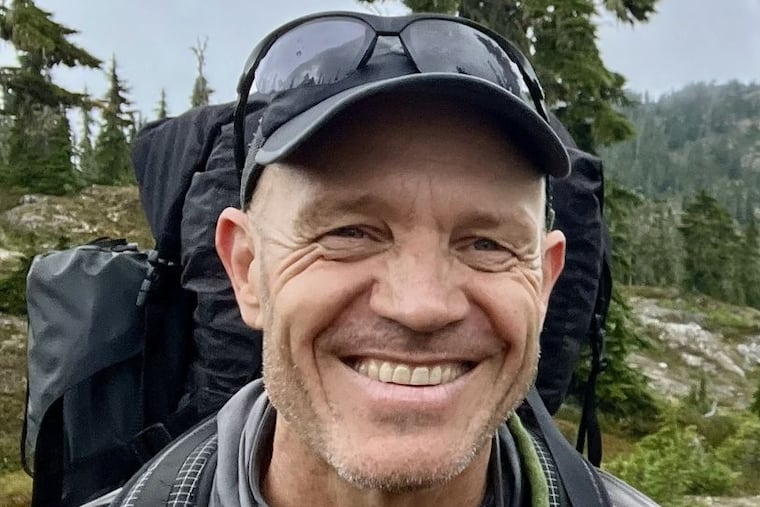
Michael West struggled to remember the five words the neurologist asked him to repeat.
The 64-year-old Philadelphia businessman — credited with helping to build one of the nation’s largest orthopedic practices — used to do complicated math in his head. Now cognitive tests showed he could no longer count backward from 100 by intervals of seven.
The former CEO of Rothman Orthopaedics knew what was coming. Early-onset Alzheimer’s had stolen his mother’s mind and confined her to a bed inside a nursing home in her 50s.
More than 7 million Americans are living with Alzheimer’s. Only 200,000, or 3%, are diagnosed before age 65. Such an early onset means the disease is more likely to progress rapidly and shorten their lives.
With an Alzheimer’s diagnosis, West had seen, there is more than one patient: The person who loses their identity. The loved ones who watch that identity disappear. New drugs offer some hope to slow the disease, but there’s no cure.
Alone in his home office, West opened his laptop and typed a note to his wife, “Lynn, I cannot believe I am having to write this letter. However, what I am about to say below is best for everyone …”
Fated by genes
West was 39 years old when he moved to Philadelphia in 1999 for the CEO’s job at an orthopedic practice with one office in Center City, seven doctors — and deep debt. The move was a step down on his career ladder, coming from a financial leadership role at a national healthcare management company, but founder Richard Rothman had promised him total autonomy in business decisions. West couldn’t resist the challenge.
A year later, West met Lynn when she interviewed for a role to help manage patient scheduling. He hired her on the spot.
West and Lynn, who each had kids from previous marriages, fell in love over strategy meetings and after-work jogs. They moved in together in a South Philadelphia house close to the sports complex so they could walk to games. West turned his team fandom into lucrative contracts for Rothman doctors to exclusively treat players with the Philadelphia Eagles, Sixers, and Flyers.
In the early morning darkness, seven days a week, West put on a suit and tie in his bedroom closet so he didn’t wake Lynn. He would arrive at Rothman’s Chestnut Street office at 3 a.m.
“He was a machine,” his 34-year-old son, Austin West, recalled. “His famous 4 a.m. emails sent waves of anxiety through everyone, including myself, especially when they included a note about wanting to discuss my grades later that day.”
West was known as a decisive risk-taker, always thinking two steps ahead to formulate and execute business plans. At a time when orthopedic surgeries were largely performed in hospitals, he would drive around with Lynn to look at empty buildings. He had a vision to expand Rothman’s reach and lower overhead expenses by turning them into outpatient surgical centers.
Rothman grew to 90 surgical and clinical locations in Pennsylvania, New Jersey, New York, and Florida, with more than 230 doctors and more than 60 partners.
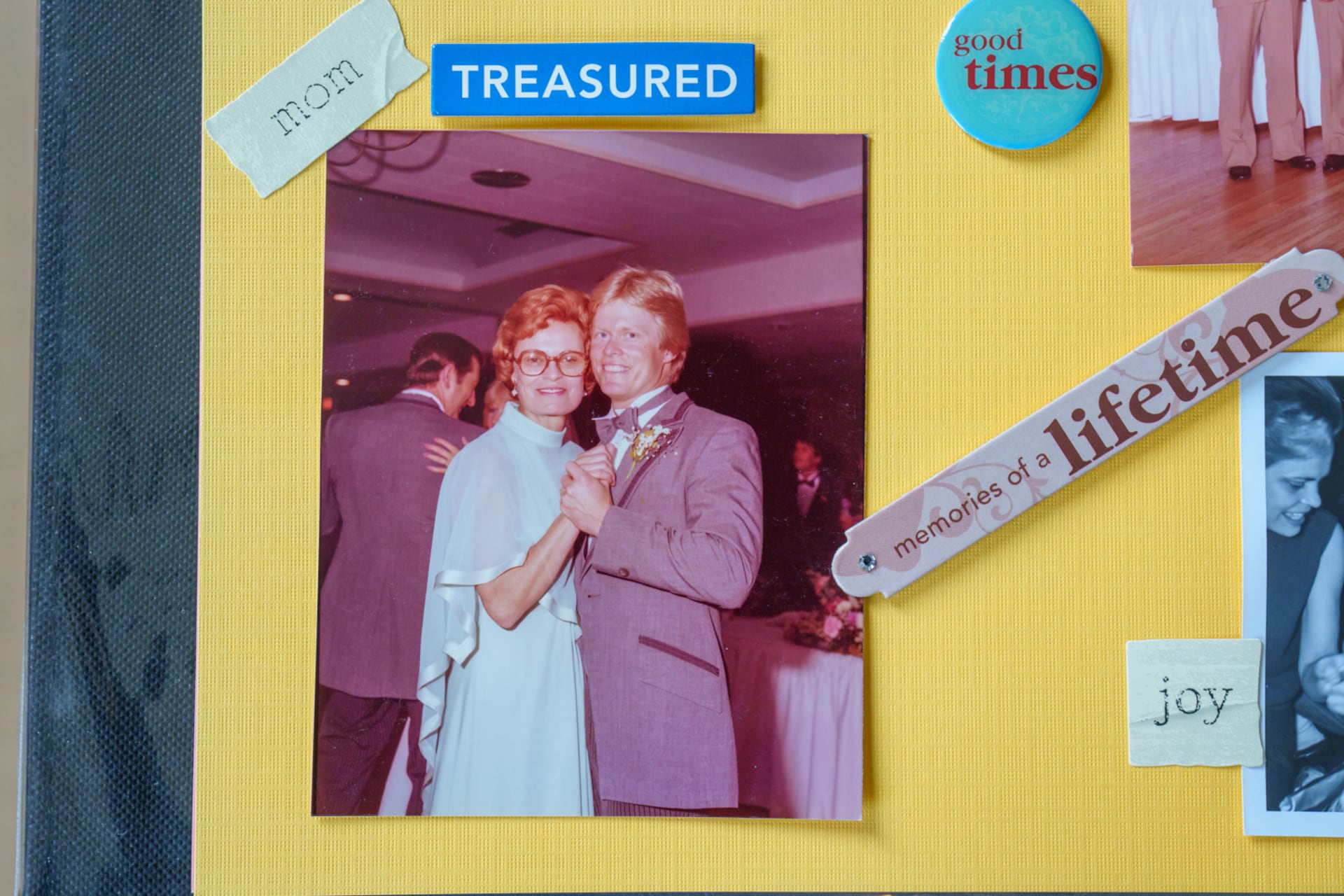
Once a month, West drove to Virginia to visit his mother, Mozelle West, at her nursing home. He talked to her, held her hand, and rubbed her feet.
He had inherited her athletic prowess and competitive drive. At 5 feet, 2 inches, his mother was a point guard on her university’s basketball team. She inspired her son to become a champion diver in high school and college, where he broke swim team records and then broke his own records.
West’s mother was diagnosed with Alzheimer’s in her 50s. She quickly lost her ability to speak, swallow, or use the bathroom.
Early-onset Alzheimer’s has a strong genetic link. Mozelle West was one of 13 siblings; half of them developed it at an early age.
“She was just curled up in the bed, just kinda lifeless. No idea who she was,” said Austin, who was in middle school when he and his older brother, Michael, occasionally went with their father to visit her, along with Lynn. “It was like she was already dead.”
Mozelle West died at age 63 in 2004, about a month after her son’s 45th birthday.
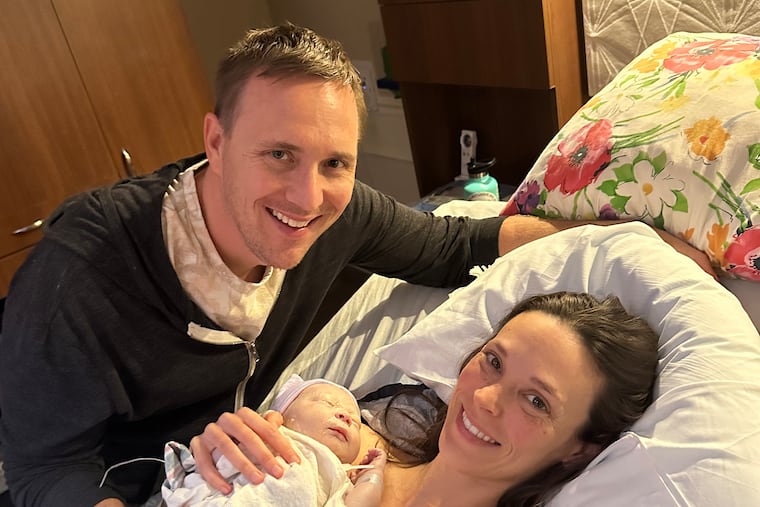
That was the year West asked Lynn to marry him. They had a small ceremony in City Hall and took their kids on their honeymoon to Breckenridge, Colo.
After West turned 50, he told his sons if he developed Alzheimer’s, “just give me a pill. Let me take myself out. I don’t want to be that person,” Austin recalled.
“Absolutely not,” Austin told him. “You will be loved more than anyone in this world. We will take care of you.”

Alzheimer's disease is a type of dementia that affects memory, thinking, and behavior. Symptoms eventually grow severe enough to interfere with daily tasks. Age is a risk factor for this terminal disease with no cure. Most patients have late-onset Alzheimer's, which develops after age 65. A small percentage have early-onset Alzheimer's in which symptoms can begin during the patients' 30s and 40s, though the disease is typically diagnosed in their 50s and early 60s. While both affect memory, there are key differences with early-onset Alzheimer's:
- Strong genetic link.
- Often progresses more rapidly with high rate of mortality.
- Non-memory symptoms, such as language, judgment, and visual problems, can be more prominent.
- Psychosocial challenges arising from loss of career and income and disruption of family responsibilities.
- Increased anxiety, depression, and suicide risk.
Sources: Alzheimer's Association, Dementia Matters, Early- and Late-Onset Alzheimer’s Disease: Two Sides of the Same Coin?, Johns Hopkins Medicine.
‘In denial’
Around the time West retired in 2021 at age 61, Lynn noticed changes so subtle that only she picked up on them.
He asked questions she had already answered. He repeated himself more than usual. He forgot business meetings and bill payments. He began taking photos of where he parked the car.
She started urging him to make a neurology appointment in early 2022. West would have received VIP treatment at Jefferson Health, a close partner with Rothman, but he was still working as a healthcare consultant and he didn’t want anyone to think his brain might be failing. But also, “he was in denial,” Lynn said.
So he waited six months for an appointment at Penn Medicine, and canceled it.
After rescheduling, his first appointment at Penn Memory Center in February 2024 marked the start of a battery of medical tests. Blood work. Spinal tap. Brain imaging.
Until recently, Alzheimer’s could be confirmed only through an autopsy. Now, new tests can diagnose Alzheimer’s with near certainty before dementia symptoms are severe. That means doctors can try to treat symptoms earlier or possibly slow the disease’s progression, although they can’t stop it.
It also means patients — and their families — have to live with the knowledge of what’s to come.
What West hated most were the pen-and-paper cognitive tests, like counting backward or repeating a five-word sequence. Those helped to track the disease’s progression, but they made him feel like a fifth grader.
“It ate him up,” Lynn West said. “The more the testing happened, the more aware he became. It was devastating to him.”
West didn’t want Lynn to tell anyone, but their kids began to notice changes.
In late spring of 2024, while at their beach house in Ocean City, N.J., Lynn’s daughter, Sammi, then 23, asked West to go jet-skiing with her — a favorite activity they shared as kindred speed demons. He told her to go without him. When she returned, he asked her where she had gone.
Lab results of West’s spinal tap hadn’t even come back yet when West opened his laptop and typed the first in a series of letters to Lynn.
“I now admit/recognize what I have and what is next. I cannot put you thru the issues you would have to deal with over the coming years,” West wrote. “I know you would disagree, because that is who you are.”
He did not want a long, one-sided goodbye like the one he had with his mother. “It was so hard to visit her and see her condition worsen, a horrible quality of life,” he wrote.
West said he loved Lynn too much to burden her, recalling with his mother the toll of “the sacrifices everyone made to care for her for so many years.”
He was also worried about the economic strain of caring for someone with dementia, whether at a nursing facility or at home.
West wrote that Lynn deserved to enjoy “a full life,” with the time and money to go on vacations with family and friends.
In June 2024, about four months after the initial neurology appointment at Penn, the test results came back.
West had two copies of a gene variant, APOE-e4, that put him at much higher risk of Alzheimer’s. Tests also showed increased levels of proteins in his brain and spinal fluid linked to the disease.
Lynn was closely monitoring West’s electronic patient portal and learned the results first. She spoke with his neurologist, who was sure West had early-onset Alzheimer’s, though he planned to order more genetic testing for further confirmation.
It was morning. West was working in the family room. “Would you like a cup of coffee?” she asked, part delay tactic, part wanting to do something for him.
After she told him, they hugged wordlessly for a long time, both crying.
‘Don’t know what I need’
A few days after West’s diagnosis, a Penn Medicine social worker called and asked Lynn if she needed anything.
At the time, Lynn didn’t know about research showing suicide risk is especially high among patients with early-onset Alzheimer’s, particularly in the months right after diagnosis.
“I don’t know what I need,” she told the social worker. Looking back, she wishes the social worker had set up some therapy sessions to help her and her husband cope with the diagnosis.
West’s neurologist, Jeffrey Maneval, put him on a medication called donepezil. It’s supposed to improve thinking skills, but only marginally.
“It’s better than nothing,” Maneval said.
West hated the side effects, including bruise-like blemishes on his fair skin. He wore long sleeves all summer.
The plan was to enroll West in a clinical trial for a new drug, lecanemab, administered through IV infusions. Lecanemab was shown to slow cognitive decline by 30% to 40% by removing amyloid, a protein linked to Alzheimer’s, that builds up and forms plaques in the brain.
But there were serious risks. The medication can cause swelling and bleeding on the brain, especially in patients with West’s genetic profile.
West was scheduled to start the trial in October 2024, about four months after his diagnosis.
Life expectancy for patients with Alzheimer’s varies greatly, and Lynn found hope in that uncertainty.
She reminded him that they knew how to navigate the healthcare system. She would research the best diets and the latest breakthroughs. They knew some of the best doctors in Philadelphia and beyond.
“We’re going to do everything we can,” she told him. “We’re going to get you on this trial. You’re going to be fine. You’re still young. You still know who everyone is.”
Lynn recalled West telling her, “I’m not afraid to die, but I am afraid to lose my brain and my mind and my dignity.”
He mentioned pills that would kill him, telling her he’d have to take them himself so she wouldn’t get in any trouble.
He said it in a joking way. Just talk, Lynn thought.
Once fearless, now fearful
As the summer progressed, so did West’s symptoms.
West used to love cruising on a moped, with Lynn on the back, exploring remote areas of a foreign country. He’d randomly hop off a public bus to try local cuisine. He’d jump off seaside cliffs so high the water’s impact left his body bruised.
But this summer, during a trip to London and Paris, he insisted on having tour guides and was afraid to take the train without them. When they got home, he couldn’t remember everything they saw, so Lynn made him a photo album. She later studied the photos. He smiled broadly in front of Parliament and the Eiffel Tower, but his eyes looked sad.
West became scared to go places without Lynn. He wanted her close by at social functions. When he ran Rothman, West handwrote birthday cards to each of its 1,600 employees and greeted them by name in office elevators. Now he feared not recognizing people.
Lynn worried about leaving him alone with their grandchildren. What if he forgot to close the door and a child wandered off?
By July, West could no longer keep the diagnosis from his kids. He told Austin and his wife when they came for a visit.
Austin recalled telling his father: “You are still my dad. Not only are you still my dad, but you are still Mike f— West. Don’t ever think that you are less than that guy because in my eyes, you never will be.”
“What if I repeat a story?” West asked, tearing up.
“I’m gonna smile like you never told me before,” Austin said.
An unanswered call
West rose early on Sept. 16, 2024. A cloudy Monday.
In his retirement, he had a regular 5 a.m. call each weekday to share business advice with Alex Vaccaro, an orthopedic surgeon and Rothman’s president. He had told Vaccaro two weeks earlier about his diagnosis, and Vaccaro didn’t think he seemed depressed or less sharp.
That morning, Vaccaro later said, they “talked numbers,” as usual.
About 7 a.m., West checked on Lynn. She was awake but still in bed. He normally bent down and kissed her. Instead, he asked her to stand up.
“I want to hug you,” he said.
His next morning routine was to call Austin on his son’s drive into work. This morning, they spoke for 30 minutes, an unusually long time. He told Austin he was excited to come visit him in Florida the next month. He wanted to hear about a job interview Austin had, and how Austin and his wife wanted children. “Nothing leapt out to say, ‘Hey, I’m in pain,’” Austin said.
“All right. Love you, dude,” West said before hanging up.
As he often did, West decided to spend the day at their Ocean City beach house. He told Lynn as he left their South Philly home that he’d be back by about 3:30 p.m. He wanted to get some consulting work done before leaving for a vacation to Europe in three days.
He texted his older son, Michael, 36, who lives in Gloucester County, to say he enjoyed spending time with him and his two boys, ages 3 and 5, the day before. He added that he loved him. West wasn’t much of a texter; he usually called. “It was a little strange,” Michael said.
West called Lynn several times, more than usual.
Just before 3 p.m., he called again to say he’d decided to spend the night at the beach.
“I’m tired,” he said.
He said he’d had a drink. He never drank in the middle of the day.
“I’m coming down,” Lynn said.
“Now?” he asked.
She called him while on her way. He didn’t pick up.
Lynn called Michael, who lived closest to the Shore house.
“I’m really scared,” she said.
They were on the phone together when she walked into the house. West’s car keys, wallet, and two envelopes were neatly lined up on a marble table in the foyer.
She found him in the garage, where he had hanged himself, and she ran from the house screaming.
‘No closure’
Lynn opened one of the envelopes West left her. It was thick with about 30 pages of instructions, ranging from finances to burial.
One handwritten page read, “Lynn’s To Do’s.” There were 11 bullet points, starting with:
Each time you see the grandkids — give them a kiss from me.
Each time you go in the backyard for drinks or gatherings — plug in the lights — that will mean I am with you.
Defend me for those who judge me.
In the days after his death, the words weighed on Lynn. She was so focused on protecting him from what others would think about his suicide that she couldn’t fully grieve.
More than 2,000 people came to West’s funeral, waiting 2½ hours to sign his guest and memory books. Friends and colleagues wrote he was a “selfless giver,” a “humble CEO,” and “a visionary” whose “joy came from watching those around him succeed.”
Lynn emailed the neurologist to cancel the drug trial and additional genetic testing. She didn’t say why until he called her.
“He took his own life,” she told him. The words were hard to expel, like small stones in her mouth.
Lynn and West’s boys don’t think his suicide was a selfish act. They understand why he did it. But they’re upset — at times angry — about when and how he did it.
Austin can’t fathom why he would leave Lynn to find him. “I am so f— mad that he put this on Lynn,” Austin said. “And I know he can hear me right now.”
It hurts that they didn’t see it coming, despite their closeness: “We spent all our time together. I had no clue. That’s what is hard for me,” Lynn said.
“I’m upset that he didn’t confide in me,” Austin said. “I’m upset that he didn’t give us more time to be there for him and take care of him, as he always took care of us.”
Michael wishes that his father had at least given his family an opportunity to discuss options.
New Jersey and Delaware are among the 11 states with laws that allow terminally ill adults to end their lives with a physician’s prescription. None apply to Alzheimer’s, because the patient has to be within six months of dying, mentally capable of making the choice, and able to self-administer the medication.
But they could have talked about going to Switzerland, where assisted suicide is legal for Alzheimer’s patients.
“I think he could see his faculties slipping,” Michael said. “I think he just didn’t want to get to the point where he couldn’t make the decision to move on. Because once you’re at that point, you’re just kind of living in the abyss, and I think he was terrified of that.”
Lynn often replays conversations with West, wondering how she could have prevented his suicide. Maybe she should have been more tender and less strong?
“We have no closure,” she said. “It’s driving me crazy.”
‘Nobody wants to talk about it’
She recently had a dream that West went missing. She looked everywhere for him. He changed his phone number.
If Lynn had known West’s plan, she would have tried to talk him out of it. And if she couldn’t, she wanted the opportunity to be involved in his decision and its timing. At least try the clinical trial, and maybe when he started to forget who she was, they would go to Switzerland together.
“People with a terminal illness want to live with a quality of life, but having your brain intact is quality of life,” said Lynn, who decided to talk to The Inquirer because she doesn’t want other families to go through this.
Lynn is left wrestling with questions: What are the options for patients who don’t want to drain their finances and require round-the-clock care at home or in a nursing facility? Why are these conversations taboo in the U.S.? Should patients with severe dementia be kept alive by their families against their will?
“I’m not advocating for people to commit suicide. I’m advocating for discussions, so families aren’t blindsided,” Lynn said. “Nobody wants to talk about it. Yet it’s a discussion that has to happen because there’s so much hurt and shock if it doesn’t.”
If you or someone you know may be considering suicide, help is available:
- The 988 Suicide & Crisis Lifeline offers help in more than 150 languages. Call or text 988. En Español, marca al 1-888-628-9454. If you're deaf or hard of hearing, call 1-800-799-4889.
- The Philadelphia Suicide and Crisis Center offers guidance and assessment about depression, self harm, hopelessness, anger, addiction, and relationship problems, at 215-686-4420.
- Veterans Crisis Chat is available at 1-800-273-8255 or by text at 838255.
- The Trevor Project offers crisis support to LGBTQ youth. Call 1-866-488-7386, text START to 678678, or start a chat.