An Alzheimer’s diagnosis can take months, but that’s just the beginning. Here are resources to help families.
The former CEO of Rothman Orthopaedics was diagnosed with Alzheimer's. His widow is working to help patients and their families get the support they need.
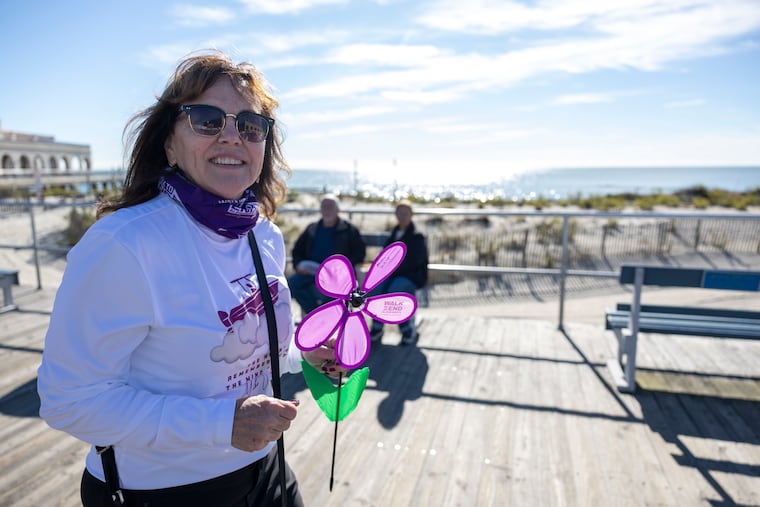
Lynn West watched her husband become increasingly anxious and defeated as the months leading up to his Alzheimer’s disease diagnosis stretched on.
It took Michael West six months to get a neurology appointment. Then another four months of medical and cognitive testing before he got diagnosed, and an additional four to get scheduled to start IV-infusions of a medication aimed at slowing his worsening dementia.
She repeatedly tried to reassure him that everything would be OK. In reality, they lacked the tools and support to navigate that terrible time. “We were going through this kind of on an island by ourselves,” Lynn said.
The diagnosis provided answers, but not an end to the stress for Mike, Lynn, and their family.
» READ MORE: Former Rothman CEO Mike West didn’t want to burden his family with his Alzheimer’s. He quietly planned his suicide.
The experience has propelled her to join forces with the Delaware Valley Chapter of the Alzheimer’s Association to improve access to medical care, help connect patients and their families with more mental health supports, and raise awareness about available resources.
“Alzheimer’s is a terminal disease. Early diagnosis and care are essential to slowing its progression and maintaining quality of life,” Lynn said. “We must push for better access to care and stronger support for patients and families — until we find a cure for this disease that strips away a person’s dignity.”
Here are some tools and resources from the Alzheimer’s Association for patients and families dealing with the disease:
24/7 Helpline (800-272-3900): A free service offering support for people living with dementia, caregivers, families, and the public. Callers connect with a live person who can provide information, local resources, crisis assistance, and emotional support.
My Alz Journey: A free mobile app offering personalized support for newly diagnosed people and their care partners. It includes planning tools, helpful checklists, and guidance on adjusting to a diagnosis.
Local support groups: Trained facilitators lead free support groups via phone, video, or in person. These groups offer a safe, confidential, and supportive environment, and help forge social and supportive relationships. There are early-stage Alzheimer’s support groups and ones for caregivers.
Online education (training.alz.org): Training materials designed to help empower patients and caregivers, such as, “Dementia Conversations: Driving, Doctor Visits, Legal & Financial Planning,“ “Transitions in Care,” and “Effective Communications Strategies.”
The Alzheimer’s Association’s annual Walk to End Alzheimer’s in Philadelphia is scheduled for Nov. 8 at Citizens Bank Park. Registration is free. To learn more about Lynn’s team, “West Walkers Philly,” click here.