Federal jury rules against doctor who claimed Drexel punished her for speaking out about gender discrimination
Emergency room doctor Sharon Griswold said at her civil rights trial against Drexel that she was standing up against sex discrimination. She lost her case.
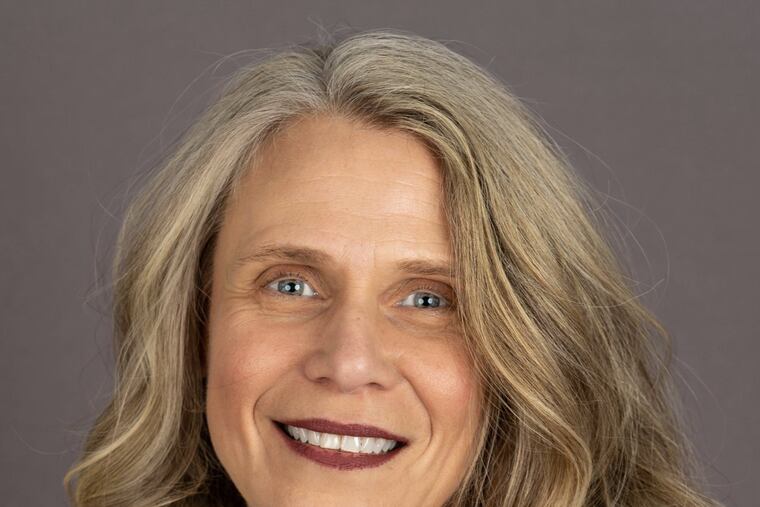
Drexel University medical school leaders did not retaliate against a former emergency room doctor and professor for speaking out about gender discrimination, a federal jury found on Friday in a high-profile civil rights case.
The jury of six women and two men also concluded that the doctor, Sharon Griswold, was not subjected to a “gender-based hostile work environment” during the 13 years that she worked at Drexel, ending with her termination in early 2020.
Rather, the jury found Drexel complied with civil rights laws that prohibit workplace sex discrimination, and her supervisor took “reasonable steps” to address Griswold’s grievances.
In the days before the trial, Griswold sought to rally female doctors to attend in support of her case and against gender bias in a field that remains male-dominated, especially in emergency medicine. She sent Evite invitations to the trial to peers and posted about the case in a 4,200-member private Facebook group for Philadelphia-area female doctors.
“I am here to stand up for justice,” Griswold told jurors on the trial’s second day, Tuesday.
After a five-day trial in U.S. District Court in Center City, jurors reached their verdict in Drexel’s favor after deliberating for 90 minutes.
Lawyers for both Drexel and Griswold declined comment after the verdict.
During the trial, Griswold, 57, argued she suffered emotional distress and financial loss for complaining about sex discrimination, claiming she was denied a promotion to academic vice chair — a “stepping stone” to become chair, a prominent position worth millions in salary over the span of her remaining career.
Drexel’s lawyer, Charlene Gedeus, told jurors Griswold was repeatedly promoted and did not suffer financial harm: She went on to new positions at Penn State Health and Merck.
After being hired in 2007, Griswold became the first full-time female professor in Drexel’s emergency medicine department.
“Doctor Griswold enjoyed a flourishing career at Drexel,” Gedeus said during her closing statement.
Gedeus said Griswold was laid off, along with scores of other faculty doctors, because its teaching hospital, Hahnemann University Hospital, closed in summer 2019.
Griswold’s lawyer, Rahul Munshi, told jurors Griswold could have continued to run a master’s program at Drexel’s graduate school, arguing the real reason for her termination was a sex-discrimination complaint that she had filed with the Pennsylvania Human Relations Commission (PHRC), the agency that enforces state laws prohibiting discrimination.
“They were mad at her because they knew she about to file a lawsuit,” Munshi said in closing. “The hospital closing is just a red herring.”
Griswold testified that she and other females within Drexel’s emergency medicine department were treated poorly by male leaders, and the rules were different for the sexes. She described how female faculty came to her in tears over lewd and belittling behavior by men.
Drexel contended that Griswold’s department chair, Richard Hamilton, supported her for a third promotion just days after she complained to human resources about gender bias in 2019. Hamilton also nominated her for a prestigious fellowship program for female leaders in medicine and allocated funding to help Griswold establish and lead a new master’s program.
Hamilton testified that he took Griswold’s complaints seriously but when he asked her for specifics, he found that the disputes with male colleagues centered on scheduling conflicts and clashes over resources, “not actions taken against women.” Griswold “chose not to” move forward with a formal complaint process with the university’s Office of Equality and Diversity, Drexel’s lawyer noted.
About 60% of Griswold’s work involved treating patients and training medical residents at Hahnemann and leading the department’s simulation division, which used computerized mannequins to train medical residents.
The remainder of her workload focused on her role at Drexel’s graduate school as director of a master’s program in healthcare simulation that she had pioneered.
Former colleagues testified that Griswold was a talented doctor and an exceptional professor, who at times was also temperamental and exacting.
On Thursday, a former Drexel staffer testified that Griswold got angry over a scheduling conflict and said she felt like “burning this building down.” The staffer reported the October 2019 incident to university leaders.
Drexel leaders placed Griswold on paid administrative leave pending an investigation and university police officers escorted her out of the building. She was barred from contact with students and faculty.
“It was horrible, and it was isolating,” Griswold testified. “Because I tried to raise concerns and do the right thing, I felt as if they are making me out to be a criminal.”
A detective with Drexel’s public safety department testified his superior told him to hold off on his investigation, citing the PHRC complaint Griswold filed shortly after being put on leave. Griswold’s lawyer, Munshi, told jurors that Drexel “slow-walked” its investigation to prevent her from renegotiating her contract before its end date.
The investigation ultimately closed with “no findings” against Griswold. By then, however, her contract had ended.
Several witnesses testified that Griswold’s master’s program had struggled with enrollment. A Drexel leader testified the program ultimately closed because Griswold sent a “cease and desist” notice, seeking to prevent use of her curriculum materials after she was let go.