Wills Eye has lost money for at least 10 straight years. Here’s why and what it’s doing to dig out.
Wills is trying to convince private insurers to pay it the same as other hospitals, but faces pushback because its Center City flagship is not a comprehensive hospital.

Wills Eye Hospital, the only remaining independent eye hospital in the United States, is looking to new leadership to turn around its finances after at least 10 straight years of operating losses.
The Philadelphia nonprofit, founded in 1832, offers services from routine cataract surgery to highly complex care, while also conducting research and training future doctors. It is the nation’s only top specialty eye center that is not part of a larger healthcare system, which can provide financial and administrative support.
Wills leaders blame its financial struggles on the relatively low payment rates it receives from insurers, compared with local competitors like Penn Medicine’s Scheie Eye Institute at Presbyterian Medical Center.
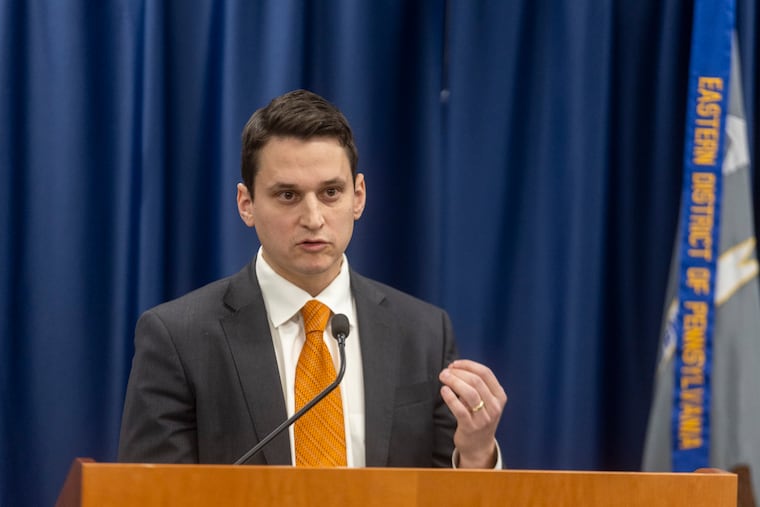
“Commercial insurers as a group are paying other area hospitals at least two to three times what Wills is getting paid for the same procedure,” said Rebecca Rhynhart, a former Philadelphia city controller who was hired in May to help sort out Wills’ financial troubles.
Two months later, the city board that controls Wills appointed a new CEO, Julia Haller, who will also remain ophthalmologist in chief at the Center City institution.
Renegotiating contracts with Independence Blue Cross and other insurers is the top priority at Wills — which had a $17.8 million operating loss on $104 million in revenue in fiscal 2024. Wills and IBX said in a joint statement Wednesday that they are committed to reaching a contract with “appropriate rates.”
If Wills got the same prices as local hospital competitors, it would receive $15 million more a year in revenue, Rhynhart said.
That math might be right, but it doesn’t capture the full scope of the Philadelphia institution’s challenges in today’s consolidated healthcare marketplace, industry experts said.
Wills is still trying to do everything — conduct research, provide education, and offer complex care available at few other places — at a very small scale, said Dan Grauman, managing director at consulting firm VMG Health.
“Independent, small is just not where this industry has evolved to,” he said, noting that money-losing Holy Redeemer Hospital in Abington Township is the only general hospital in the region that is not part of a larger system.
It is unclear how long Wills has been losing money. Audited financials are publicly available back to fiscal 2016, and results for the most recent fiscal year are not yet available.
Wills did not answer a question about when it last had an operating profit.
What makes Wills unusual
Wills serves as the ophthalmology department and a teaching site for medical students and residents at Thomas Jefferson University Hospital and Jefferson’s Sidney Kimmel Medical College.
But Jefferson does not own Wills, which was founded around the same time as Jefferson in the 19th century.
A Quaker grocer named James Wills Jr., who died in 1825, left his estate to the City of Philadelphia to create “The Wills Hospital for the Relief of the Blind and the Lame.” The hospital opened seven years later on the southwest corner of 18th and Race Streets, according to its online timeline.
Because the donor left his money to the city, Wills Eye became part of the Board of Directors of City Trusts, which state lawmakers created in 1869 to improve management of bequests to the city.
Girard College and Girard Estate are other significant responsibilities of the 12-member board. Former Mayor Michael A. Nutter, who became president of the City Trusts board in January, says he is confident in Wills’ leadership.
“We are where we are. It’s not where we want to be, and it’s not where we’re staying,” Nutter said in an interview last week.
Wills is the only freestanding institution among the nine U.S. members of the World Association of Eye Hospitals. Beyond the association’s membership, the well-known Bascom Palmer Eye Institute in Florida is part of the University of Miami.
Two similar specialty centers founded in the first half of the 19th century, New York Eye & Ear Infirmary in Manhattan and Massachusetts Eye & Ear in Boston, have been acquired by larger systems.
But Wills’ management and its board value the institution’s independence. “It is a part of why we’re so good at what we do,” Nutter said.
What Wills gets paid
For common cataract surgery, IBX pays Wills $2,517 per eye, while the insurer pays Scheie $9,257 and Thomas Jefferson University Hospital $8,516, according to prices posted on the hospitals’ websites.
The three hospitals did not disclose their methods for arriving at those prices, which means they might not be entirely comparable.
IBX’s commercial plans paid for 29% of the cataract surgeries performed at Wills last year.
Wills’ argument is that the procedures are the same, and it is licensed as a hospital, so IBX and other commercial insurers should pay it the same as Jefferson and Penn.
But Wills is not a general service hospital like those competitors.
When Wills opened its current location at 840 Walnut St. in 2002, it was licensed as a surgery center. Medicare recognized it as a hospital five years after remodeling added a four-bed inpatient unit in 2013.
Even with the hospital designation, Wills remains limited on how sick a patient can be to have surgery there, said Michael Allen, Wills’ chief operating officer.
Some patients, for example, require the backup of a cardiac care or an intensive care unit, in case problems arise during an outpatient procedure. “There is a portion of eye care that is required by the sickest patients that is still done today at Jefferson,” Allen said.
How insurers think about provider payments
Wills’ unique profile factors into how insurers like IBX set its payment rates.
“Inpatient hospital procedures are reimbursed at higher rates than those performed in outpatient settings or ambulatory surgical centers, where Wills delivers the majority of its care,” Richard Snyder, a physician who is chief operating officer at IBX, said in an email.
Wills’ contract with IBX has renewed automatically, with annual payment increases tied to an index created by the federal Centers for Medicare and Medicaid Services, for the last six years, Snyder said.
Wills officials say the rates are still too low.
IBX’s goal in the ongoing contract negotiations is “to ensure our reimbursement structure reflects current market dynamics and supports continued access to high-quality, affordable eye care for our members,” Snyder said.
Scale a challenge for Wills
Wills’ leaders tout its No. 2 ranking for ophthalmology by U.S. News & World Report as an indication that its “quality of care is actually the best in this area,” Rhynhart said.
The U.S. News ranking for ophthalmology is based on a survey of specialists who are asked where they would send their sickest patients and does not include other indicators that assess overall quality.
Rankings also do not take into account the challenges Wills faces competing with institutions with similar-scale but more extensive institutional resources.
Consider how Wills stacks up with Penn’s Scheie Eye Institute:
Wills has 38 employed ophthalmologists, compared with 48 employed by the core academic practice at the University of Pennsylvania.
Scheie did 3,315 cataract procedures last year, compared with 2,936 at Wills in fiscal 2025.
The Jefferson/Wills ophthalmology resident program, with 24 slots, is larger than Scheie’s, which has 15, according to the Accreditation Council for Graduate Medical Education. (But Medicare payments that subsidize medical education go to Jefferson, which pays Wills a cut.)
A grant comparison shows a wider divide: Penn’s ophthalmological research program received $13.8 million in National Eye Institute grants last year, compared with $2.4 at Wills.
And Scheie exists inside a health system with nearly $12 billion in annual revenue. Wills’ total annual revenue is less than 1% of that.
This reflects a core challenge at Wills: how to maintain its top-tier status as a teaching and research institution without the financial support of a full-fledged hospital, said Robert Betz, who has decades of experience as a healthcare consultant.
“It’s a specialized ophthalmic ambulatory surgery center with a tremendous reputation,” he said.