A disabled Ecuadoran immigrant faces deportation. Del. Gov. Matt Meyer hopes to stop it.
Whether a governor's support in an asylum case can hold any sway in the immigration system remains to be seen.

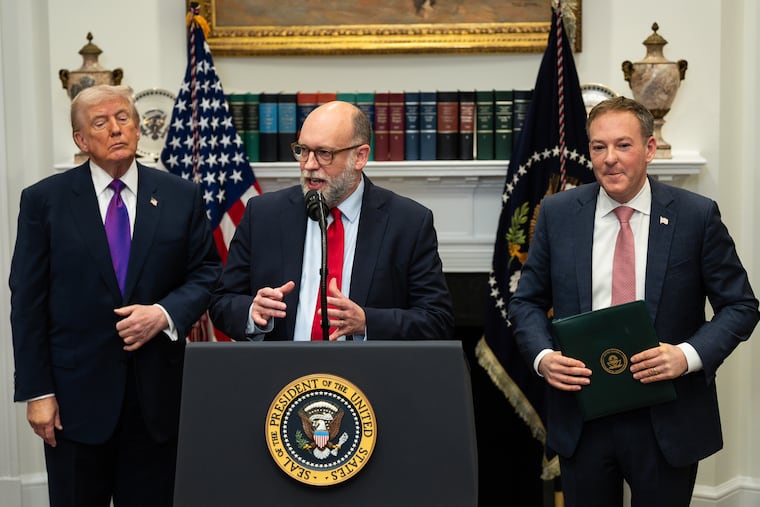
Delaware Gov. Matt Meyer has stepped into the case of a 52-year-old disabled Ecuadoran immigrant, telling the judge it would be “cruel” and “egregious” to deport the Seaford resident to face gang violence in his homeland.
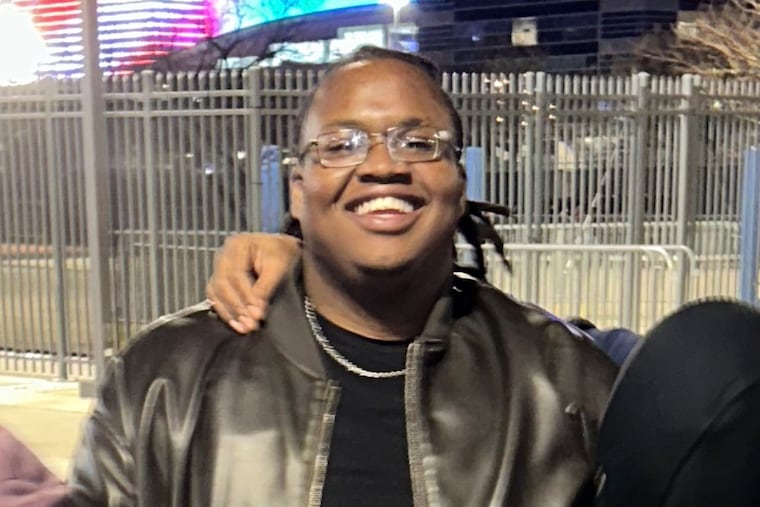
The man, Victor Acurio Suarez, is unable to live on his own, always cared for by his younger brother. He tried to flag down a U.S. Immigration and Customs Enforcement agent in a Lowe’s parking lot near his home in September, apparently thinking the officer could help him find work. Instead, he was arrested and placed in detention and is scheduled for an Immigration Court hearing on Jan. 16.
“Given Mr. Suarez’s medical and functional limitations, I am concerned that he is unable to safely care for himself, effectively represent himself in legal processes, or access the necessary support without his family,” the governor wrote to Judge Dennis Ryan.
» READ MORE: A disabled Ecuadorian immigrant tried to flag down an ICE officer. Now he faces deportation.
Meyer also advocated for Acurio Suarez in a series of social media posts, saying, “I want Delawareans to know about Victor Acurio Suarez,” and calling what has happened to him “deeply disturbing.”
Meyer’s advocacy is notable. While many elected officials have spoken out against President Donald Trump’s broader immigration policies, advocating for specific individuals has been typically reserved for high-profile cases like Kilmar Abrego Garcia, the Maryland man who was illegally deported to El Salvador’s notorious CECOT prison, returned to Moshannon Valley Processing Center, and was recently released.
Meyer argued that with no criminal history, not even a traffic violation, Acurio Suarez “poses no threat to public safety.”
Yet how much weight the backing of a governor carries in the immigration system remains to be seen.
In the past, someone with Acurio Suarez’ profile might have been allowed to stay home as their case moved forward in Immigration Court.
A medical assessment submitted for his asylum application this week said Acurio Suarez has autism and aphasia, a language disorder that affects his ability to produce or understand speech.
Dr. David W. Baron noted Acurio Suarez can’t safely live on his own. He requires supervision to perform daily hygiene activities or cook and has a hard time communicating his needs to others, a condition made worse by being in an unfamiliar setting while in detention, where he doesn’t have access to the support needed for his neurocognitive disabilities.
» READ MORE: More than 65,000 immigrants are being held in federal detention, a big increase from when Trump took office
Still, as the Trump administration pursues a mass deportation agenda, undocumented immigrants without violent criminal histories are increasingly held in mandatory detention, unable to seek release on bond, as their cases play out.
The latest federal data from November says 74% of the roughly 65,000 people in detention have no criminal convictions.
It’s unclear what impact the governor’s letter might have. The judge on the case can only approve or deny the asylum application.
ICE does have discretion in releases but has so far denied a September request from Acurio Suarez’ attorney, Kaley Miller-Schaeffer.
“The letter from the governor, if anything, could maybe persuade ICE to relook at the request for release on parole,” she said, noting that Meyer’s letter brings more attention to the case.
An ICE spokesperson said in a statement that the agency was committed to the “health, safety, and welfare of all detainees in custody.”
“ICE’s National Detention Standards and other ICE policies require all contracted facilities to provide comprehensive medical and mental health screenings from the moment an alien arrives at a facility and throughout their entire time in custody,” the statement said.
Miller-Schaeffer said she will still have to prove Acurio Suarez met all the strict requirements for asylum in Immigration Court. Should ICE not reconsider releasing Suarez on bond, he will remain in Moshannon Valley Processing Center until he is either granted asylum or deported.
Deportation could be deadly, according to Acurio Suarez and his brother. In addition to lacking the necessary support to perform daily tasks, Acurio Suarez fears the gang that drove him and his brother to flee the country would find him again in an effort to recruit or kill him.
Acurio Suarez told Baron he fled to the United States in 2021 after a group of gang members beat and kicked him with steel-toe boots, knocking out his gold front teeth and stealing them. The group was part of Los Lobos, a criminal organization with a national presence in the country, designated a foreign terrorist organization by U.S. Secretary of State Marco Rubio this year.
Acurio Suarez said the group also set his home on fire after they learned his younger brother reported the attack to the police.
According to the Global Initiative Against Transnational Organized Crime, gang violence has risen in Ecuador amid economic hardship and subsequent battles over the illicit economy. The Geneva-based group estimates that the country will reach about 9,100 intentional homicides in 2025, a 40% increase from the previous year.
In his passionate defense of Acurio Suarez, Meyer said the 52-year-old is at “high risk of re-victimization by the Los Lobos gang” should he be deported.
“If you believe compassion belongs in our immigration system, join me in calling for Victor’s release,” Meyer wrote.