How a $20,000 expense for an awards gala upended Pa.’s civil rights enforcement agency
The exchange occurred about two weeks before Gov. Shapiro asked Chad Dion Lassiter to resign as the head of the Pennsylvania Human Relations Commission and launched an investigation into its spending.
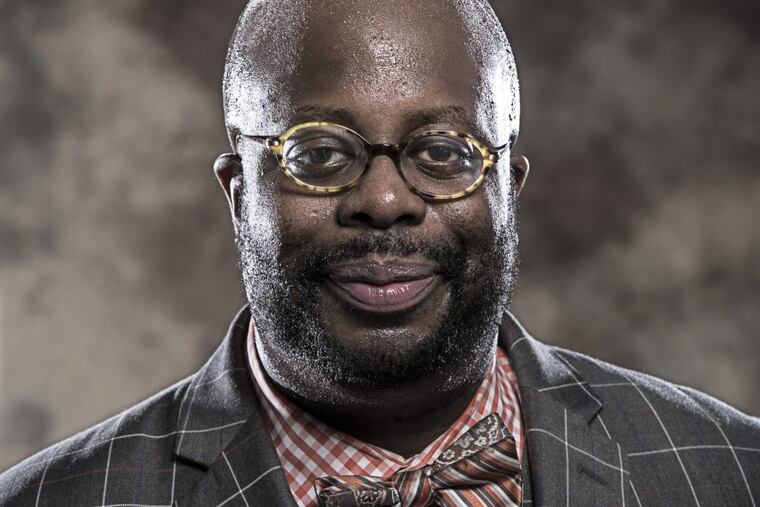
The head of Pennsylvania’s civil rights enforcement agency pressed his staff to fast-track a $20,000 payment for an NAACP awards gala, which led officials in his agency to discuss ways to sidestep rules around spending taxpayer funds, emails obtained by The Inquirer show.
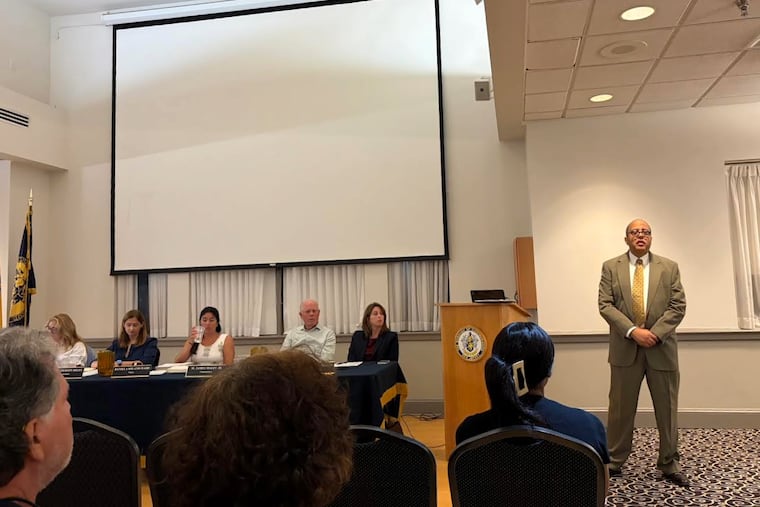
The exchanges occurred about two weeks before Gov. Josh Shapiro’s office asked Chad Dion Lassiter to resign as the head of the Pennsylvania Human Relations Commission and launched an investigation into the office’s spending. Shapiro’s request coincided with a flurry of high-ranking departures at PHRC — an independent agency that enforces anti-discrimination laws — raising concerns about its ability to process thousands of discrimination claims.
State law requires payments over $10,000 to go through a formal review process. In early February, Lassiter, 53, sought to quickly expense $20,000 for two banquet tables at the NAACP’s Freedom Fund Awards ceremony on Feb. 12, where he received the President’s Award for his eight years of work leading the commission.
When a procurement official at PHRC pushed back on the director’s request, suggesting there wasn’t enough time to approve a payment that large, Lassiter reprimanded her and called her behavior “very embarrassing and problematic,” according to the emails.
“You were also instructed not to email me directly moving forward,” he wrote. “You continue to display with defiance even after being given an instruction.”
Lassiter, in an interview Wednesday, blamed the tone of his email on his busy schedule and said he simply wanted the procurement official to “make it happen.” He said he was not “trying to hide anything” about the payments and rejected the idea that paying to attend events violated spending rules.
After his request, however, PHRC staff began exploring other ways to push the payment through, according to the emails. One proposal suggested splitting the $20,000 gala cost into two payments and calling them outreach expenses. PHRC attorneys objected and the payments never went through.
A PHRC employee reported concerns about Lassiter’s spending practices to Shapiro’s office, which quietly asked the director to resign on Feb. 23, in an arrangement The Inquirer reported last month. Lassiter will continue working until June 30.
Rosie Lapowsky, a spokesperson for Shapiro, declined to comment last week on the review of the agency’s accounts and whether any purchases had been improper.
“It is the agency’s responsibility to ensure the agency remains in compliance with the procurement rules,” she said.
Public accounting experts and government watchdogs said expenditures must advance an agency’s agenda, and noted the law doesn’t address paying to attend events.
Eric Epstein, cofounder of the good-government group Rock the Capital, argued that the NAACP awards ceremony walked a fine line between official business and self-promotion.
“Many state officials are recipients of awards, but those honors should not include a taxpayer gratuity,” he said.
Catherine Hicks, president of NAACP Philadelphia, said her organization ultimately sponsored tables for Lassiter, his family, and his staff.
Lassiter, an Olney High School graduate who earned a master’s degree in social work from the University of Pennsylvania, inherited a backlog of more than 6,000 cases and a commission with a battered public reputation when he was named executive director in 2018. He said in an interview that he has expanded public outreach to restore the office’s image, combat the rise of hate speech, and encourage more people to file discrimination claims.
Hosting, sponsoring, and attending events are key to his mission, he said, and such expenses had never been flagged before as improper.
“They are social justice initiatives that are mission-critical to the PHRC, whether someone is receiving an award or not,” Lassiter said. “We use taxpayer dollars for everything that we do.”
Lassiter confirmed PHRC also paid the Philadelphia Gay News for tables at a similar event in February. It also paid City & State PA for ads on the publication’s list of “2026 Black Trailblazers,” which featured Lassiter; a sponsorship for the UNCF Masked Ball gala; and another gala sponsorship for the Maryland Commission on Civil Rights last summer.
A spokesperson for PHRC decline to confirm the amounts paid for each transaction.
Meanwhile, the commission is facing instability among top leadership.
Three of the PHRC’s board of commissioners, including the longtime chairman, resigned within the last month. The board is responsible for ruling on complex cases and appointing the executive director. Seven of the 11 positions are now vacant.
Attorney Joel Bolstein, who served as chairman for 27 years, resigned in early April. Two other commissioners, Mayur Patel and Raquel Yiengst, have also resigned since then.
Bolstein said Friday his departure was unrelated to the scrutiny of Lassiter and is due to added responsibility as a partner at his law firm, Fox Rothschild.
Outside spending remains frozen at PHRC, pending the investigation.
Philadelphia City Councilmember Curtis Jones Jr., who was named interim commission chair, said Friday the commission does not oversee day-to-day spending but that he would take “corrective action” based on the results of the probe.
“We’re waiting for the report,” he said. “If we have credit cards that aren’t being managed, we’re going to manage them.”
The commissioners have warned that the growing vacancies could draw out cases further.
PHRC annual reports show the agency resolved more than 3,250 cases in the fiscal year that ended mid-2023, but dropped to about 1,380 cases as of the latest report in 2025. Nearly half the resolved cases were over a year old — an improvement from when Lassiter took office.
Shapiro’s office said the governor plans to begin nominations for the vacant commissioner seats “in the coming days.”
— Staff writers Ellie Rushing and Gillian McGoldrick contributed to this article.

The Inquirer’s journalism is supported, in part, by the Lenfest Institute for Journalism and readers like you. News and editorial content are created independently of The Inquirer’s donors. Gifts to support The Inquirer’s high-impact journalism can be made at inquirer.com/donate. A list of Lenfest Institute donors can be found at lenfestinstitute.org/supporters.