A man who helped investigate his daughter’s killing is closer to staying in the U.S. But ICE is still keeping him in custody.
Erasmo Zavala Almanza assisted authorities after his 20-year-old daughter was shot to death and her 2-month-old baby critically wounded.
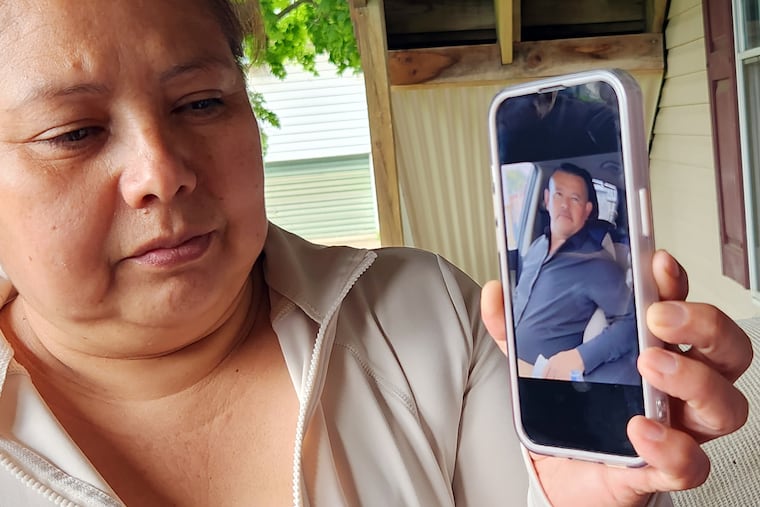
An undocumented Mexican immigrant who was arrested by ICE after he helped Berks County authorities investigate the fatal shooting of his daughter has been granted deferred action ― a key administrative decision that typically allows people in his situation to legally stay in the United States for at least four years.
Erasmo Zavala Almanza, 51, whose then-2-month-old granddaughter was critically wounded in the 2025 attack, also received a work permit.
But he remains in ICE detention, held at the Moshannon Valley Processing Center in Clearfield County, Pa., despite a favorable initial decision on his application for a U visa. If approved, that visa puts undocumented victims and witnesses who help the police on a path to live permanently in this country.
His attorney, Bridget Cambria, said Zavala Almanza should be freed immediately, given the decision by U.S. Citizenship and Immigration Services. That agency decides whether to issue U visas, and with them the important benefits they can carry, including freedom from enforcement.
Zavala Almanza’s detention springs from Trump administration policy changes in ICE protocols that, in U visa cases, now dissuade agents from taking a “victim-centered approach” to lean toward arrest and deportation.
In the past, U.S. Immigration and Customs Enforcement generally would not arrest an immigrant who was pursuing a U visa. Instead, the agency would allow U.S. Citizenship and Immigration Services to first decide whether a U visa was warranted.
That’s no longer true.
Zavala Almanza was arrested for immigration violations three months after the federal government received his visa application.
Now USCIS has issued a favorable decision for Zavala Almanza in what’s called a bona fide determination. That’s a process established by Congress as a kind of mini-review to determine whether a U visa application was likely to be approved.
The positive finding for Zavala Almanza carries deferred action, where the Department of Homeland Security delays action on deportation, essentially putting enforcement on hold. In U visa cases, the initial four-year deferment can be renewed and extended. He also received permission to legally work in the United States.
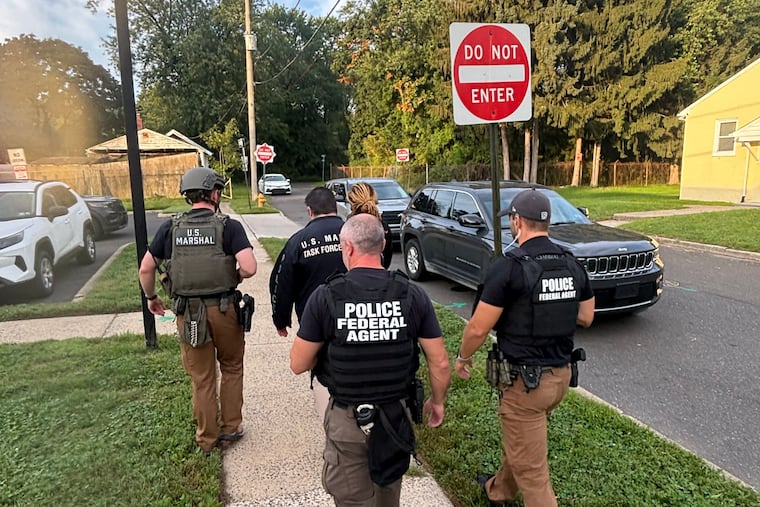
At the same time, however, ICE, not USCIS, is in charge of custody decisions involving undocumented immigrants. That agency has sought to deport Zavala Almanza since April 15, when agents arrested him outside his home in Temple, Berks County, for immigration violations that stem from when he entered the country without permission.
Meanwhile, on Tuesday, a federal judge ordered both sides to halt the filing of briefs in the legal case, where his lawyer seeks to free him from detention, while she decides whether to impose a preliminary injunction that would block ICE from deporting Zavala Almanza.
U.S. District Judge Stephanie Haines earlier issued a temporary bar on removal that expires on June 1.
Zavala Almanza’s lawyer, Cambria, executive director of Aldea — the People’s Justice Center in Reading— called the USCIS decision “huge.” It’s a key, favorable finding from the agency that holds sole power to decide whether someone gets a U visa that can enable them to live in the U.S.
Spokespersons for ICE, USCIS, and Homeland Security could not be reached for comment on Friday.
Zavala Almanza helped Berks County authorities as they investigated the February 2025 killing of his daughter, Selena Zavala Hernandez, 20, and the wounding of her baby, Selene Zavala Hernandez, for whom he is now a primary caregiver.
The mother and child, both U.S. citizens, were attacked by the baby’s father, 31-year-old Jesus Peñaloza Cruz, who then shot and killed himself, police said.
The child survived a dire stomach wound, multiple surgeries, and months of hospitalizations, supported by the love and care of Zavala Almanza and his wife, whom the courts appointed as guardians to their orphaned granddaughter.
The Berks County District Attorney’s Office certified Zavala Almanza to apply for a U visa, obtainable only in the case of serious crimes.
Because of a cap on the number of U visas that can be awarded annually, and a subsequent huge backlog, Congress established the bona fide process as a means to sort out whether applications were likely or unlikely to be approved.
In federal court last week, Haines said she found parts of Zavala Almanza’s case “very compelling” and questioned whether the government was avoiding the issue of “fundamental fairness.”
Berks County authorities relied on Zavala Almanza in the criminal case, the judge said, but now federal officials are “punishing this person” in the civil immigration system.
In court papers, Zavala Almanza said he and his wife settled in Pennsylvania after entering the United States without permission in March 2004. In September 2009, the couple was stopped for a traffic violation and police contacted ICE.
An immigration judge in Philadelphia granted voluntary departure, which meant they would be allowed to leave the country on their own, without accruing the penalties that accompany deportation.
Zavala Almanza acknowledged in court documents that while his wife departed on time, he overstayed the December 2010 deadline by at least a year before returning to Mexico. He recrossed into the United States in late 2015 or early 2016, followed by his wife.
The government maintains that what the Immigration Court initiated as voluntary departure converted into a deportation order when Zavala Almanza failed to leave on time. And that he must go back to Immigration Court to try to resolve that.
Cambria argued ― and the judge seemed to agree ― that any deportation order was fulfilled when Zavala Almanza departed the United States, no matter how he left. Even if an order exists, Cambria said, it would be wiped away by the U visa.
This is a developing story and will be updated.