Immigration lawsuits are dominating Philly’s federal courthouse as ICE push continues
Before this summer, detained immigrants filed release petitions with Philadelphia's federal court a handful of times a year. A new ICE detention policy led to hundreds of filings in recent months.
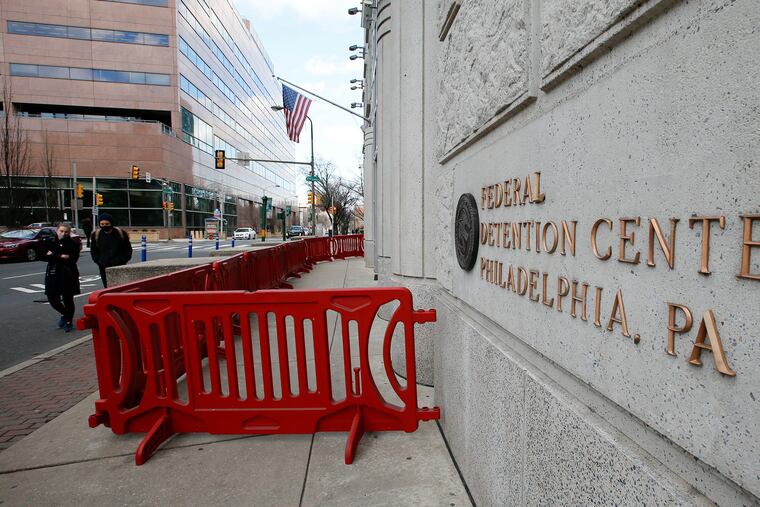
Philadelphia’s federal courthouse has become awash in lawsuits filed by undocumented immigrants challenging the government’s attempts to detain them, an Inquirer review has found, the latest example of how the mass deportation push by President Donald Trump’s administration has been affecting the nation’s legal landscape.
Through six weeks this year, court figures show, 168 such lawsuits have been filed in Pennsylvania’s Eastern District Court, up from 115 in all of 2025.
By contrast, only 11 such suits were filed between 2020 and 2024, meaning a new practice of litigation dominating the region’s federal court practically sprung up overnight.
U.S. District Judge Paul S. Diamond wrote in a recent court filing that these lawsuits, known as habeas petitions, now represent more than one in six civil suits filed in the district.
In other jurisdictions, the surge has become so pronounced that judges and attorneys say they’re struggling to keep up. In New Jersey, the region’s chief judge last week issued new procedures for filing and litigating the petitions, writing: “The volume and timing of these filings is creating a substantial burden on the Court’s ability to expeditiously docket, assign, and address” them.
And in Minnesota, a federal judge took the highly unusual step of holding a Justice Department attorney in contempt for failing to follow orders about the terms of an immigrant’s release.
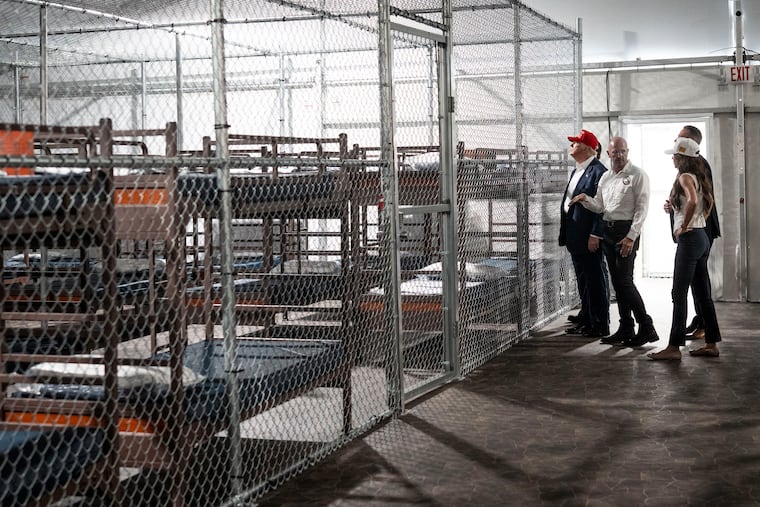
In Philadelphia, nearly all of the increase in habeas petitions appears tied to the Trump administration’s decision last summer to mandate detention for virtually every undocumented immigrant encountered by authorities. ICE and other agencies are now confining people who would have previously been eligible to remain in the community while their cases wound through the immigration system, such as people who have been in the country for years, or those who have not complied with ICE’s instructions while living here.
“It was not a big part of our work up until about six months ago,” said Chris Setz-Kelly, a managing attorney with HIAS Pennsylvania, a nonprofit that provides legal assistance to immigrants.
» READ MORE: In dozens of cases, Philly’s federal judges have found Trump’s mandatory detention policy unlawful
For decades, Setz-Kelly said, there had been a clear understanding about who was or was not eligible to be released on bond once they were picked up by ICE. But he said that changed under mandatory detention, which also says anyone who is newly detained should be denied a bond hearing.
And the petitions represent just the tip of the iceberg, the attorney said, as many detained immigrants don’t have representation or leave the country during the process.
“It had really dire consequences to the community,” Setz-Kelly said.
The number of people in immigration detention has since grown from about 50,000 people in June, to nearly 70,000 people at the start of this year, federal data show.
‘The border is everywhere’
Trump’s administration has been clear about its desire to increase deportations. And it has scored one legal victory in a higher court so far while defending its mandatory detention policy in court.
Earlier this month, a three-judge panel in the Fifth Circuit Court of Appeals ruled the policy was legal and could be applied in Louisiana, Mississippi, and Texas.
The government’s main argument in that case was that every undocumented immigrant is, in legal terms, “seeking admission” to the United States, despite a longstanding interpretation that the phrase only applied to people who had recently crossed the border without proper paperwork.
“The everyday meaning of the statute’s terms confirms that being an ‘applicant for admission’ is not a condition independent from ‘seeking admission,’” the majority opinion said.
Two Fifth Circuit judges agreed with the government’s position.
The one who dissented, U.S. Circuit Judge Dana M. Douglas, wrote that the government’s interpretation contradicted the basics of immigration law and, in effect, would create a situation in which “the border is now everywhere.”
A ‘trap’
The ruling in the Fifth Circuit — based in New Orleans, and widely considered one of the most conservative courts in the country — has done little to change the views of judges in Pennsylvania’s Eastern District Court.
This region’s federal judges have consistently criticized the government’s mandatory detention policy over the last eight months, ruling in favor of nearly every immigrant seeking to be released from confinement.
Some judges have quoted Greek mythology to describe what they’ve cast as an unending attempt by the Trump administration to continue defending a policy that has been resoundingly rejected in court. The region’s chief judge even wrote that “the law is piled sky high against the government’s position.”
Diamond, in an opinion this month, wrote that he’d reviewed 201 recent decisions in the district involving habeas petitions, and found that judges in every case had rejected the government’s view that mandatory detention — with no opportunity for bond — was both warranted and legal.
U.S. District Judge Karen Spencer Marston, a Trump appointee, wrote in a recent decision that she was “unpersuaded” by the Fifth Circuit’s ruling as she agreed to free an undocumented immigrant from custody.
» READ MORE: Philly federal judges are growing frustrated with ICE policy to detain most undocumented immigrants
Still, government attorneys have appealed dozens of those losses to the region’s Third Circuit Court of Appeals. Experts believe the effort is part of a Justice Department attempt to create opposing appellate rulings and propel the question of the policy’s legality to the U.S. Supreme Court, which has a conservative majority.
“I think they’re just trying to tee up the right cases,” said Chris Casazza, a Philadelphia-based immigration attorney who has filed more than 60 habeas petitions in recent months. “They’re hoping the Supreme Court is going to rubber stamp this.”
In the meantime, judges in Philadelphia are continuing to confront and rule on dozens of petitions in an emerging area of law.
This week, in a blistering opinion, U.S. District Judge Gail A. Weilheimer wrote that ICE had set up a “trap” for “thousands of non-citizens,” who are required to file forms, attend check-ins, or apply for asylum to receive permission to stay in the country.
But under mandatory detention, Weilheimer wrote, those applicants will now get arrested and taken to a detention facility for the duration of their removal proceedings, which could take months or years.
The judge compared the situation to the government handing immigrants a bow and instructing them to shoot an arrow at a tree.
If anyone hits it, Weilheimer said, “the Government will look at the mark, paint a target to the left of it, and accuse them of missing.”
Correction: This story has been updated to correct the spelling of Chris Setz-Kelly.