Supreme Court justices are not ‘purely political actors,’ Chief Justice Roberts says in Hershey
U.S. Supreme Court Chief Justice John Roberts also condemned criticism directed at judges in a nearly hour-long fireside chat in which he did not mention President Donald Trump or recent cases.
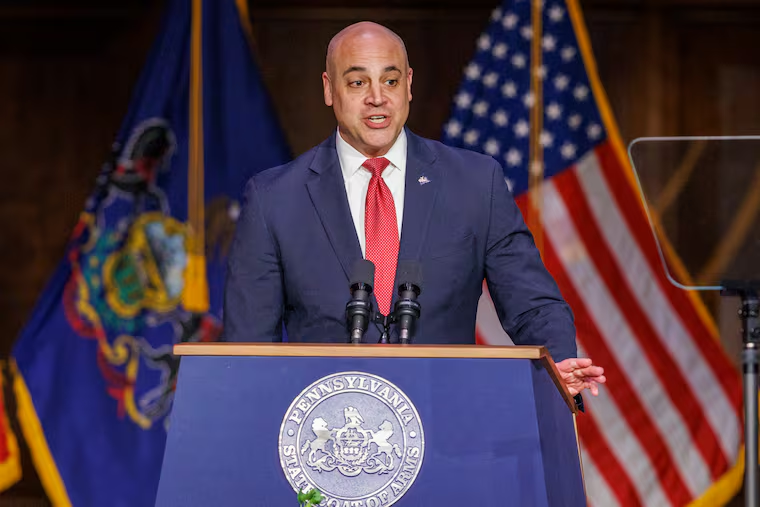
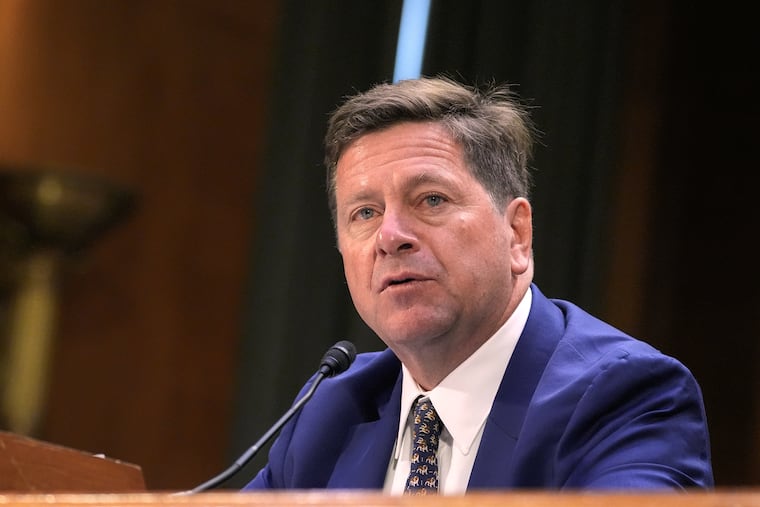
HERSHEY, Pa. — A week after a controversial ruling by the U.S. Supreme Court on the Voting Rights Act, and at a time of growing threats against judges, Chief Justice John G. Roberts Jr. condemned criticism of the judiciary and said the public was mistaken to view judges as “purely political actors.”
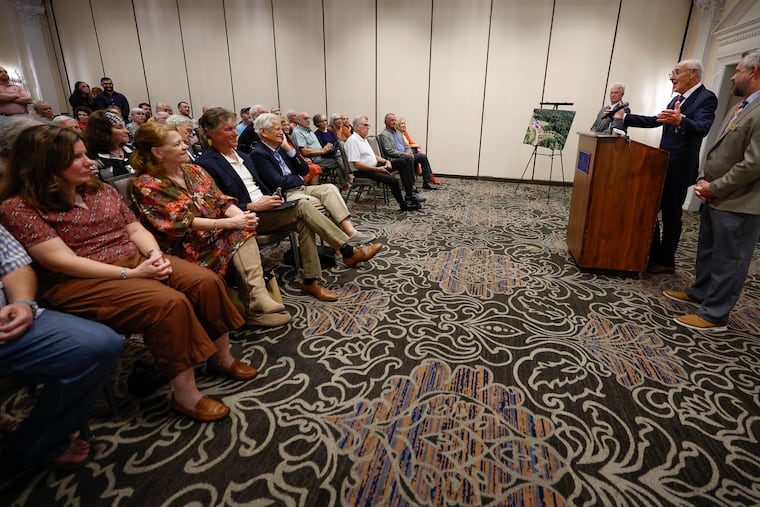
Speaking Wednesday in Hershey at a conference for judges and lawyers who work in the U.S. Court of Appeals for the Third Circuit, which includes the federal courts in Pennsylvania, New Jersey, Delaware, and the U.S. Virgin Islands, Roberts said he wished the public better understood that making unpopular decisions was part of the Supreme Court’s job.
“I think they view us as purely political actors,” Roberts said. “I don’t think that’s an accurate understanding of what we do.”
The justices are not “simply part of the political process,” the chief justice said, and rulings are not based on popular sentiment or the personal preferences of those on the bench.
“It’s based on our best effort to figure out what the Constitution means and how it applies,” Roberts said.
His comments came as the Supreme Court has been subject to criticism for its redistricting ruling that Democrats and civil rights group decried as gutting the Civil Rights Act. Roberts was in the 6-3 conservative majority.
During the nearly hour-long fireside chat in Hershey, Third Circuit Chief Judge Michael A. Chagares asked Roberts about the role of criticism. The chief justice said he views “considered criticism” of opinions as a “very good thing. But when the criticism is directed at the judge, it can become problematic.
“People can say what they want,” Roberts said, adding that there is “a lot of hostility” about court decisions and people should be “more careful.”
Federal judges have been speaking out about a growing number of threats against members of the judiciary at a time when President Donald Trump has shown willingness to criticize openly judges who rule against him. Trump lashed out on the six Supreme Court justices, including Roberts, who struck down his tariffs in February, calling them “disloyal to our Constitution” and “lapdogs.”
The chief justice did not mention Trump, the court’s recent decisions, or recent controversies surrounding the court. He painted a collegial relationship between the nine justices, even as some have been openly criticizing one another.
Roberts also spoke about his career, the history of the court, and Notre Dame football during the conversation.
On the use of artificial intelligence, which has gotten attorneys into hot water with some judges, the chief justice said he was “absolutely intimidated by it.”
“I do know that it makes mistakes, but so do associates,” Roberts said.