Supreme Court sides with antiabortion group in New Jersey subpoena fight
A unanimous Supreme Court sided with First Choice Women’s Resource, a New Jersey faith-based network of crisis pregnancy centers, in its fight against a subpoena to disclose information about donors.
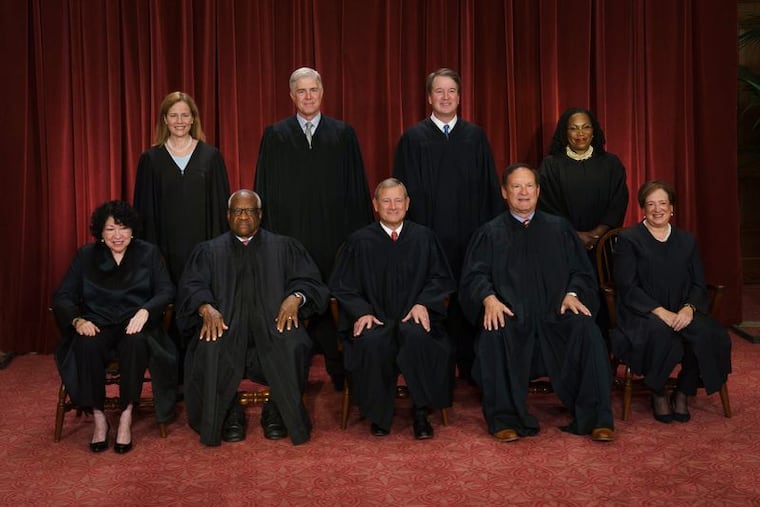
All nine U.S. Supreme Court justices agreed Wednesday to revive a lawsuit challenging New Jersey‘s efforts to obtain information about donors to a network of faith-based crisis pregnancy centers.
First Choice Women’s Resource, a self-described “abortion clinic alternative,” can sue in federal court over a subpoena from the New Jersey Attorney General‘s Office that demanded information about its financial backers. Such request is enough to violate the organization’s First Amendment rights, the Supreme Court said, and complying could discourage future donors from making contributions.
“An official demand for private donor information is enough to discourage reasonable individuals from associating with a group,” Justice Neil Gorsuch wrote in the opinion. “It is enough to discourage groups from expressing dissident views.”
First Choice has been operating in New Jersey since 1985 and currently operates five crisis pregnancy centers, according to the nonprofit’s website. The organization “seeks to to protect and honor life in all stages of development.”
These types of centers often open near abortion providers, and the number of them increased following the 2022 Supreme Court decision that eliminated the federal protection for abortion rights.
In 2022, then-New Jersey Attorney General Matthew Platkin established a “Reproductive Rights Strike Force” and soon after issued a consumer alert that crisis pregnancy centers like First Choice “seek to prevent people from accessing comprehensive reproductive healthcare, including abortion care and contraception.”
Many centers “do not provide any healthcare at all,” the alert said, and “may also provide false or misleading information about abortion.” The office instructed the public to file a complaint if they believe they were victims of “fraudulent, deceptive, misleading, or unlawful conduct.”
The office didn’t receive any such complaints, the opinion said, but in 2023 issued a subpoena to First Choice under the state’s consumer fraud act seeking a variety of documents, including the “names, phone numbers, addresses, and places of employment” of the nonprofit’s donors since 2021.
First Choice sued in federal court, asking a judge to quash the subpoena, saying it would discourage people from associating with the group. Platkin filed a countersuit in state court accusing the organization of failing to comply with the request.
A New Jersey district judge denied First Choice’s request, dismissed the lawsuit, and instructed both sides to negotiate a resolution.
First Choice appealed the ruling to the Third Circuit Court of Appeals. A divided three-judge panel declined to revive the lawsuit because the organization did “not yet show enough of an injury.”
The nonprofit next went to the U.S. Supreme Court, which reversed the Third Circuit in its unanimous decision.
First Choice established that the demand for private donor information violated its First Amendment rights of association, Gorsuch wrote.
The nine justices rejected New Jersey’s arguments, including that donor information obtained from First Choice wouldn’t become public.
“Demands for private donor information, we held, ‘chill’ protected First Amendment associational rights even when those demands contemplate disclosure only to government officials and not ‘the general public,’” the opinion said.
The case now returns to federal court for litigation.
New Jersey Attorney General Jennifer Davenport called the decision “procedural,” noting in a statement that the nation’s highest court only said First Choice could pursue its challenge to the subpoena, and not that the challenge should succeed.
“New Jersey law makes clear that nonprofits cannot deceive or defraud New Jerseyans, and we regularly exercise our traditional investigative authority to ensure they are not doing so — regardless of the particular services they provide,” Davenport said.
Erin Hawley, an attorney with conservative Christian legal-advocacy group Alliance Defending Freedom, who argued the case on behalf of First Choice, called the ruling a “resounding victory.”
“New Jersey’s attorney general targeted First Choice — a ministry that provides parenting classes, free ultrasounds, baby clothes, and more to its community — simply because of its pro-life views,“ Hawley said in a statement. ”That is blatantly unconstitutional."
The antiabortion group’s challenge to the subpoena drew support from the American Civil Liberties Union and the Philly-based Foundation for Individual Rights & Expression.
The court recognized that subpoenas seeking donor information can scare away supporters of nonprofits even before they are enforced, Brian Hauss, deputy project director of the ACLU’s Speech, Privacy, and Technology Project, said in a statement.
“At a time when government officials throughout the country abuse regulatory powers to punish their ideological opponents, federal courts must remain a venue in which people can vindicate their First Amendment rights,” Hauss said.