An explosion in Nicetown blew out her rowhouse’s front windows. Then her landlord ghosted her.
Tawanda Davis has repeatedly asked her landlord to repair her windows, but he has kept them boarded up and gone radio silent.
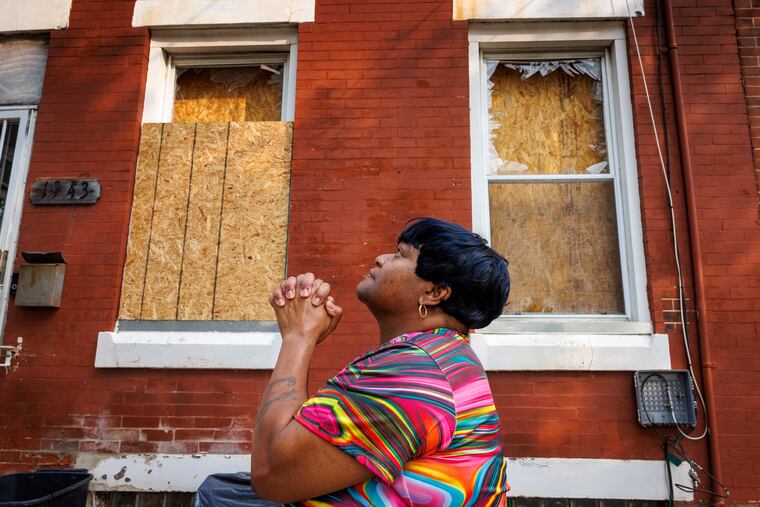
Tawanda Davis’ rowhouse has plywood boards for windows.
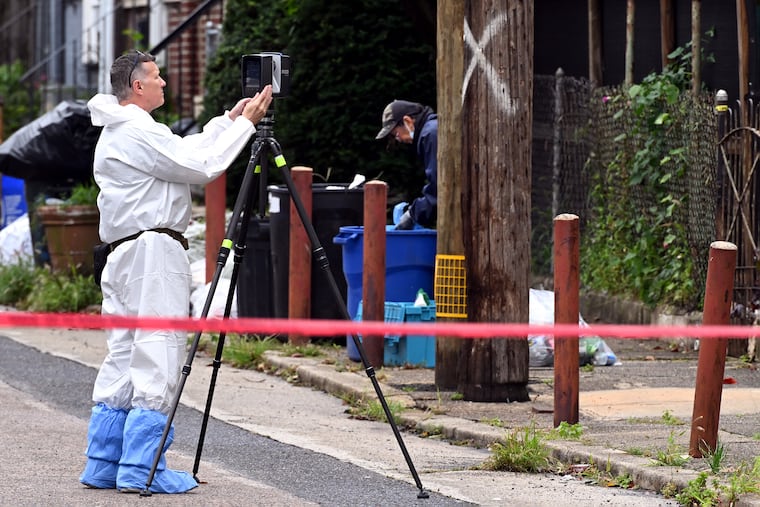
Her original glass panes were shattered when a June 29 explosion destroyed three homes and killed one person across the street from her Nicetown residence of about eight years.
Those plywood boards have acted as barriers to the elements in the weeks that followed, but since the explosion, her landlord has yet to replace them with working windows, and Davis is unsure if there is a plan to do so. In the days after the explosion, as she asked for a replacement timeline, he suggested Davis move out. He offered to give back her $2,400 security deposit, Davis said.
» READ MORE: Nicetown residents search for normalcy after explosion kills one neighbor, injures two others
When Davis sought help from Councilmember Kendra Brooks’ office, her landlord, Adrian Tyler, went radio silent. Withholding August rent hasn’t gotten his attention either.
“It’s not like him,” said Davis. “If I’m late with my rent, he’s on me, he’s calling me, he’s at the house.”
The Inquirer also couldn’t reach Tyler after multiple attempts. Tyler, according to city records, has owned the property on the 1900 block of West Bristol Street since 2004. He hasn’t had a rental license for the property since 2005.
Charlene Samuels, a constituent services representative at Brooks’ office who spoke to Tyler, said she believes the failure to replace the windows is a retaliatory measure.
“It’s just sad to me that in a tragedy such as this, you’re going to ask this woman to leave with her family and children, and are only willing to give a minimum amount of money to do that,” said Samuels.
Samuels, Brooks, and housing rights advocates say tragedies like the Nicetown explosion often expose the vulnerabilities faced by renters who rely on landlords to have the proper insurance and to be proactive when it comes to getting repairs. By the time renters catch on to deficiencies, it’s often too late.
With no word on a pending fix, Davis has given in to the idea she needs to leave. She feels that even if Tyler were to put up new windows, she can’t count on him in case of an emergency.
What’s more, in seeking help for her window fix, she’s realized that she never received a lead-safe certification, a relatively recent requirement for landlords renting properties built before 1978, where children younger than 6 will be living. City records say the property Davis lives in with her five grandchildren — ages 1 to 7 — was built around 1930.
Landlords are required to bring out certified technicians to determine whether a property is either lead-safe or lead-free. Davis said that hasn’t happened.
Fatal explosion upends a home
Davis’ problems began around 5 a.m. on June 29.
She and her 6-year-old granddaughter were in the bathroom when an explosion across the street shook the home. Davis returned to her street-facing bedroom to find it covered in shards of glass. As smoke and screams penetrated the air, Davis evacuated her remaining grandchildren to the rubble-filled street and called Tyler to inform him of what happened.
Though Tyler was on site the day of the explosion, Davis said it took him two days to board up the broken windows. During that time, Davis paid for three nights at a hotel out of pocket to avoid the lingering smoke — the nonprofit aid organizations on site told her they would not be able to help her with the room expenses.
It was also around this time that Tyler suggested she leave. She connected with Samuels on July 2, who reached out to Tyler the same day for more information. At first, Samuels didn’t rule out that it could be an insurance issue. The explosion revealed that some residents didn’t have homeowners’ or rental insurance.
But Samuels said the conversation with Tyler quickly soured. When she suggested he offer Davis $6,000 to $10,000 for an expedited move, she said Tyler scoffed, pointing out that Davis had a month-to-month lease and called Samuels a “bad representative,” hanging up on her.
An insurance adjuster came to the house two weeks after the explosion, Davis said. She’d hoped that would mean new windows would arrive soon after, but none materialized, and by this point Tyler was not responding to her texts.
» READ MORE: Pennsylvania tenants’ rights guide
At a resource fair after the explosion, she learned of a program called FreshStartPHL, run by the Department of Planning and Development and the Philadelphia Housing Development Corporation. Should she meet income requirements, the city might be able to pay three months’ rent and up to $1,000 in moving costs for her to relocate. But Davis would have to find a landlord who agrees to participate and has a property in good standing with the city.
“Hopefully the funds don’t run out before I find a place to stay,” said Davis, her voice breaking.
The city, meanwhile, continues to encourage residents affected by the natural gas explosion to contact L&I for free interior inspections.
Jamila Davis, spokesperson for the Department of Planning and Development, said while some residents won’t be “eligible for everything,” there are many programs and services available.
“We continue to encourage persons affected to connect with a CEO Community Health Worker, through Mayor’s Office of Community Engagement, so that we can keep helping people navigate their unique situations with the finite resource pool we have,” the spokesperson said in an email.
Brooks said the Nicetown explosion highlights how much of the city’s infrastructure is old, interconnected, and how “there is no meaningful social safety net for dozens of people who suddenly found themselves without a safe home.”
“We need to massively scale up home repair programs, hold landlords accountable for basic safety of their properties, and start building new social housing for people at all income levels,” Brooks said in a statement.
As Davis searches for a new rental, she’s added a new worry to the list: What if she can’t get her security deposit back?
“I’m so overwhelmed and angry,” she said. “I try not to cry for the grandkids, but it’s not fair.”