Pittsburgh Post-Gazette avoids closure, will continue to publish thanks to nonprofit sale
The Pittsburgh Post-Gazette will continue to publish now that it’s been purchased by the Baltimore Banner’s parent company, turning the paper into a nonprofit news outlet.
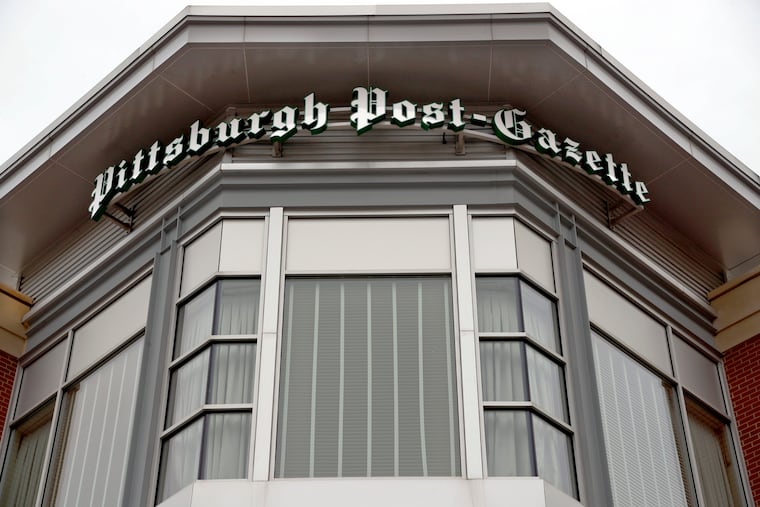
After a period of mourning, it looks like the Pittsburgh Post-Gazette has narrowly escaped closure and will continue to publish.
The news comes less than three weeks before the paper was scheduled to shutter its doors entirely.
» READ MORE: The Pittsburgh Post-Gazette is shutting down
On Tuesday, the Post-Gazette announced its owners, Block Communications Inc., would sell its assets to the Venetoulis Institute for Local Journalism, the nonprofit publisher of the Pulitzer Prize-winning Baltimore Banner.
“Venetoulis is committed to solving a national problem, to providing high-quality local journalism where it’s most needed,” Bob Cohn, CEO of the Banner, said in a news release. “That is our civic mission. And here is an opportunity to do that in a market where the 240-year-old incumbent is going out of business or could be sold.”
The Post-Gazette will be Venetoulis’ second newspaper. The Banner was established in 2022 and quickly earned recognition for its business model and local reporting. The Banner won a 2025 Pulitzer Prize for its series on Baltimore’s fentanyl crisis. The paper has almost 80,000 paid subscribers and a newsroom staff of about 100, including reporters in seven counties throughout Maryland.
The sale marks the continuation of one of the oldest newspapers published west of the Allegheny Mountains. The Pittsburgh Gazette Times was founded in 1786 and published weekly. The paper took its current form as the Post-Gazette in 1927.
Under new ownership, the paper will keep its name and maintain its two print publication-day model, printing on Thursday and Sunday.
Block Communications CEO Allan Block told the New York Times that several groups were interested in buying the paper. Venetoulis Institute was not the highest bidder, but the board decided it would be the best steward, he said.
Hotel magnate Stewart W. Bainum Jr., who founded and finances the Venetoulis Institute, told the Times he and his wife, Sandy, were committing $30 million over the next five years to help expand the Banner and turn around the Post-Gazette.
That’s good news for an industry ridden with closures and layoffs. A 2025 Northwestern University report said more than 130 papers shut down in 2024. The Local News Initiative’s State of Local News report said the industry recorded the 11th highest loss of jobs among any industry from 2023 to 2024. Over that year, almost every U.S. state lost newspaper jobs. Half of all states have fewer than 1,000 newspaper workers.
For years, the Post-Gazette was in decline because of a mix of decreasing ad revenue, internal strife within the newsroom, and a yearslong labor strike. The announcement of its closure, along with the closure of another Block property, City Paper, raised concerns that Pittsburgh could become a news desert.
Pittsburgh City Paper, a free alt-weekly that began publishing in 1991, relaunched last month under separate new owners.
The Post-Gazette was led by former Inquirer senior vice president and executive editor Stan Wischnowski. He resigned from The Inquirer in 2020 after a controversy following a headline after the murder of George Floyd.
When Block Communications announced the paper’s closure, citing unsustainable cash losses, the paper’s union fought back, saying the move was a result of “losing a nearly decade-long attempt to bust unions at the paper.”
After a nearly three-year strike that started in 2022, the Post-Gazette was found guilty in federal court of unfair labor practices. That left Block Communications responsible for paying back staff benefits and restoring old contract terms.
Instead, Block announced it was closing via a companywide Zoom meeting with a prerecorded message. The company said the court’s decisions made it impossible to keep the paper running.
In a leaked recording of the Zoom announcement obtained by Pittsburgh’s KDKA Radio, a spokesperson asked staff to continue to publish under “business-as-usual conditions” for the paper’s remaining months. The spokesperson added that Block Communications would “of course” give the Post-Gazette the opportunity to break the news of the closure first.
Multiple reporters told The Inquirer that no company representatives spoke live during the video and that there was no opportunity provided for follow-up questions or discussion.
Block Communications has a pending petition asking for the Third Circuit Court of Appeals to rehear the case. It was unclear how the paper’s sale could impact legal proceedings.
NewsGuild-CWA president Jon Schleuss said the guild was hopeful for a new direction that values journalism with the acquisition.
”There are still a lot of details to iron out, including the several million dollars the Blocks owe journalists for violating federal law,” Schleuss said. “We are dedicated to working with ownership that follows the law, respects workers’ union rights, and invests in a newsroom delivering high-quality local news. Pittsburgh has made it clear it will accept nothing less.”
Financial terms of the deal were not disclosed. The transaction will take effect on May 4, one day after the paper was initially expected to close.