Swarthmore avoided an income tax, but gets an emergency service tax instead
The closing of two Delaware County hospitals sent the borough’s EMS costs rising. Officials are now looking to a commonly levied tax across the state.
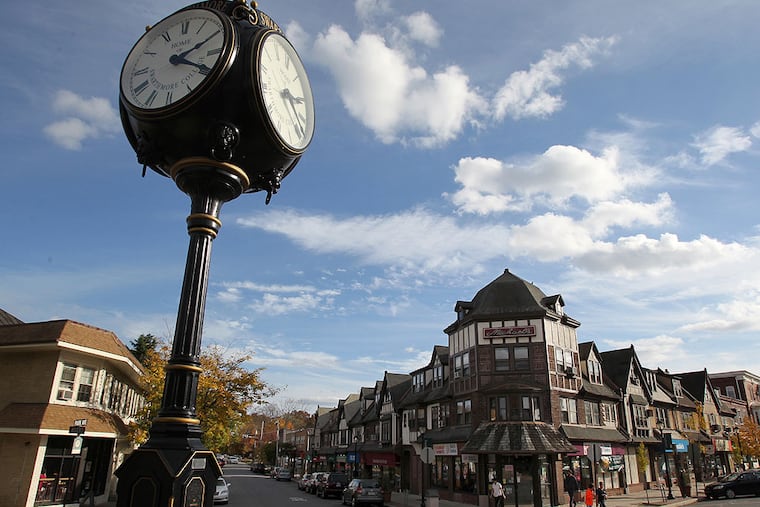
Swarthmore Borough implemented an emergency service tax this week amid budget shortfalls and rising service costs.
The borough council passed the emergency service tax (EST), a specific type of property tax earmarked for emergency services, at Monday’s council meeting. The borough avoided implementing an earned income tax with a contribution from Swarthmore College in October, but more tax revenue is still needed to keep emergency services up to par, said borough council member Kristen Seymore.
The tax will impose a millage rate of 0.45 mills, which, according to Seymore, for owners of a home assessed at the borough average, would result in an increase of around $18 to $20 per month on their property tax bill.
A millage rate, or mill rate, is used to calculate property taxes by charging the rate for every $1,000 in the value of a property, according to Investopedia. Tax collectors multiply a property’s assessed value by the millage rate and then divide by 1,000 to calculate property tax.
“These are really difficult circumstances, and an important cost of the social safety net has been pushed unexpectedly onto local governments in our area,” said Scarlett McCahill, vice president of the borough council.
After the closures of Crozer-Chester Medical Center in Chester and Taylor Hospital in Ridley Park earlier this year, the borough’s finances are looking “starkly different,” with emergency services costs going up and less tax revenue coming in, Cindy MacLeod, chair of the council’s finance committee, told The Inquirer in October.
In response, the borough declared a state of emergency in April and later proposed a 1% earned income tax, which was met with pushback from the community and some council members. In October, Swarthmore College contributed $638,000 to the borough to fill in some of the budget shortfall. However, at the time, Swarthmore officials did not take an emergency service tax off the table.
“The cost assumptions around all these emergency services is a real and meaningful change,” McCahill said at a Sept. 8 meeting. “It’s not that all of a sudden, surprise, we weren’t minding the shop and now we’re really behind and need to do a catch-up. The actual costs to the community have changed significantly.”
In addition to the closure of vital medical institutions, the borough has steep fire equipment repair costs compounded by fewer people signing up to become volunteer firefighters. Community services costs are rising, too, and Swarthmore leaders do not want to cut those services, MacLeod said in October.
State law allows most municipalities to levy a maximum EST of 0.5 mills for EMS services, and a maximum of 3 mills for fire services. Swarthmore’s tax will come under just shy of the half-mill cap for EMS services. Last year, Act 54 was passed, which allows some municipalities to raise that cap to 10 mills for fire services and 5 mills for EMS services.
Now, state lawmakers are introducing legislation to allow more municipalities to take part in Act 54’s increased EST caps, with bills from Reps. Nikki Rivera (D., Lancaster) and Chris Pielli (D., Chester). Currently, only first-class townships can impose ESTs up to 10 mills for fire services and 5 mills for EMS services.
“These proposals bring the commonwealth’s townships and boroughs into alignment with what was granted last year to first-class cities, like Philadelphia,” Rivera said. “The ability for local control by allowing municipality administrators to determine what portion of their allotted budget needs to go toward increased fire services and increased EMS.”
The efforts to modernize Swarthmore’s services funding will continue, Seymore said, as the council has also looked at the possibility of partnering with other municipalities to pool emergency service resources.
On top of the local EST hitting the Swarthmore property tax bill in 2026, Delaware County’s executive director is requesting a 19% property tax increase. County property taxes were already raised by 23% earlier this year.

Inquirer Greater Media