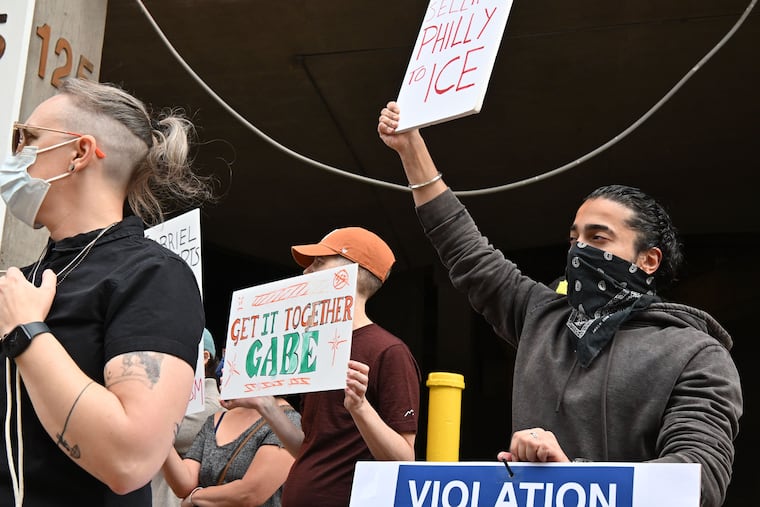
Protesters handcuffed at Philly Sheriff’s Office sit-in, demanding action on ICE courthouse arrests
Many who go to the courthouse are not criminal defendants. They are witnesses, victims, and family members.
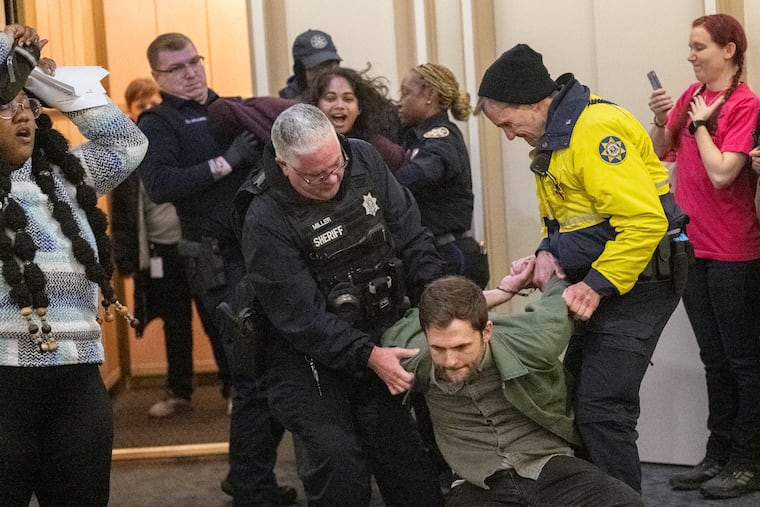
A sit-in to demand that Philadelphia Sheriff Rochelle Bilal act to help stop ICE arrests at the Criminal Justice Center turned chaotic Thursday, when deputies handcuffed and physically removed demonstrators from the foyer area outside the Sheriff’s Office.
They were escorted on elevators to the street-level floor, then loaded into vans to be taken to Philadelphia police headquarters, a Sheriff’s Office lieutenant said at the scene. They would face charges or citations that would likely include disorderly conduct, he said.
The demonstration by No ICE Philly began around 12:30 p.m, when about a dozen activists sought to meet with the sheriff and present her with petitions. When that didn’t happen, they sat down and began to sing.
“Which side are you on, sheriff, which side on you on?” they sang, so loud that sheriff’s employees came out to look. “Why won’t you take action, which side are you on.”
People coming off the elevator carefully stepped carefully around the seated demonstrators.
The sheriff’s office had no immediate comment on the protest.
ICE now seems to be targeting additional city courts, said Erika Guadalupe Núñez, executive director of Juntos, the Latino advocacy organization, with reports of arrests at Family Court and the Traffic Division court.
Juntos, No ICE Philly, and other activist groups met with Bilal in early February, she said, but no response to their concerns has been forthcoming.
The sit-in occurred amid continuing protests against the sheriff, who activists say has allowed Immigration and Customs Enforcement to turn the courthouse into “a hunting ground” for immigrants.
It was not clear whether anyone was formally arrested on Thursday. The Philadelphia Police Department did not immediately provide details.
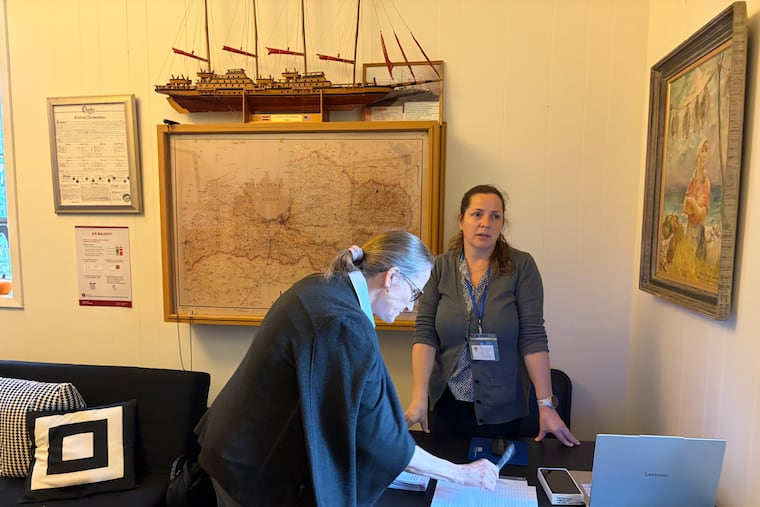
During Thursday’s protest, a man who identified himself as a special assistant to the sheriff’s chief of staff told the group that Bilal was “busy right now.” He told the protestors that they needed to leave the office’s foyer area but could continue their demonstration outside.
No one moved. Two uniformed sheriff’s deputies arrived and conferred in a hallway, followed by the arrival of five more. They were met with chants from protesters.
“No ICE at the CJC, change the policy, then we’ll leave,” the group responded.
At that point, sheriff’s deputies began pulling people away.
The group No ICE Philly has castigated the sheriff and said that by not barring ICE ― as judges and lawmakers in some other jurisdictions have done — she has helped enable the arrest of more than 100 immigrants who have been trailed from the courthouse and arrested on the sidewalk.
No ICE Philly and allied groups have mounted a week of action that included an attempt by clergy to block the doors of the agency garage in Center City. Ten people were arrested.
That group and others say ICE agents have been allowed to essentially hang out at the Center City courthouse, waiting in the lobby or scouring the hallways, then making arrests outside.
The sheriff has said her office does not cooperate with ICE, does not assist in ICE operations, and does not share information with the agency. And that the office will comply with court orders regarding the comings and goings of ICE officers.
In January, the judicial district that oversees the Philadelphia court system said that the authority for managing ICE’s presence at the Criminal Justice Center rested on the sheriff and that decisions around that were her “sole responsibility.”
That followed a news conference where the sheriff joined local elected and community leaders who suggested that court officials or legislators needed to address the turmoil around courthouse immigration arrests. They called for meetings with court leaders to discuss setting guardrails on ICE activity.
The First Judicial District responded with a statement that said it was “always willing to discuss matters of mutual concern with our justice partners, but managing security in court buildings ― which includes managing ICE’s presence ― is the sole responsibility of the sheriff. These decisions are the sheriff’s to make.”
The Philadelphia Sheriff’s Office responded that it was “ready to execute all lawful judicial orders.”
The office has said security inside court facilities is its responsibility; outside areas are public spaces that are not under its control.
ICE’s presence in and around the Criminal Justice Center has provoked demonstrations partly because many who go there are not criminal defendants. They are witnesses, victims, family members, and others in diversionary programs.
But they have been targeted and arrested by ICE, immigration attorneys and government officials say, causing witnesses and victims to stay away from court and damaging the administration of justice in Philadelphia.