‘Big Rube’ Harley made throwback jerseys popular. He says Mitchell & Ness didn’t pay him his share.
Reuben "Big Rube" Harley's lawsuit says Mitchell & Ness failed to pay him for his promotional activities that made vintage jerseys popular among rappers and athletes in the early 2000s.
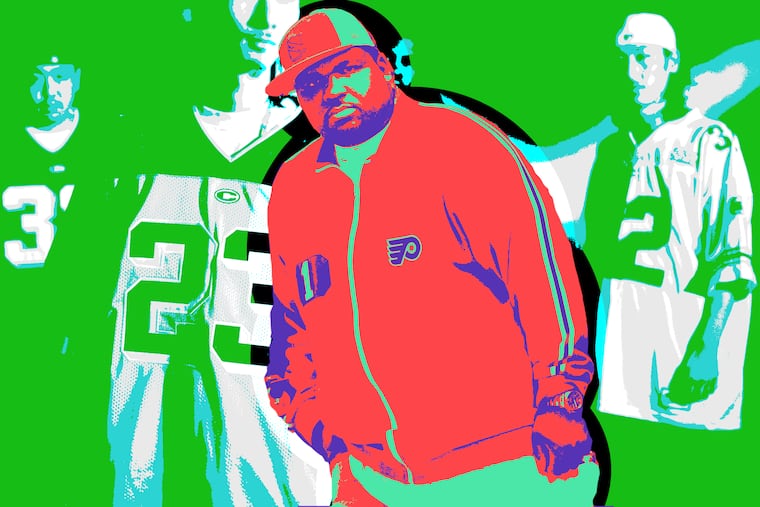
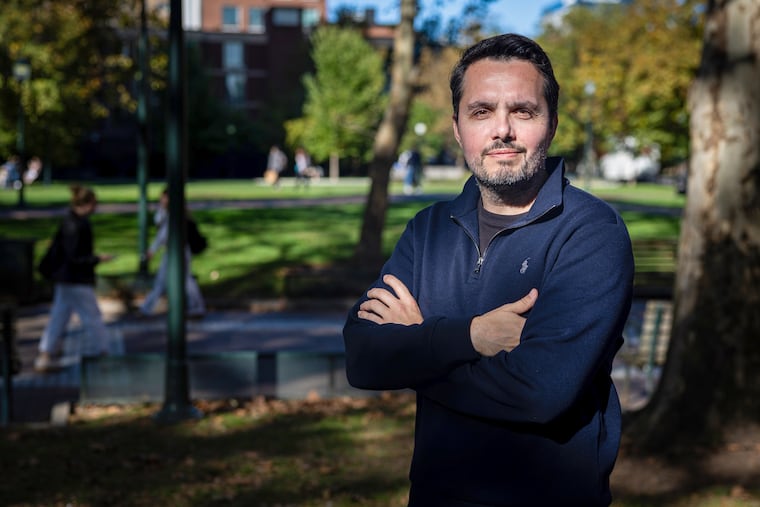
Days after Mitchell & Ness opened its new three-level flagship store on Walnut Street, Reuben “Big Rube” Harley stood across the street to announce his lawsuit against the sportswear company.
Big Rube was an influencer before influencer was a job description. And in the early 2000s, he influenced athletes and hip-hop artists to wear Mitchell & Ness’ vintage jerseys, which can cost more than $300 a pop. Celebrities started wearing throwbacks and business was booming.
But Mitchell & Ness didn’t fulfill their side of the deal, according to the lawsuit, which was filed Thursday in the Philadelphia Court of Common Pleas.
The brand, which Fanatics bought in 2022, is obligated to pay Harley an unspecified commission for sales attributed to his marketing efforts, the lawsuit says. But it has refused to even calculate how much that commission might be, the suit says.
“They’re not in this location for nothing,” Harley said Friday across from the new Mitchell & Ness store. “I created that and I want what’s mine.”
A spokesperson for Fanatics said the company hadn’t been served the lawsuit and was unable to comment.
Harley became a Mitchell & Ness customer in the early 1990s, purchasing throwback Negro League baseball jerseys and caps, the complaint says. A decade later, in 2001, he approached then-Mitchell & Ness owner, Peter Capolino, with a vision of marketing the throwbacks to hip-hop artists and athletes.
The brand was “tailored to old conservative white men,” Harley said of the Philadelphia-based company that was founded in 1904, “and I gave it to my culture.”
Harley and Capolino entered into a “partly written and partly oral” agreement, the suit says, in which Mitchell & Ness would pay Harley commission based on sales attributable to his promotional efforts. The suit does not include a copy of the written part, say whether the commission was in perpetuity, or specify the percent of sales Harley claims he is owed.
Mitchell & Ness also made Harley the company’s marketing director with a salary.
“I got paid, but the agreement was a piece of the pie,” he said.
As the new marketing director, Harley contacted athletes, celebrities, and artists in his network, the suit says. The throwbacks trend caught fire. Just a few months later, now-disgraced musician Sean “Diddy” Combs co-hosted the 2002 American Music Awards wearing a rotation of vintage jerseys.
Mitchell & Ness’ annual sales rose from $2.2 million in 1999 to roughly $25 million in 2002, the suit says.
“I consider it a miracle that Reuben fell into my lap,” Capolino told Time Magazine in 2003. “He deserves all the credit.”
Fanatics’ owner Michael Rubin bought Mitchell & Ness in 2022 for $250 million as part of an ownership group that includes Meek Mill and Jay-Z.
The new owners must respect the agreement with Harley, the suits says, and pay him his share of the sales that he is owed. The complaint does not specify a percent or amount.
“Big Rube did his part,” said attorney Emeka Igwe. “Mitchell & Ness’ part was to give him a percentage of the sales from all the revenues that they were getting. And that was never done.”
After parting ways with Mitchell & Ness in the mid-2000s, Harley continued to reinvent himself. He launched an apparel line, wrote a Philadelphia Daily News column, and became a chef.
He decided to bring the lawsuit now because he is battling stage-four prostate cancer. Harley said he has been assessing his life and wants to leave a legacy for his 22-year-old daughter.
Standing across the street from the new flagship store in Center City, about a dozen friends expressed their support.
“We ain’t gonna stop until they build you a statue out here,” Simon Carr said. “You deserve it.”