Philly has lots of trails. For the first time, it is hiring a full-time crew to maintain them.
City officials have relied on residents using 311 to report issues trail issues before sending out a crew.
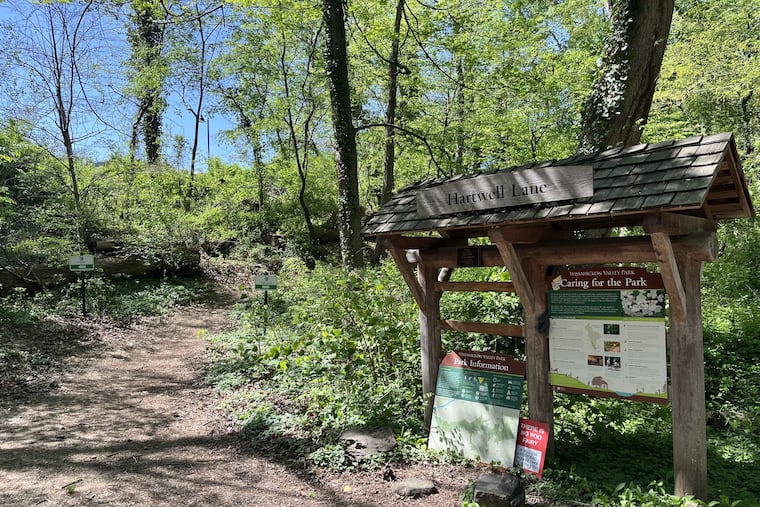
Philadelphia’s miles of trails draw a constant stream of runners, walkers, hikers, cyclists, and commuters.
Yet for years, city officials have depended on residents calling in or logging in to the 311 system to report trail issues before a crew was sent out.
Now, Philadelphia Parks and Recreation (PPR) is set to roll out the city’s first dedicated trail-maintenance crew, a pilot program funded by a $600,000 grant from the William Penn Foundation.
The money will fund a six-person team tasked exclusively with monitoring and maintaining multiuse trails that thread through 10 watershed-protecting parks.
Susan Buck, PPR’s deputy commissioner of operations, said the crew would launch this summer and resolve a long-standing logistical problem.
“The focus has always been on building the trails,“ Buck said. ”However, in recent years we would go to community meetings and hear more about trail maintenance.”
Right now, addressing a downed tree or a washed-out path means pulling staff away from recreation centers and neighborhood parks. A dedicated trail crew will ease that strain, she said, and position the city to address issues before they snowball into bigger problems.
Now, PPR can be proactive, she said.
Parks are priorities
The crew’s immediate priority will be to rotate through 10 watershed parks, such as Wissahickon Valley, Pennypack, Tacony Creek, and Cobbs Creek. Crews will also monitor the Schuylkill River Trail, which recently saw major repairs to sinkholes and storm damage.
Buck said the crew will initially be responsible for about 80 miles of trails.
The city has 166 miles of trails or more depending on what’s being counted. Overall, PPR manages asphalt, gravel, and dirt trails that residents use not only for recreation but for commuting and walking neighborhood to neighborhood.
The new crew will have skid-steer loaders, which are small versatile vehicles with mechanized arms and buckets used to clear, dig, grade, and lift. And they’ll have other equipment such as wood chippers and chainsaws.
For the average park-goer, it should translate to a smoother weekend run, daily commute, or less frustrating bike ride, Buck said.
“Overall, people will see safer trails and more enjoyable trails,” Buck added. “If you’re a runner or cyclist getting hit by overgrown brush, maybe we’ll be able to get to that faster. Ruts and divots should get filled in faster.”
By having a mobile team that can move from the Wissahickon to East Fairmount Park, the city aims to create a uniform experience for all users.
Buck has been working alongside Sarah Clark Stuart, the trails manager for the Streets Department.
The two are working toward a cost-sharing agreement between the two departments to turn the pilot program into an annual part of the city budget.
That way the crew can continue to clear overgrown brush, haul away downed trees, fix washouts, tackle soil erosion, eliminate tripping hazards, and clean graffiti off signs.
The pilot program could use existing employees or result in new hires, she said.
‘Great cities have great parks’
Sara Stevenson, executive director of Friends of the Wissahickon (FOW), said the dedicated crew represents a shift in the way the city has viewed its natural assets. The nonprofit FOW helps manage the city-owned Wissahickon Valley Park.
The 2,000-acre park has more than 50 miles of paved and dirt trails. The new trail crew will be assigned to help with paved paths and major arteries like Forbidden Drive.
“It’s a great program,” Stevenson said. “The more we can invest in Parks and Rec, the better our city will be. This is a good step forward and a recognition of how important the trail system is.”
The Wissahickon relies on thousands of volunteers annually to pull invasive species, clear debris, and help with other maintenance. Stevenson said that the demands of maintaining sustainable trails requires a professional, daily presence.
“Great cities have great parks,” Stevenson said. “I think what we’ll see is a new standard of care … It’s an illustration that the city understands the value of the trail across the entire city.”