Impromptu pageantry replaced Philly’s official parade as extreme heat mars the nation’s 250th
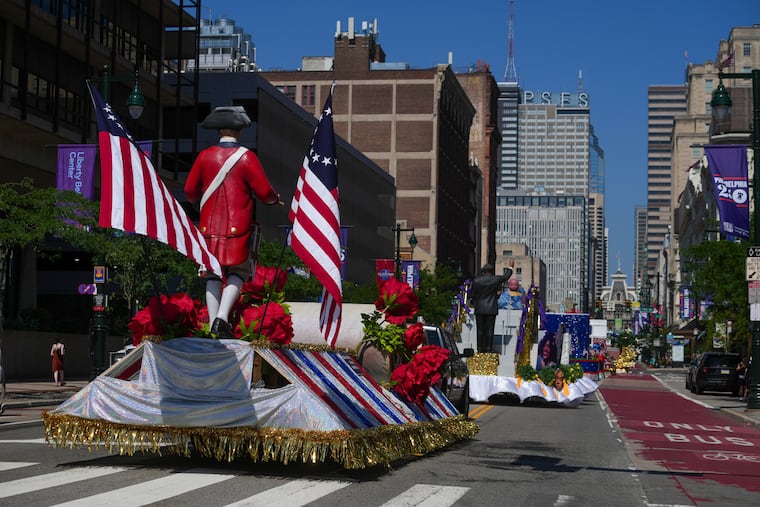
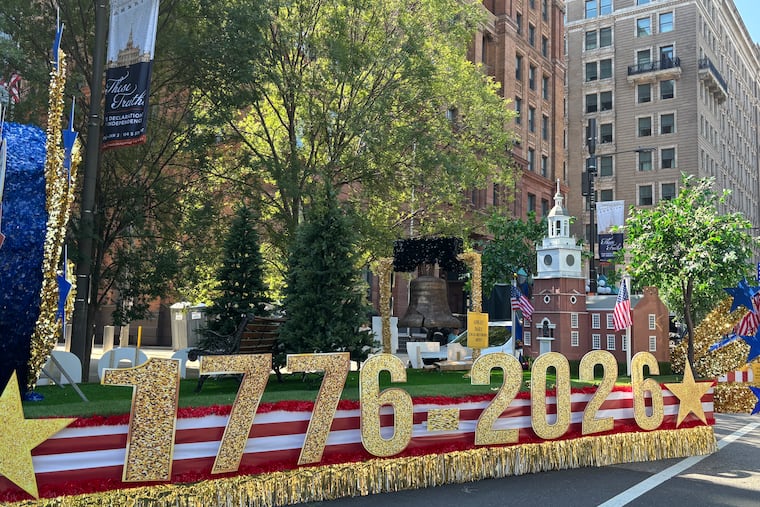
The semiquincentennial parade Friday was canceled because of 100-plus-degree temperatures. Friday may not have been the anticipated celebration, but there was still an air of importance and history.
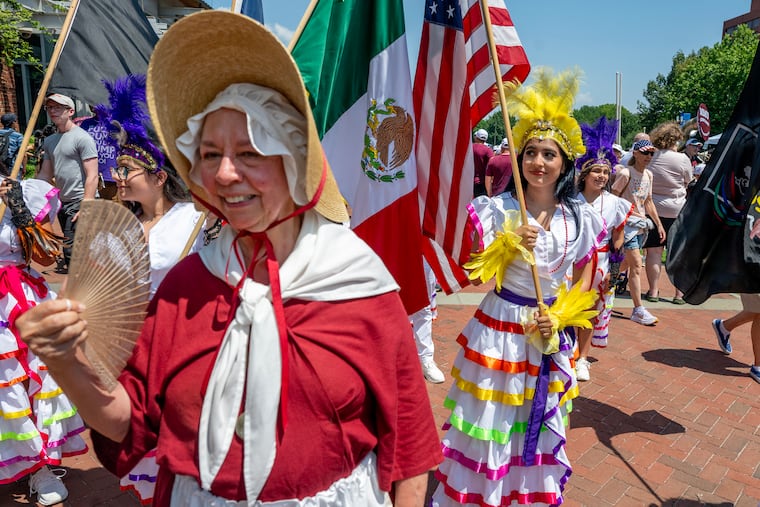
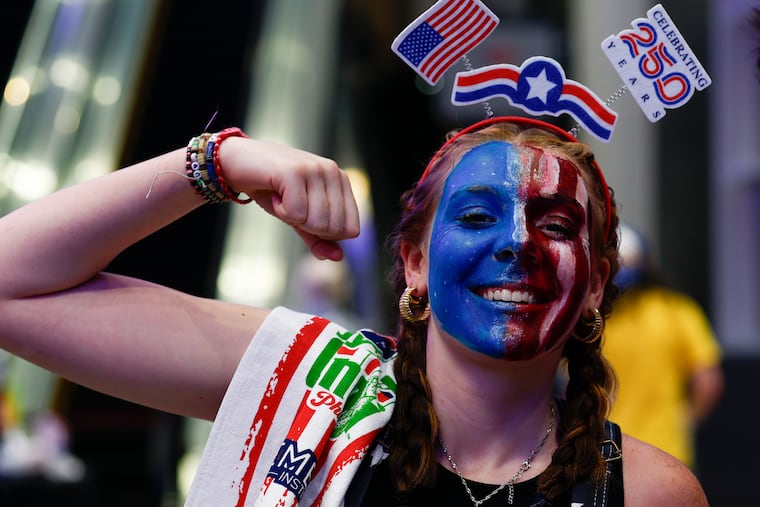
The eve of the United States’ 250th birthday in Philadelphia was less celebration and more chagrin, as oppressive heat left swaths of tourists and revelers in an aimless search of pomp and circumstance.
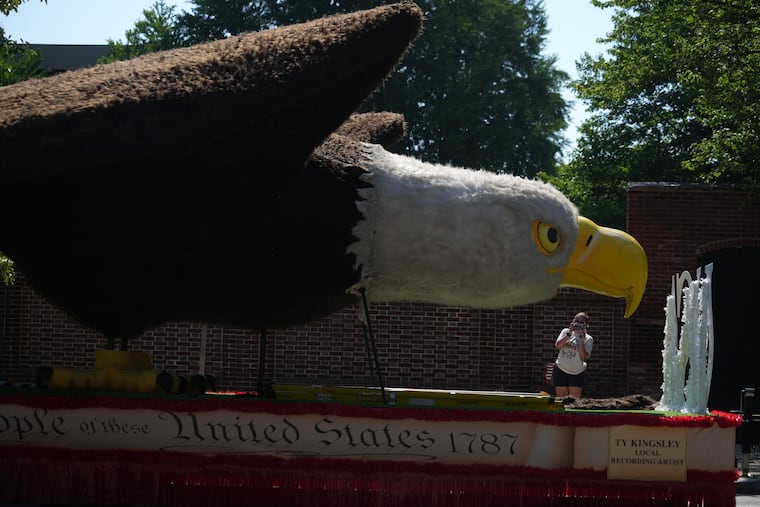
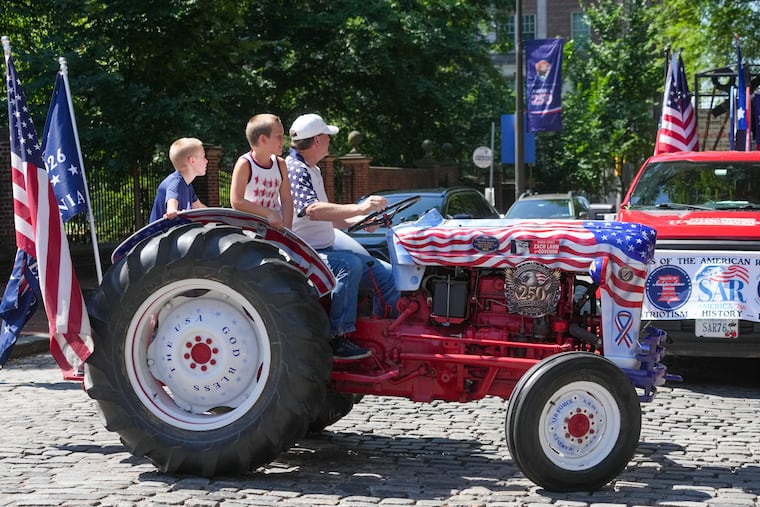
On Friday, Wawa’s Salute to Independence Semiquincentennial Parade was canceled because of 100-plus-degree temperatures and a perilous heat index. It was one of numerous events called off or shortened this holiday weekend, as the scorching weather has thwarted events across the region, and potential storms could impact more.
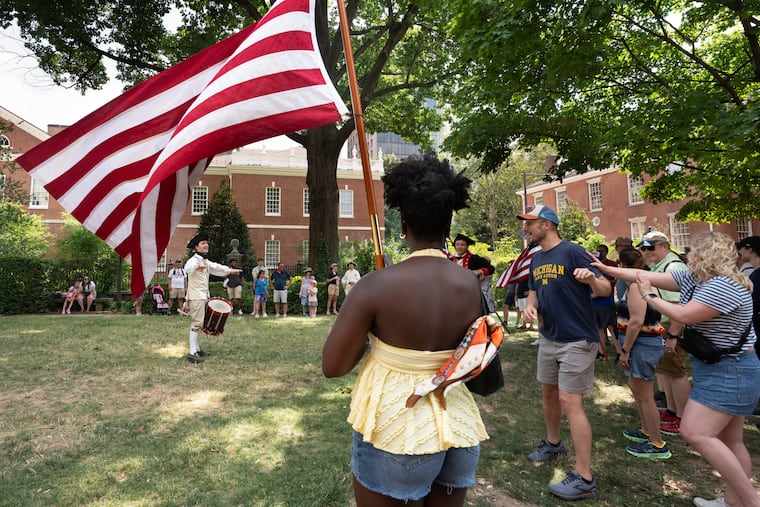
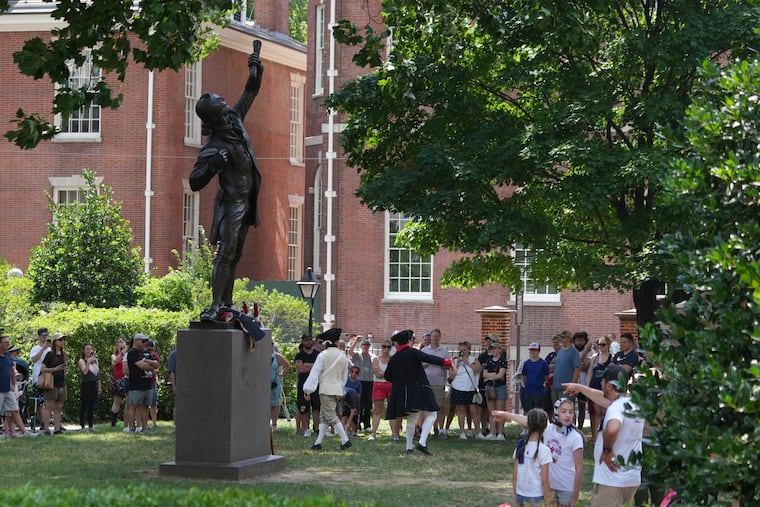
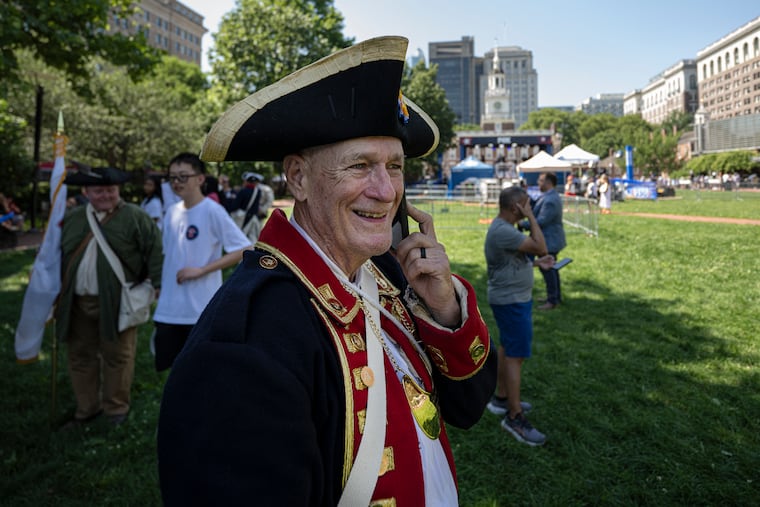
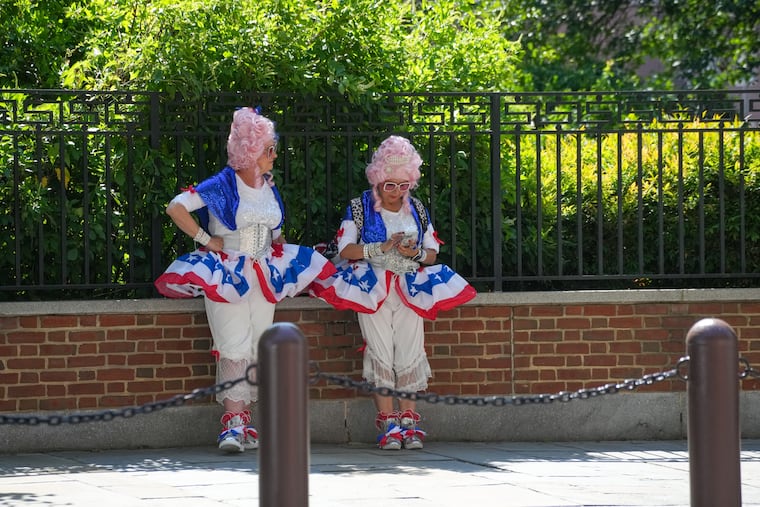
The cancellation left scores of sweat-soaked performers, musicians, and historical reenactors in wool garb stranded near Independence Hall and around Center City. There might not have been the sort of “shews, games, sports, guns, bells, bonfires and illuminations” that John Adams prophesied in a July 3, 1776, letter to his wife, but there was still an air of importance — and some impromptu pageantry.
» READ MORE: Live: Philly finds ways to celebrate after parade is canceled
“We won’t be around for the 300th, so we really wanted to come for the 250th,” said war re-enactor Kathy Touzjian, 61. Touzjian and Laurie Pelletier were among a 75-person Massachusetts Army of 1775 troupe, who traveled six hours by bus to be in Friday’s parade.
“At least we still have cheesesteaks,” Touzjian said.
To the pair, the 250th anniversary of the signing of the Declaration of Independence and the fledgling country’s split from Great Britain felt different — and not just because of the heat. Now more than ever, Pelletier said, it was important to return to the country’s bedrock: liberty and independence for all.
“Today is still special,” said Pelletier, 60. “It’s a chance to recognize what our ancestors gave us, because the world is falling apart and this brings people together.”
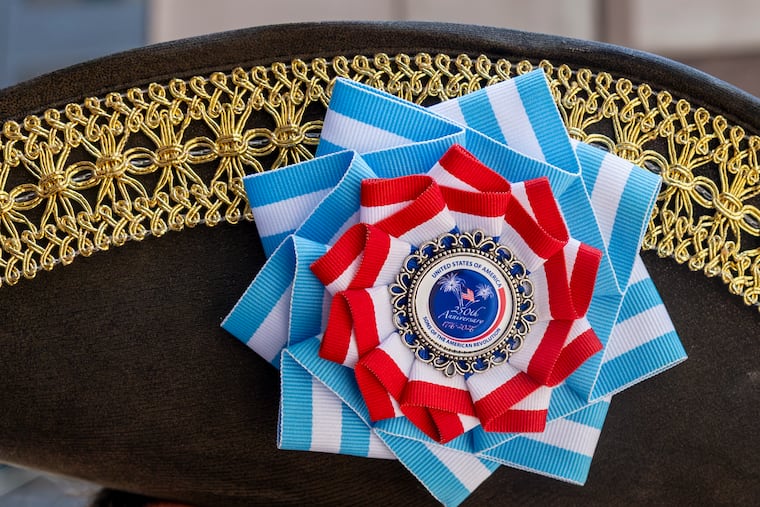
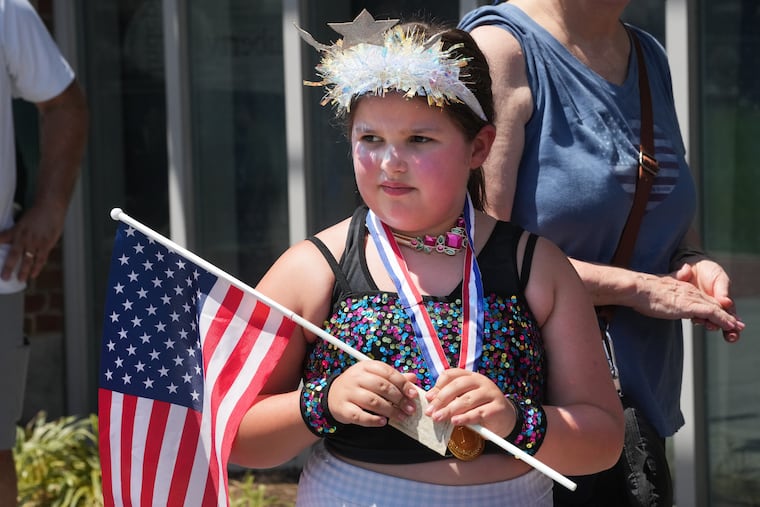
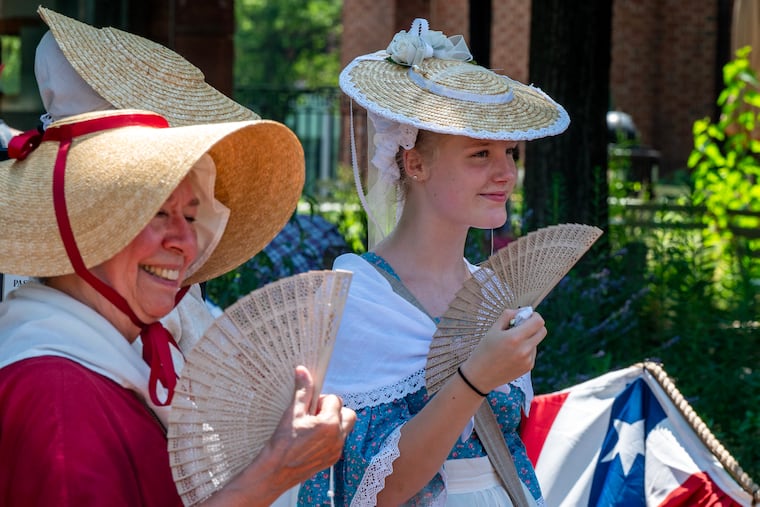
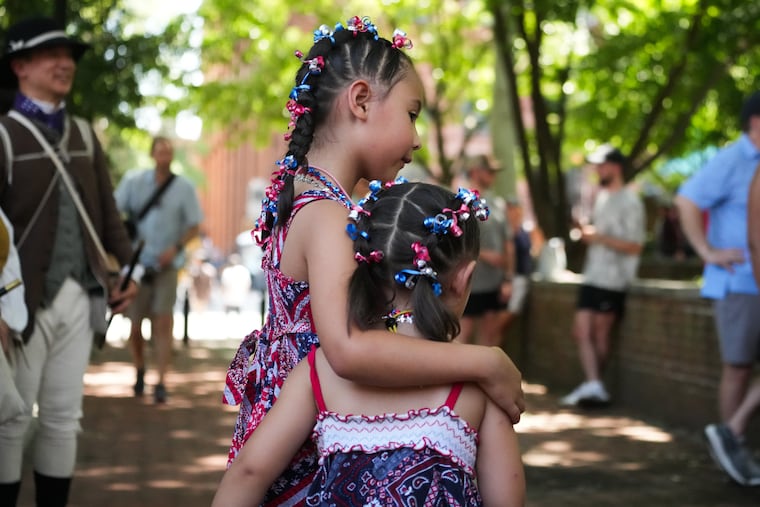
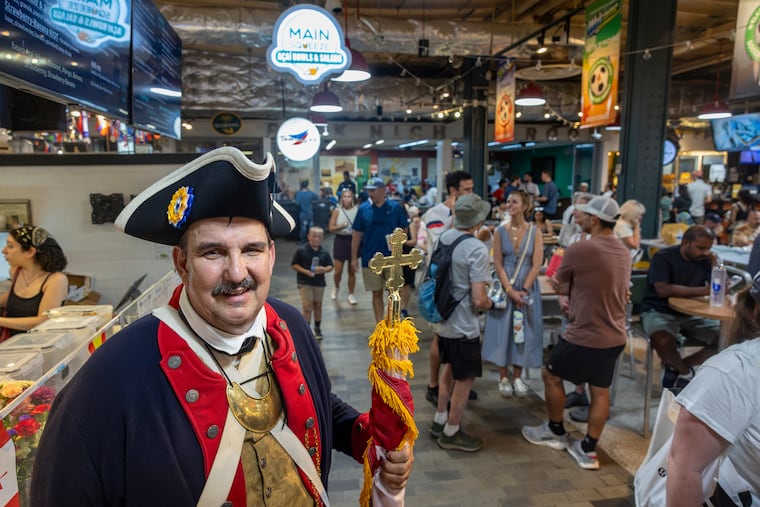
The cancellation didn’t immediately send the performers home; instead, the duo stayed to play the fife, a wooden instrument similar to a piccolo, throughout Old City. As they readied their three-layer historic attire, Touzjian hoped future generations would heed her advice:
“No matter how hot it is, do not cancel the 300th independence parade.”
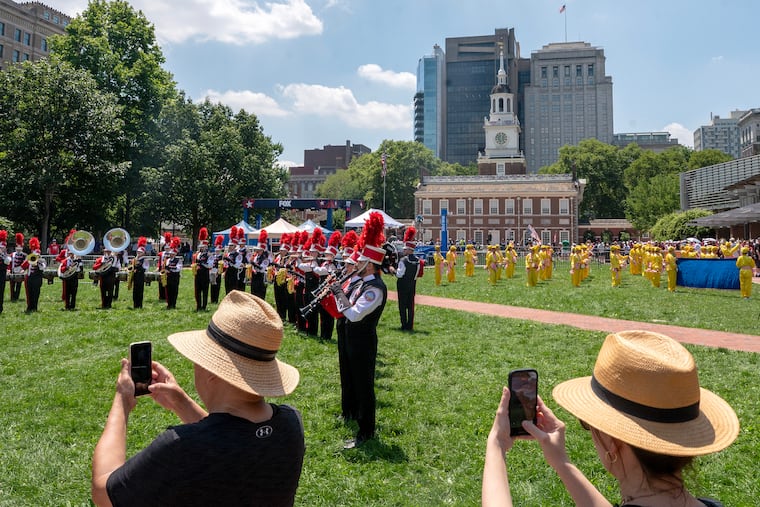
At Independence National Historical Park, people clamored for respite in the tree-lined periphery, in the sliver of shade by the Liberty Bell, or the air-conditioned Independence Hall. Around noon, the line to see the historic site of the Second Continental Congress snaked through the courtyard. While entries were paused as the building surged to capacity, history buffs dressed in colonial costume gave mini lectures, and a few marooned groups didn’t let the weather dampen their dancing. Indianapolis-based squad Ballet Folklorico Mosaicos performed their routine inspired by an annual carnival in Veracruz, Mexico, while Asian American Dragon & Lion Dance artisans carried a long puppet dragon to the beat of a drum.
“I feel immense pride to be able to show the love for our country,” said Henry Lee, founder and director of Asian American Dragon & Lion Dance.
Teens from Sahuarita High School’s band came a long way from their Arizona homes only to not be able to march through Center City. But, director Ben Garland said it taught his 87 students a valuable lesson about being an American: community. Garland praised organizers for making the parade participants feel included in the 250th.
“Most of my students have never even been on a plane before and coming here was their opportunity to see the Wast coast and engage with history they wouldn’t see otherwise,” he said. “For us the trip was worth it for what they have been able to learn and the camaraderie they have built here.”
Across the city, Allison Utain and her husband found a form of patriotism at the Philadelphia Museum of Art no less festive than what they were hoping for in the parade.
“You see a culmination of so many cultures that make the tapestry of what American is,” Utain said, “far from perfect, but it’s great.”
Despite a rocky start, city leaders and tourism officials have postured Philadelphia’s Semiquincentennial celebrations as the country’s defining 250th party. And there’s immense pressure for the city to meet its moment, as commemorative events — from George Washington’s Mount Vernon estate to the Boston Harbor — and the American royal wedding between Pennsylvania’s own Taylor Swift and Eagles-adjacent Travis Kelce compete for the nation’s attention.
» READ MORE: Taylor Swift and Travis Kelce donate $1 million to Reading food bank
Alex Bergstedt and his wife traveled from Idaho to Philadelphia because they “knew Fourth of July would be big.” Nicholas Roth and two friends came from upstate New York to walk where the Founding Fathers were.
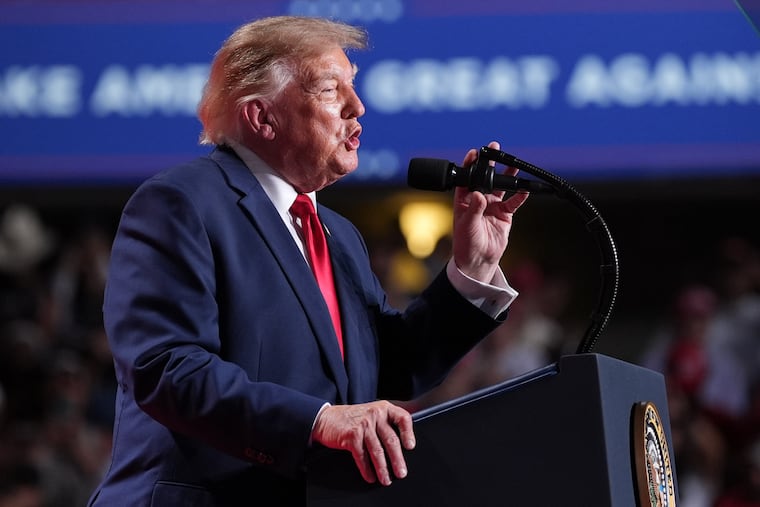
Just this week, Mayor Cherelle L. Parker reiterated the gravity of the grandeur: “We won’t get a second chance to do this over again, Philadelphia. We only turn 250 years old once in a lifetime.” The mayor defended the city’s July Fourth concert planned for Saturday, amid concerns about the dangerously high temperatures and revelations that the event will cost taxpayers more.
As of late Friday afternoon, the concert was still on. Misting stations and water-refilling stations will be available along the Benjamin Franklin Parkway during the seven-hour billing, featuring acts such as Jill Scott, Christina Aguilera, The Roots, Will Smith, and Freeway, the city said. Officials pleaded with attendees to prepare accordingly.
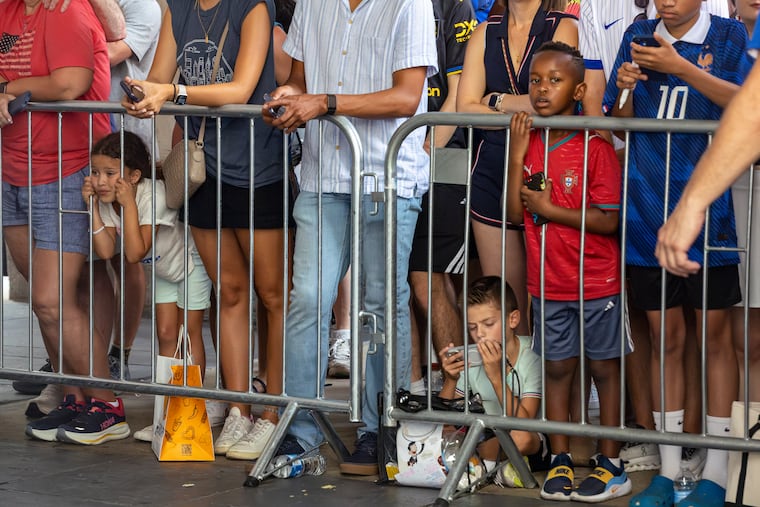
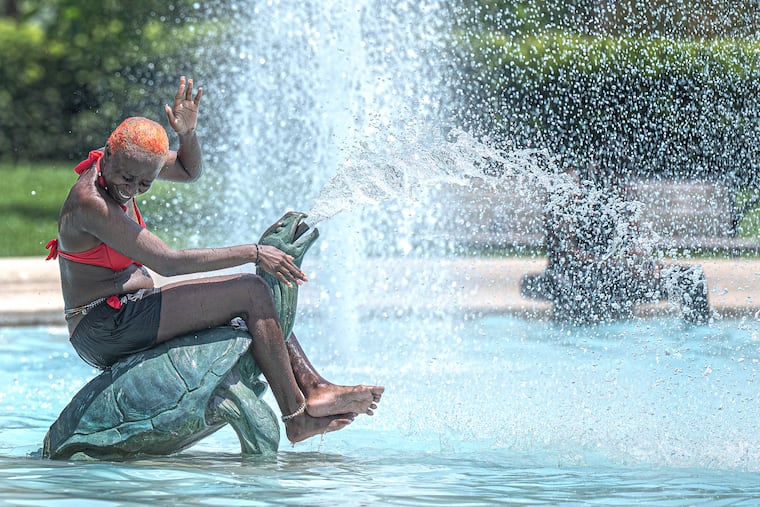
On the Parkway Friday, it was hot enough to see the shimmering heat on the asphalt. Most people rushed from museums to other scraps of shade, while some poured water down the backs of their necks, and dozens of children and their families streamed through the Swann Memorial Fountain at Logan Circle.
Yet, this isn’t Philadelphia’s first brush with a foiled fete. In 1976, the city’s grand plans for its Bicentennial were dashed — not by weather, but rather unmeetable expectations. The blunder of ‘76 was an unrivaled level of municipal malaise, according to contemporaneous reports.
This year, Ron Crofoot traveled to Philadelphia to be with his granddaughter as her marching band was supposed to perform at the parade. He reflected on what it was like to have celebrated the Bicentennial.
“How quickly 50 years go by,” he said. “I won’t see the next — it gets more meaningful as you get older — you come to appreciate the uniqueness of the United States.”
At Sixth and Market Streets, consternation was brewing: On an observed federal holiday, a Philadelphia-based federal appeals court gave President Donald Trump’s administration the final go-ahead to install its own exhibits at the contentious President’s House site, a memorial to the nine people enslaved by Washington there. The city quickly appealed, but the motion does not pause the administration’s ability to proceed.
The rupture at the President’s House is just one part of the Trump administration’s ongoing campaign to purge history it says “inappropriately disparage[s] Americans past or living.”
» READ MORE: Trump administration gets final legal OK to install own panels at President’s House, city appeals
It wasn’t immediately known if federal authorities would attempt to install the panels during this historic weekend.
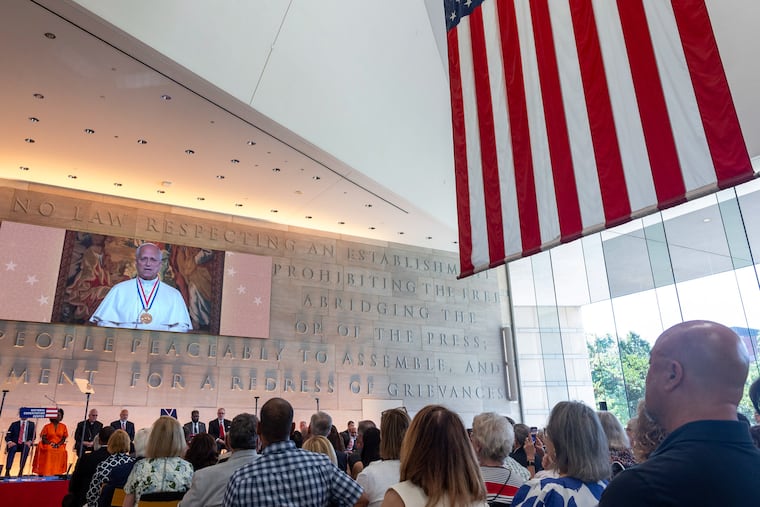
In a video address, a block north at the National Constitution Center, Pope Leo XIV called for a “recommitment” to the nation’s ideals as he accepted the center’s prestigious Liberty Medal. The first U.S.-born pope has been outspoken about calls for international peace, which have landed him at odds with Trump’s immigration policies and the war with Iran.
» READ MORE: Read the full text of Pope Leo XIV’s speech to the National Constitution Center
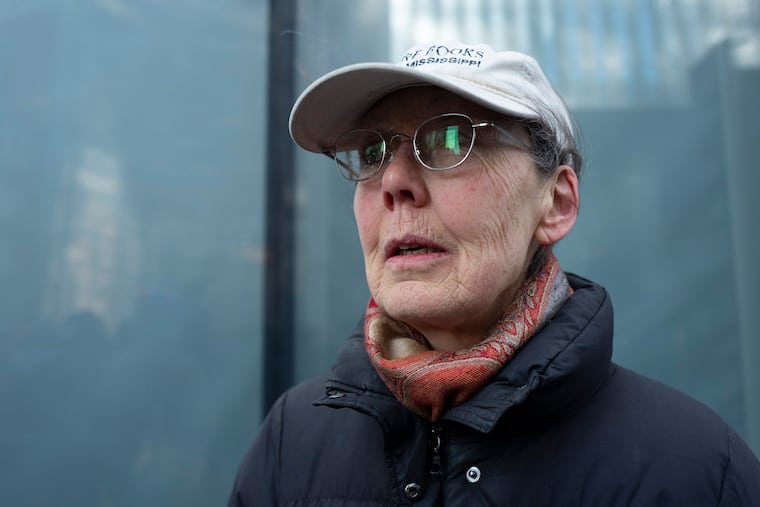
“I’ve never seen such patriotism in one place,” said Thad Waites, 81, who traveled from Hattiesburg, Miss., for the Semiquincentennial — and hear from Pope Leo XIV.
Andrew McLaughlin, 68, of West Chester, recently returned from a trip to Chicago.
“I think it brings back pride in the country,” McLaughlin said of the 250th anniversary.
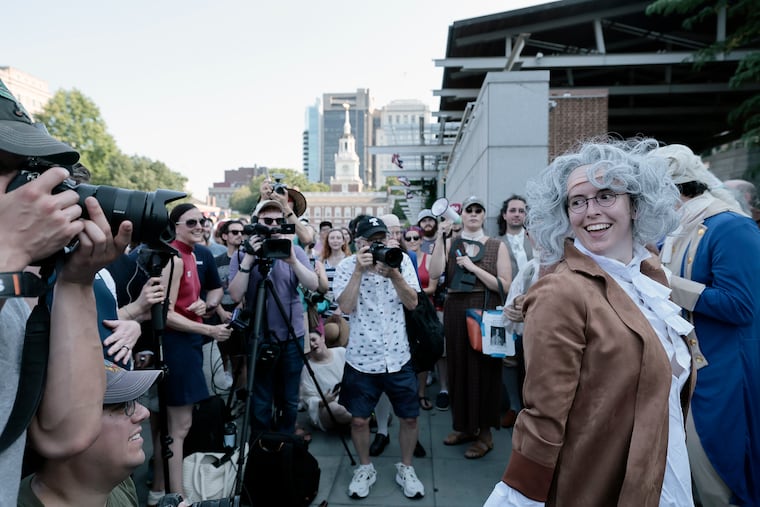
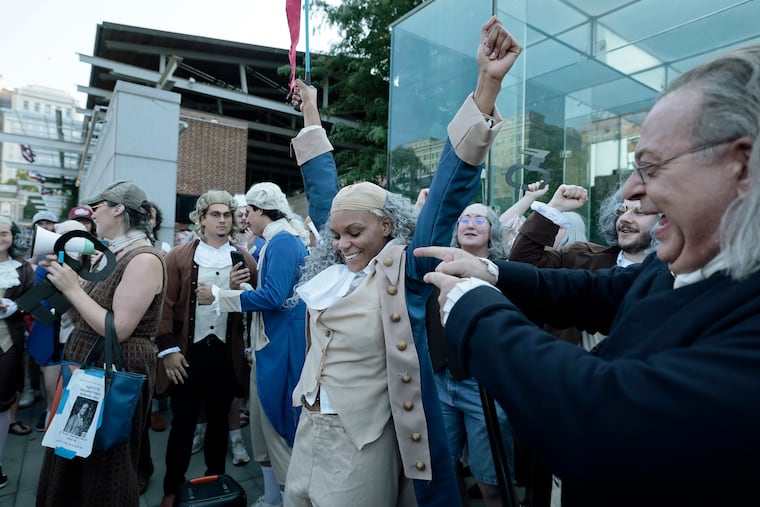
By Friday evening, Philly’s proclivity for wackiness was on full display when a crowd formed on Independence Mall, shouting “one more Ben, one more Ben” as men and women dressed like Benjamin Franklin walked through the plain-clothed masses.
It wasn’t a catwalk, per se, but rather the Franklin stroll. The mob had gathered to find the Founding Father’s best doppelganger.
“You have to make the event you want to see in the world, said organizer Elena Jackendoff, 32, who is a student at Johns Hopkins University. “I wanted to see 250 bald caps.”
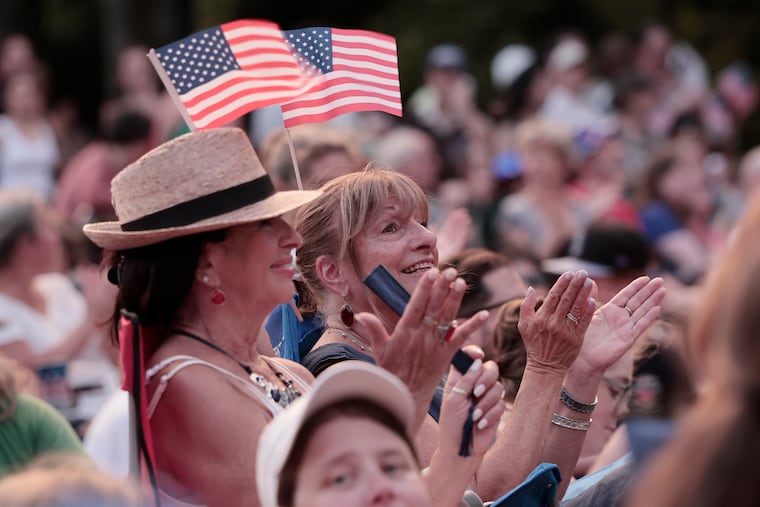
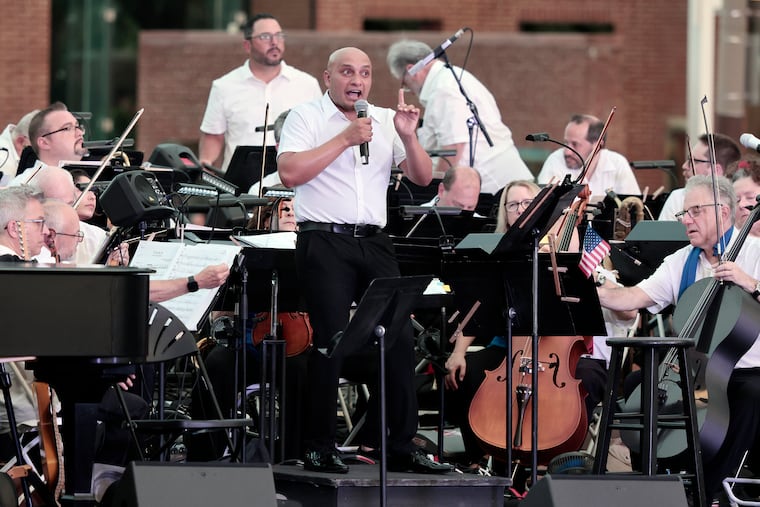
Opposite Market Street, thousands gathered to hear Pops on Independence. By the delayed-8 p.m. start time, the temp had fallen to a pleasant 89 degrees and the orchestra played on with featured Broadway star Idina Menzel.
Last year’s Pops concert was cut short by rain. This year, the sky held dark clouds and some flashes of lightning, but the precipitation stayed at bay as Menzel made her appearance to a roaring audience.
“There is something especially fitting about gathering here, surrounded by the places where the nation was born,” said Steven Sims, superintendent of Independence National Historical Park, told spectators stretched out on the lawn.
Music, he said, “has always brought people together.”
Staff writers Peter Dobrin and Nick Vadala contributed to this article.