‘The last thing that is protecting my dignity.’ A South Philly mother talks about life under sanctuary.
As Trump moves against sanctuary cities, one undocumented mother in Philadelphia worries what the future holds for her.

Guzman and her companions were moving through the Northern Mexico desert, nearing the U.S. border, when they were ambushed by several armed men.
The bandits forced her to strip, then ordered the others to do the same.
Guzman, 23 at the time, feared she was going to be raped or killed.
Instead, the gunmen searched the group’s clothes for money, took their food, and left. She soon crossed into Arizona, evading U.S. border authorities and making her way to family in Philadelphia.
Twenty years later, said Guzman, who agreed to be interviewed if identified only by her surname, the terror of that moment at gunpoint still feels recent. She is now engulfed by a similar sense of dread, she said, as President Donald Trump takes aim at so-called sanctuary cities like Philadelphia, which limit their cooperation with ICE.
“The sanctuary city is like my clothes,” Guzman said, growing tearful. “The last thing that is protecting my dignity as a human being.”
Guzman, a 42-year-old single mother, is among an estimated 47,000 undocumented residents of Philadelphia — ultimate targets of Trump’s effort to make sanctuary jurisdictions help enforce federal laws and kick immigrants out of the country.
These days, she said, the clothing of sanctuary feels a little thin. Yes, she knows city policies remain in place. But can she trust they will be honored? Even if so, she’s scared to test it.
In May, a former romantic partner showed up at her home, screaming and blocking the door after she refused to let him inside.
Before Trump returned to office, she would have dialed 911 — knowing that Philadelphia bars city employees from asking about immigration status. Police here and elsewhere say that policy helps them fight crime, because it enables undocumented victims and witnesses to come forward without fear of repercussions.
But with the president pressing jurisdictions to comply, phoning the police suddenly didn’t feel safe.
“Even if the call is anonymous, they know where the call is coming from,” she said. “I was worried the police would come but instead of asking about him, they were going to see it as an excuse to ask about my immigration status.”
Her former partner finally just left, she said.
Philadelphia city officials have said repeatedly that all prior sanctuary policies remain in place under Mayor Cherelle L. Parker, whatever may emerge from the White House.
“There is uncertainty now in the air. People don’t know what to expect from their government,“ Parker said Wednesday, without mentioning Trump by name, as she announced Charlie Ellison as the new director of the Philadelphia Office of Immigrant Affairs. ”Your city is here to keep you safe and to safeguard your basic rights.”
City Solicitor Renee Garcia said in May that the Parker administration was prepared to go to court if Trump tried to cut funding, which he has pledged to do as a means to make sanctuary cities obey.
“Things are changing every day nationally,” City Councilmember Rue Landau, who meets regularly with leaders of immigrant organizations, told The Inquirer last week. “The federal government is making it very difficult for cities even as welcoming as Philadelphia to maintain their laws and their positions. We do not have any intention of rolling back our protections, certainly not by any threat of the federal government.”
It’s impossible to predict every scenario under which federal officials might utilize ICE or the National Guard, but “we’ve seen how these federal agencies have wreaked havoc on other cities,” she said. “We believe it’s essential for Philadelphia to be prepared for anything.”
Some Philadelphia immigration activists have been concerned about what they see as the Parker administration’s shift in tone as the Trump administration pushes its deportation agenda. Parker has generally been quieter in her support for immigrants, while former Mayor Jim Kenney loudly proclaimed his support.
Last month the Justice Department sued New York Mayor Eric Adams, alleging the sanctuary city was blocking enforcement of federal immigration laws. A day later a federal judge in Chicago dismissed a similar lawsuit that the Trump administration had filed in February, accusing that city and the state of Illinois of illegally interfering with the president’s actions around immigration.
No sign Trump is moving to sue Philly
There is no indication the Trump administration is moving to sue Philadelphia, said Parker spokesperson Joe Grace.
“There’s been no engagement of any kind from the federal government on this,” he said. “We’d have no other comment.”
Villanova University law professor Tuan Samahon, who studies sanctuary policies in the United States, said he expects the Trump administration to file more legal challenges — and to argue that the supremacy clause of the Constitution establishes federal law as the overriding law of the land.
That delighted immigration advocates in 2012, when the Supreme Court, in a case brought by President Barack Obama’s administration, struck down parts of an Arizona law that sought to assist in deportations by authorizing local police to enforce federal laws and to arrest anyone they suspected of being undocumented.
Now the situation has flipped, and the demand for federal predominance is sought by a conservative president.
Samahon said he would not be surprised to see Trump aides claim that sanctuary jurisdictions are aiding and abetting the harboring of undocumented immigrants, and even bring criminal prosecutions against local government officials.
In May the Trump administration named Philadelphia and 15 other Pennsylvania cities and counties — and hundreds of jurisdictions across the United States — to a list of places that the president deemed noncompliant, threatening them with funding cuts of billions of dollars.
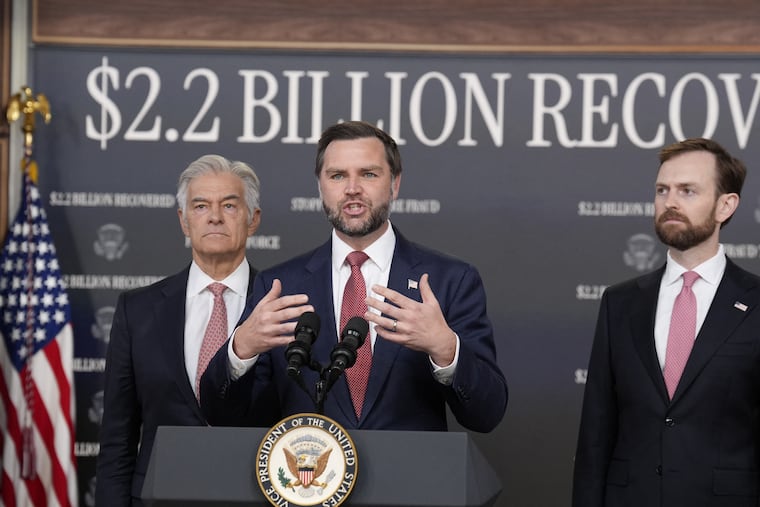
Philadelphia received $2.2 billion in federal money in the 2024 fiscal year, most of it going toward health and social services programs.
Trump officials subsequently removed the list from the internet, but said it remains operative. Elected leaders, government workers, and immigration advocates await its republication and potential impacts.
Trump wants to compel Philadelphia and other places to help arrest immigrants partly because its effort to deport millions of people requires manpower the federal government does not possess.
The United States is home to about 13 million undocumented people, roughly the population of Pennsylvania. Immigration and Customs Enforcement, the main agency tasked with deportations, employs about 21,000 nationwide.
Homeland Security officials insist that sanctuary jurisdictions like Philadelphia protect criminal, undocumented immigrants and put law enforcement officers in peril.
Acting ICE Director Todd Lyons told WABC NY Radio, in an interview shared by ICE on social media last week, that sanctuary policies not only hurt U.S. citizens, but also are “hurting that migrant community that came here for a better life, that left places where criminals prayed on them in their home countries, and now they’re having the same thing happen to them here in America.”
In Philadelphia and elsewhere, undocumented people who commit crimes are not shielded from arrest, and no local law or policy can block ICE from doing its work. Officials in sanctuary jurisdictions say they simply choose not to spend local tax dollars to help ICE.
A new Emerson College poll showed support slipping over time for Trump’s handling of immigration, with 45% approving and 46% disapproving of his policies in July.
A shrinking life in South Philly
Guzman’s world in South Philadelphia has gotten smaller since January, under the shadow of enforcement.
Last year her living room would routinely fill with neighbors, friends, and acquaintances, all gathered to share fellowship and talk over the news of the day. Now the house is quiet.
“An atmosphere of distrust began seeping through the community,” Guzman said. “People have to think twice now. I know ‘Maria,’ but in her house lives a cousin or a nephew. We don’t know him well. What if immigration arrives for him when I visit them and they take me, too?”
Celebrations for graduations, Communions, weddings, and quinceañeras have been canceled, she said.
Guzman’s neighbor called off her daughter’s graduation party after almost everyone had declined the invitation. They were afraid a crowd of Latino people, with Spanish-language music playing in the background, could be a siren call to ICE.
In Mexico she had studied civil engineering, but a troubled economy made her decide to migrate. In the United States the expense of college caused her to put aside her education and get a job.
For two decades she worked in the kitchen of a South Philadelphia restaurant, dreaming of returning to school. The COVID-19 pandemic that shut down restaurants also took away her income, and since then the financial future for herself and her 12-year-old daughter has been uncertain.
Today she works for a company that cleans homes. But her pay and working hours have decreased as the discord around immigration has increased.
Longtime clients have canceled appointments, telling her supervisors they don’t want “illegal criminals” in their homes. Others demanded discounts, offering $80 instead of the usual $200.
“Right now [getting a better job] is very difficult,” Guzman said. “People are suspicious you might be undocumented, and even if it is to take care of a puppy, they don’t want to hire you.”
To reduce costs, she and her daughter live with five other people in a two-story home. She recently applied for Supplemental Nutrition Assistance Program food benefits for her daughter, a U.S. citizen by birth. Her child gets $280 a month, which provides about two weeks’ worth of food. Guzman herself is ineligible because she is undocumented.
Legal status has not protected the sixth grader from bullying, including taunts that ICE “let you come today instead of taking you back to your country.”
Guzman has gone to the school several times to meet with teachers and administrators. She also changed her daughter’s emergency contact to a friend who has citizenship.
Making herself invisible
Even as she tries to make herself invisible, she said, the city’s sanctuary stance offers hope.
“It doesn’t guarantee you will get to stay safe,” she said, “but it’s a light at the end of the tunnel.”
It helped to see other Philadelphians taking part in the “No Kings” protest on June 14, she said, since undocumented people could have put themselves at risk by demonstrating. That’s one truth about living in Philadelphia, she said — many people support immigrants.
“It feels good to know that even when we are living in fear, there are still people out there that believe in us and want to have us as part of the fabric of this country. … Isn’t this supposed to be the land of opportunities?”
Staff writer Sean Collins Walsh contributed to this article.