What makes something a unit block in Philadelphia
Police incident reports and news stories sometimes use this measure when referring to a block.
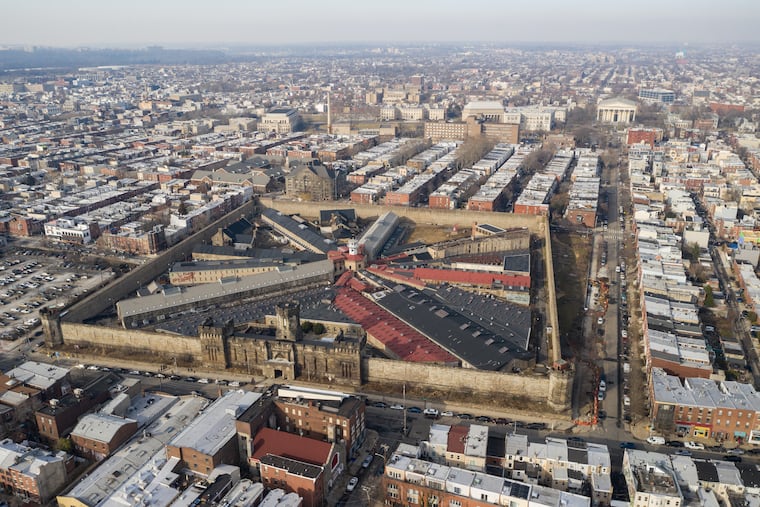
Philly is a square kind of city. Plots and constructions fit between the perpendicular streets that form the blocks that feed the city’s grid.
Modern architecture reshaped some squares into rectangles. Nevertheless, the grid system persists, helping Philadelphians navigate.
But blocks aren’t an exact science, and some don’t have an easily understandable name. Trying to figure out what areas encompass a block police and news outlets sometimes use to describe incidents, a reader asked Curious Philly, The Inquirer’s forum for questions about the city and region: What makes something a unit block in Philadelphia?
» ASK US: Have something you’re wondering about the Philly region? Submit your Curious Philly question here.
For Jeffry Doshna, associate professor of city planning and community development at Temple University, a unit block is a term associated with cities that operate on a grid. It refers to a particular block where the house numbers are less than a 100.
“When we say the 900 block of Girard Avenue, that would be the buildings between Ninth and 10th Streets on Girard,” Doshna said. “It’s a way to designate which block it is based on the numbering.”
However, the words “unit block” stop being used when house numbers exceed 99, according to the professor.
“Unit block is 0 to 99; the 100 block is 100 to 199; the 200 block is 200 to 299. It goes up as high as we have street numbers in the city,” Doshna said.
In the past year, Philadelphians may have heard the phrase “unit block” on news stories, describing an area where an incident happened without providing the specific house number. In September, a man was shot in West Philadelphia, with police reporting the shooting location as the “unit block of North Frazier Street.”
This doesn’t apply just for cities with widespread grid systems like Philly. Right before Christmas, a Bucks County man was struck by a wood chipper in Lower Southampton Township. Authorities reported the incident as on “the unit block of Valley View Road.”
“It’s just a way for us to say ‘where,’ to let people know what block something happened on, without giving a specific address,” Doshna said.