Philly’s Sheriff announced new top officials but kept their names secret. They have years of financial problems.
Sheriff Rochelle Bilal has until the end of July to show why the courts should not appoint someone else to hold timely property auctions.
Philadelphia Sheriff Rochelle Bilal announced last week that she has appointed new top officials to fix a series of financial issues, including the dysfunctional sheriff’s sale process. She just won’t say who the people are.
The Inquirer has learned that two individuals she has tapped for those roles have each lost their own properties in a sheriff’s sale and faced other serious financial issues.
George Gossett Jr., a Roxborough-based lawyer and former assistant district attorney with close ties to State Sen. Sharif Street (D., Philadelphia), confirmed this week that he will be Bilal’s next undersheriff, charged with overseeing sheriff’s sales.
Gossett replaces Tariq El-Shabazz, who retired from his $200,000-a-year position as undersheriff in May on the same day Bilal was hit with a court order demanding she fix a sheriff’s sale system that has left winning bidders waiting a year or more to get their deeds.
As undersheriff, Gossett will serve as Bilal’s top legal adviser and second in command of the 380-person office as it seeks to shore up the sheriff’s sale process, personally signing off on deeds.
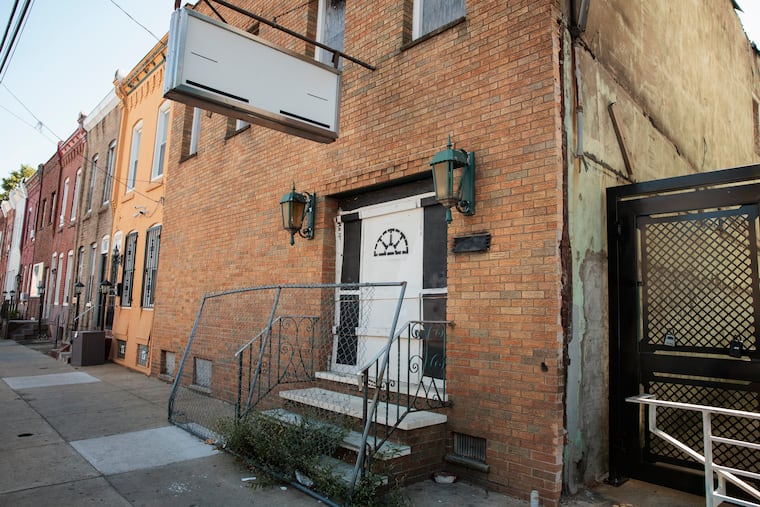
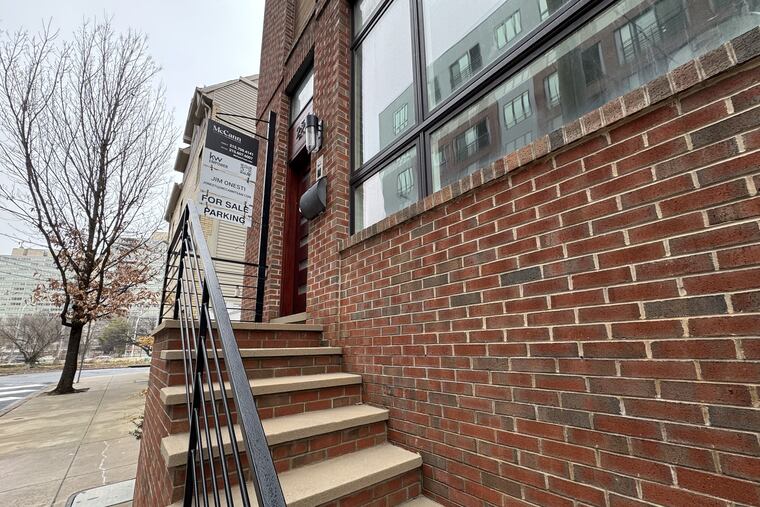
Yet at a foreclosure sale just two months ago, Bilal’s office auctioned off a North Philadelphia rowhouse that Gossett owned. The sale followed years of missed mortgage payments, liens over unpaid utility bills and other costs, and building citations from the city, court and property records show.
Gossett, who previously worked in the Philadelphia Register of Wills Office, said in a statement Tuesday that the foreclosure on his Nicetown rental property “gives me firsthand knowledge of the sheriff’s office’s operations, which I will bring to bear in my new role.”
“As a lifelong Philadelphian, I’m honored to serve as undersheriff,” Gossett said. “I believe that my experience in law enforcement, as a small businessman and as an attorney in private practice will be an asset to the sheriff as we seek to improve public safety and ensure an orderly sheriff’s sale process.”
Bilal’s news release last week said that her unnamed undersheriff would “oversee daily operations, strategic planning initiatives, personnel management, and operational coordination across the agency.”
The sheriff has also hired William Brownlee Sr., a West Philadelphia pastor whose recently updated website describes him as “Deputy Chief Financial Officer and Project Manager for the Philadelphia Sheriff’s Office.”
Besides being a pastor, Brownlee has been a motivational speaker, real estate investor, and serial entrepreneur who has dabbled in everything from childcare to credit repair.
He also has a 15-year paper trail of serious financial troubles.
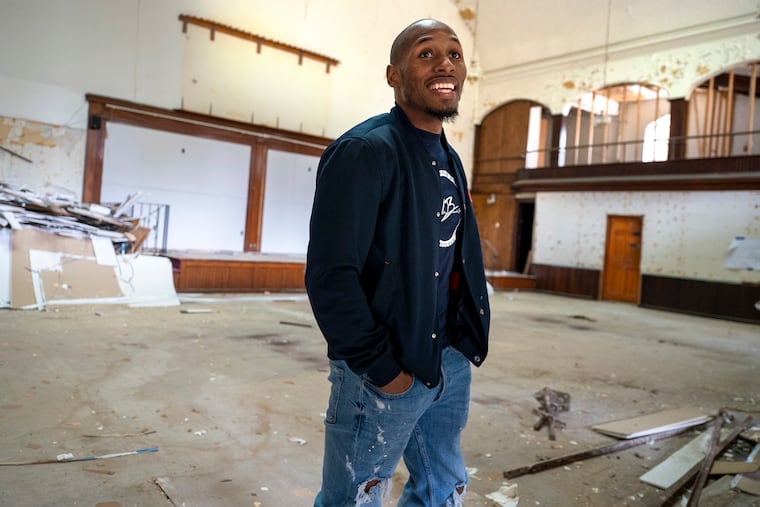
Three years ago, while pastor at the Emmanuel Christian Center in West Philadelphia, he made national news for selling off the church’s stained glass windows for $6,000 — unaware they were 118-year-old Tiffany glass worth hundreds of thousands of dollars.
The money was meant to fund part of a multimillion-dollar renovation project of the building, but ended with lenders selling off the boarded-up church earlier this year to satisfy millions in unpaid debts.
Brownlee is also behind several failed business ventures that resulted in the pastor declaring personal bankruptcy three times.
In 2023, he filed a petition to legally change his name for what he said were “spiritual reasons,” according to a court filing, only to have the request denied after a lender he owed more than $600,000 opposed the change.
“It is believed,” an attorney for the lender wrote, “that petitioner seeks a name change for the purpose of evading creditors.”
He has lost two properties at sheriff’s sale to private lenders, most recently in 2024. And in a November 2025 bankruptcy filing, Brownlee disclosed liabilities totaling $5.3 million, including nearly $1.5 million owed to the IRS.
A Philadelphia judge also held him in contempt of court last year for not responding to a Wisconsin bank’s attempts to collect $89,000 following an out-of-state judgment against him.
Brownlee, in an email Wednesday, disputed the amount of back taxes he owed and said he had sought to change his name because his father’s debts and other records were being confused with his due to the similarity of their names.
“I do not deny that I have experienced serious financial hardship,” he wrote. “However, the story of that hardship is not simply a story of irresponsibility or evasion. Much of it occurred during and after two major marital breakdowns, including divorce proceedings around 2015 and a later separation and divorce process between 2022 and 2024. Those seasons caused significant personal, financial, and organizational disruption.”
In November 2021, Bilal’s spokesperson and former campaign manager Teresa Lundy promoted Brownlee’s network of businesses, known as Divine Services, in a Metro Philadelphia column.
She wrote that Brownlee’s companies offered “childcare, beauty supplies, hair styling, estheticians and related services, financial services, credit repair, interior design, event planning, real estate development and management, photography, and entertainment.”
Neither Bilal nor Lundy would comment this week on Gossett’s or Brownlee’s hiring dates, why they were selected, their salaries, or why the office has yet to officially release their names.
Lundy said in an email that the office’s “reorganization plan extends beyond personnel; it is a holistic approach for better delivery of services to the residents of Philadelphia.”
Still holding the deed
In the early 2000s, Gossett began purchasing several dilapidated properties across Philadelphia, including one at sheriff’s sale.
He later sold most of these properties. However, in 2007, Gossett took out a $50,000 mortgage on a three-story rowhouse on North 18th Street in the city’s Nicetown section that he purchased for $8,500 in 2004.
Inspectors cited it as an unlicensed rental in 2012. In 2020, the city again cited Gossett because residents were living in the house despite its lack of a heating system, a permanent kitchen, or a certificate of occupancy, according to city records.
That same year, Deutsche Bank went to court to file the first of three suits to foreclose on the property, listing a $45,000 default. Gossett was able to come up with enough money to stave off foreclosure, but the property was declared vacant by inspectors in 2024, according to city records.
“Unfortunately, after many years of ownership, my company was unable to make that rental property work financially,” Gossett said of the rowhouse. “After I walked away from it, squatters began living there. My efforts to remove the squatters were hindered by the COVID pandemic.”
In March 2025, Deutsche Bank filed suit against Gossett again, securing a $78,000 judgment against him. In April 2026, Bilal’s office sold the property to the bank for about $58,000, according to court records.
Gossett still maintains technical possession of the building today because the deed has not yet been processed by Bilal’s office. A city lien for the costs of sealing the vacant property is still marked as active.
Gossett also runs a company called Urban Owl Construction Group, which does home repair and other services. He has faced three small-claims suits by Urban Owl clients who said the company did sloppy work or skipped out on promised repairs completely. Gossett noted that he won two of the cases and a third was settled.
He said he will continue running Urban Owl while serving as undersheriff. He is also currently doing criminal defense work in Philadelphia, but said he would transfer those cases to other attorneys to avoid potential conflicts.
El-Shabazz, Bilal’s previous undersheriff, was fined $16,000 by the city’s ethics board in 2023 after he acknowledged operating a private legal practice representing criminal defendants who were being prosecuted by the Philadelphia District Attorney’s Office, in violation of city ethics rules.
Lundy and El-Shabazz initially denied he was doing criminal defense work in the city, but weeks later he agreed to pay the fine.
Gossett, who attended Central High School with Street, was previously hired for a job in Orphans Court under Register of Wills Tracey Gordon.
He left Orphans Court in 2024 after Gordon was defeated by John Sabatina Jr., whose office indicated in internal records that Gossett had been hired on Street’s recommendation. (Gordon also now works for Bilal as a sheriff’s sales service representative, according to city payroll records.)
Street later hired Gossett for a state job as a legislative aide from February 2024 to September 2024, and the lawyer later served as campaign treasurer during Street’s unsuccessful congressional run this year.
Although Bilal declined to confirm Gossett’s ascension to undersheriff, Street sent The Inquirer a statement praising his hiring.
“George, a former assistant district attorney, is an experienced and highly qualified attorney who I’ve known since high school,” he wrote. “I’m proud of his return to public service with another law enforcement agency and believe he will serve the people of Philadelphia well in his new role.”
Under water
Brownlee’s first experience with sheriff sales came after he defaulted on a loan linked to a business called Divine Styles Salon, which was auctioned off in 2017.
Later, as Brownlee’s failed redevelopment of Emmanuel Christian Center was unfolding, Brownlee was also underwater on a $600,000 mortgage he had taken out from lender Univest to finance the construction of a business called Divine Daycare at a property he owned on 52nd Street.
Univest sought a judgment against him in 2023, and the property was sold off at a foreclosure sale in 2024.
In April of this year, about a month after the conclusion of his most recent bankruptcy case, Brownlee appeared with both Street and Bilal at her office’s Autism Awareness and Neurodiversity Resource Fair.
At that time, he was described as the chair of the “Honorary Deputy Sheriff Coalition.” But he told The Inquirer this week he had since been formally hired as a project manager “based on my professional experience in banking, real estate, leadership, ministry administration, and project coordination.” He describes himself on Instagram as “deputy CFO.”
Bilal’s new hires will have to move fast to comply with the judicial order.
By mid-July, Bilal’s staff must file a list of all sheriff’s sales since she took office in January 2020, along with detailed financial records, and names of all staffers or contractors who worked on sheriff’s sales during that time. She also will be required to show a plan for streamlining the process.
Two weeks later, Bilal or a representative must appear at a public hearing before a judge to explain why a special master, a title agent, or someone with similar expertise in real estate should not be brought in to oversee the auctions.

The Inquirer’s journalism is supported, in part, by the Lenfest Institute for Journalism and readers like you. News and editorial content are created independently of The Inquirer’s donors. Gifts to support The Inquirer’s high-impact journalism can be made at inquirer.com/donate. A list of Lenfest Institute donors can be found at lenfestinstitute.org/supporters.